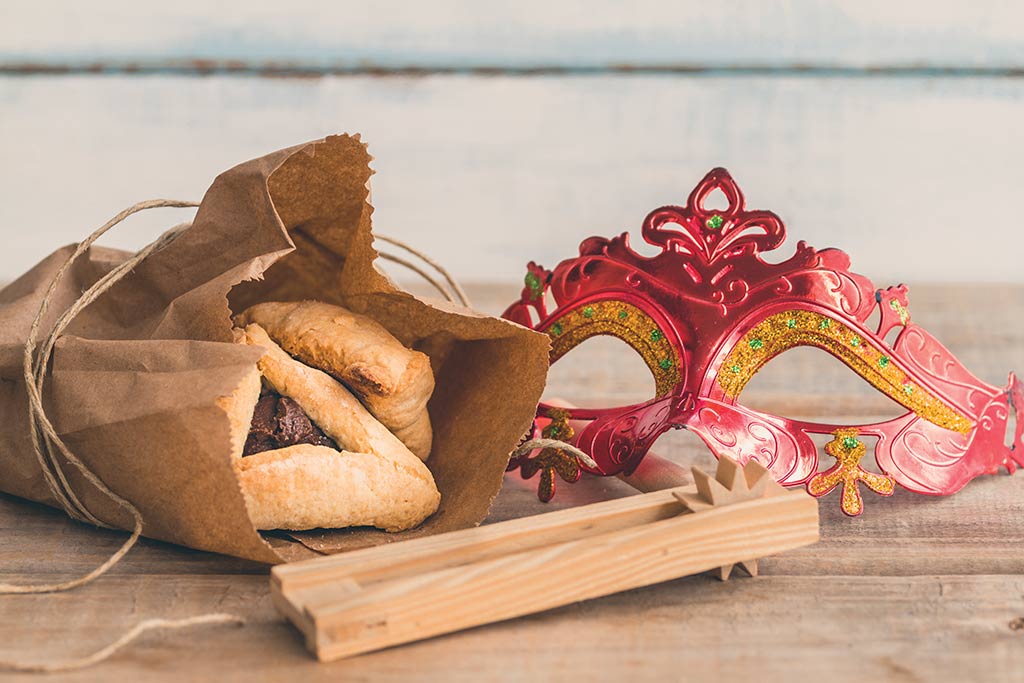
Purim is the holiday that refuses to take itself too seriously. It’s a night when adults dress up, children run wild through the synagogue, and the point is to make a little joyful chaos—on purpose.
And, yet, Purim is not, at its core, a children’s story.
Beneath the costumes is one of the most sobering stories in our tradition. Megillat Esther begins with palace gossip and political drama, but it quickly reveals something far darker: an official decree to destroy an entire people. Not a random outburst of violence, but a legal plan. Hatred with an emperor’s seal on it.
That’s part of what makes Purim endure. It doesn’t only remind us that antisemitism has always existed. It shows us how a society can be persuaded that targeting a minority is reasonable, how scapegoating becomes fashionable, and how power can turn prejudice into policy.
Purim names something uncomfortable: sometimes the greatest threat isn’t only the villain. It can be society itself—the moment cruelty starts to feel normal.
Which is why, for many Jews, Purim can feel especially resonant right now. Antisemitism has grown louder and more brazen, and too many Jews have found themselves asking questions we hoped we would never have to ask again: How visible should I be? What will happen to my child at school, on campus, or online? And who will speak up for us when it counts?
Purim doesn’t ask us to deny those fears. It takes them seriously, and then it asks what we’re going to do about them. Right in the middle of the story, Mordecai says to Esther: “Who knows —mi yodeah—perhaps it was for this very moment that you have arrived where you are.”
“Who knows?” is not a shrug. It’s the heart of the story: courage does not wait for perfect clarity. Esther did not ask to be placed in her role. She didn’t go looking for leadership. She understands the risk of being seen and the cost of speaking up. Her initial instinct is to stay quiet. To stay safe. To stay hidden.
That is precisely why finding her courage matters. Mordecai doesn’t promise Esther success. He offers something more honest: a question. Maybe you are here for a reason. Maybe this moment is asking something of you.
There are consequences to being Esther. And there are consequences to not.
This is where Purim becomes personal.
Purim isn’t only a story about surviving hate. It’s a story about addressing it when a colleague repeats an old trope about Jews, when a friend dismisses something alarming as “no big deal,” when someone turns a conversation into a test of whether Jews belong, when public life grows more cynical—and basic norms of decency start to erode. You don’t have to be in the spotlight to matter. You don’t have to be the loudest person in the room.
Purim suggests something far simpler. Your voice counts in the places where you show up.
The answer isn’t only pushing back. It’s showing up in the first place—on purpose.
To gather. To celebrate. To deliver treats to friends (mishloach manot) and give generously to those in need (matanot la’evyonim). To widen the circle of care. To show our children that Judaism is not something we hide when the world feels tense.
Purim reminds us that the threats we face are never only about Jews, but about the moral health of the society we want to live in. It is a society where people are not reduced to scapegoats, where fear does not rule, and where human dignity is not up for debate.
Purim doesn’t ask you to fix everything. It asks you not to disappear. Ironically, Purim asks you to unmask yourself.
Show up. Bring someone with you. Let the joy be real. Let your Jewishness be visible. U’mi yodeah—who knows what your presence might make possible?
Rabbi Amanda Greene is Senior Rabbi of Chicago Sinai Congregation.
In this issue
-
-

-

Catching up with Gold
Actor, writer, and comedian Judy Gold is known for her edgy wit and sharp timing
Read more