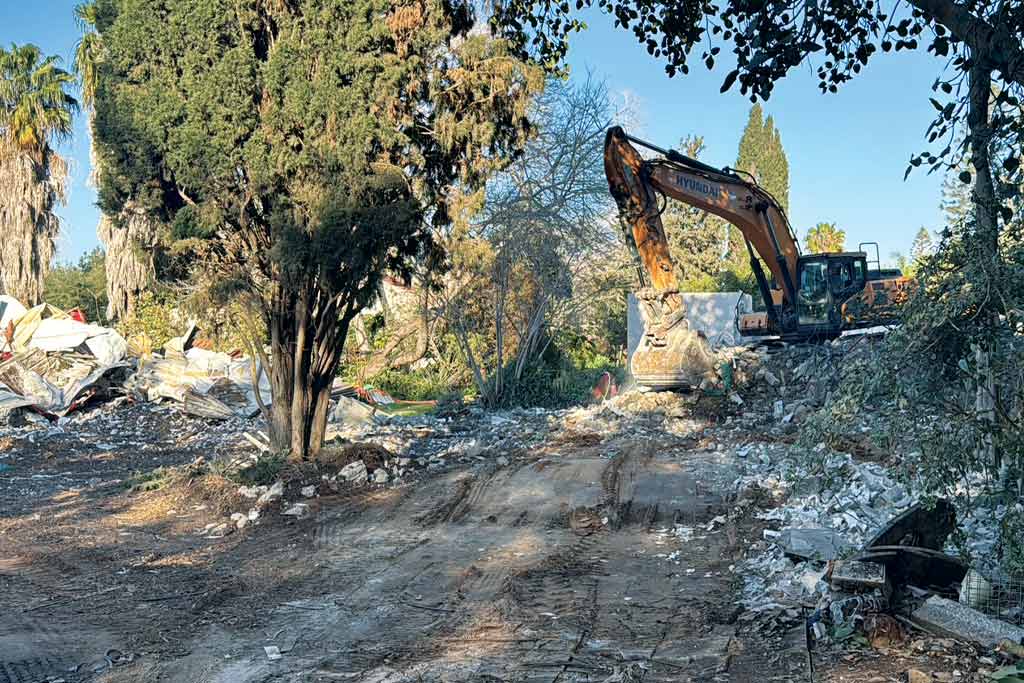
Demolition of burned homes in Nir Oz. (Photo credit: Ofer Bavly)
On October 7, 2023, Israel suffered the greatest massacre in its 75-year history.
Proportionally, no community suffered a greater loss on that day than Kibbutz Nir Oz, a mere mile and a half from Gaza’s border and its city of Khan Yunes; one of every four Nir Oz residents were murdered or kidnapped.
By November, JUF began partnering with Nir Oz, to help the community start to slowly rebuild itself on the literal ashes of its paradisal past. With most of its survivors having relocated to Kiryat Gat in JUF’s Partnership region, the new partnership with Nir Oz—whose name in Hebrew means “Field of Strength”—was a natural fit.
Only six of the 220 Nir Oz houses were untouched by bombs, arson, and unspeakable desecrations. While physical rebuilding of the kibbutz is the government’s responsibility, rebuilding a community takes more than repairing its houses. Rebuilding their communal life—was delayed for Nir Oz until their last hostage was returned home, so it took Nir Oz two years to envision a life beyond October 8th.
JUF was there for Nir Oz from the beginning. With our community’s financial and emotional support, Nir Oz could rehabilitate faster, without relying solely on governmental assistance. Among other support, we provided after-school activities, helped repair and expand their dairy farm, produced a film documentary of the kibbutz’s renewal, and sent 14 Nir Oz teens to Camp Ramah for a much-needed respite from the trauma, sadness, and constant reminders of tragedy all around them.
For Chicagoans traveling to Israel, a visit to Nir Oz became an indispensable stop. It was not just an expression of solidarity but a way to bear witness. For dozens of Chicago groups, it was a window into the magnitude of the tragedy. Some visitors likened the devastation to what they saw visiting Nazi concentration camps.
The narrative during those visits, guided by Nir Oz residents, was of tragedy and loss. Today, that narrative is changing. Recent visitors have seen a kibbutz rebuilding itself and a community reborn.
A new neighborhood called Halutz (“pioneer”) is almost completed, with 10 new houses for returning residents. A dozen homes have already been repaired and inhabited by over 40 kibbutz members. A new pre-army program, Mechina (“preparation”), is operating, with 30 18-year-olds from across Israel living and volunteering in the kibbutz.
Further, The Ha-Shomer Ha-Tzair (“Young Guard”) youth movement— which established the kibbutz back in 1955— is now back with 30 men and women, aged 25-30, living in Nir Oz and working as educators throughout the area. Most will become permanent members within a few short years, rejuvenating the community and being a beacon of hope and resilience for the whole country.
A visit to Nir Oz today is very different than it was two years ago. Some of the burned houses are still there, a stark reminder of what our enemies are capable of; a house or two will likely be left as-is, as a memorial to the catastrophe of October 7.
Dozens of homes have been demolished, erasing the physical remnants of a tragedy that can never be erased from our memories. For the residents, it was bittersweet moment as their old homes were torn down, and new homes built. Joyfully, the kibbutz is now teeming with people—returned residents, pre-army teens, and 25-year-old idealists embodying a renewed Zionism.
The story we tell to our Chicago visitors is a new one—of hope, rebirth, resilience, and of victory, embodied in the return of our people to their land amidst adversity. It is a story of optimism, of a community healing itself, aided by the hand of a Jewish community across the ocean, as sisters and brothers do for one another.
The rebirth of Nir Oz and other communities is a hopeful chapter written by Diaspora Jews together with Israelis, and nowhere is the new face of peoplehood more visible than at Nir Oz. JUF and Nir Oz forged a partnership that will forever be part of the history of the kibbutz.
Ofer Bavly is a JUF Vice President and the Director General of the JUF Israel Office.
In this issue
-
-
-
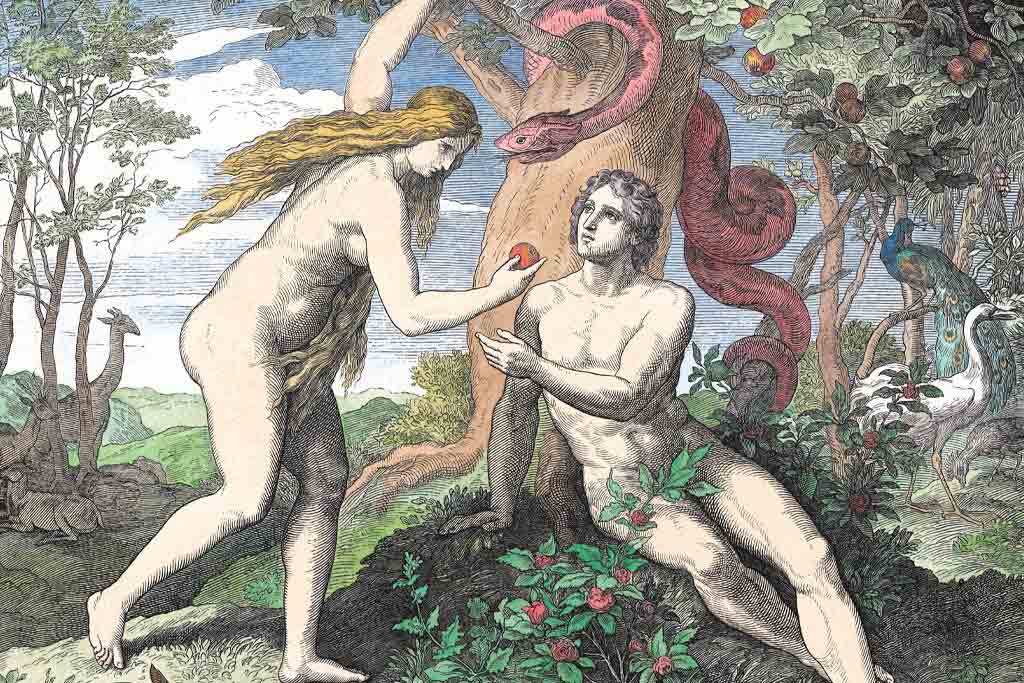
The least Jewish of Jewish holidays
Rosh Hashanah inspires the Jewish people to live in the balance
Read more