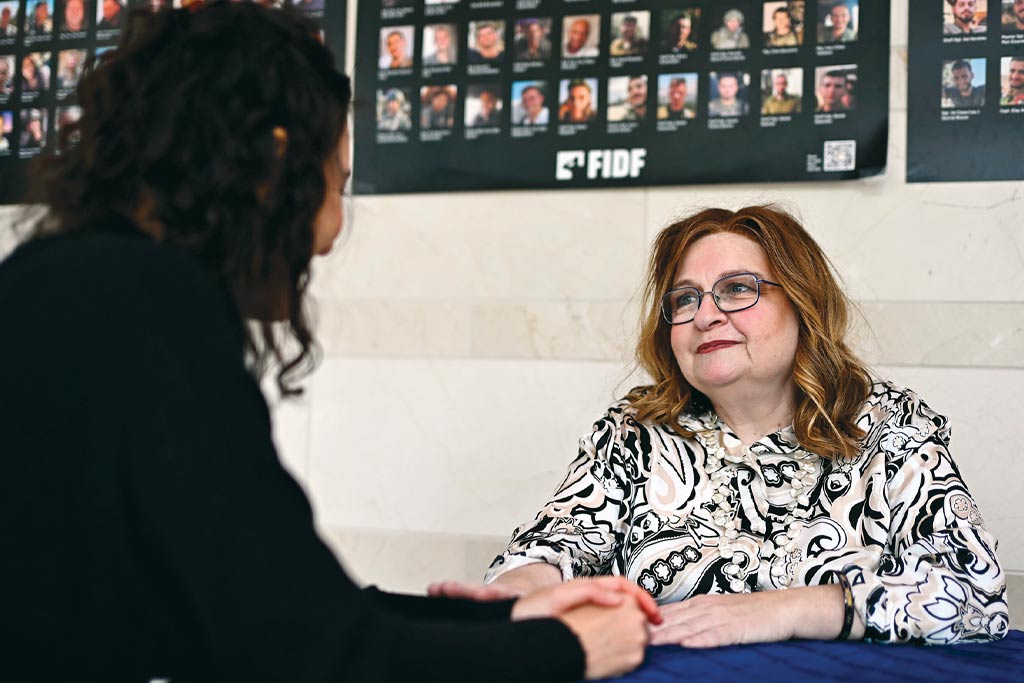
The Hinda Institute, in partnership with Tikvah Jewish Recovery and Healing and the Rutues Center for Business and People Development, launched the Shared Horizons Peer Support Specialist Training Program. (Photo credit: Victor Hilitski Photography for the Hinda Institute)
*Sarah spent her career helping others. A retired counselor from a middle-class Jewish family, she was active in her synagogue and committed to community service.
Then, her world changed overnight. Her adult son was suddenly detained, and with that came another painful revelation—he had been quietly battling addiction for years.
The news left Sarah devastated. She struggled with guilt, wondering what she had missed as a mother. At the same time, she was trying to comfort her grandchildren, all while navigating unfamiliar legal and treatment systems. Although she had access to therapy, she found herself overwhelmed by grief, isolation, and the stigma surrounding addiction and incarceration.
Everything changed when she connected with Megan, a Peer Support Specialist at the Hinda Institute, an organization that assists Jewish families dealing with the pain of institutionalization. Megan understood Sarah’s experience because she had lived through similar challenges. She listened without judgment, shared practical guidance, and offered a resource Sarah hadn’t realized she needed: hope.
“Megan never judged me,” Sarah recalled. “She understood the silence, the shame, and the feeling that no one else could possibly understand. She helped me realize I wasn’t alone.” Today, Sarah says that Hinda Institute’s Peer Support Program has helped her move from simply surviving to healing. Her story illustrates why peer support is becoming one of the fastest- growing approaches in behavioral health.
Across Illinois, access to mental health care and Medicaid continues to fall short of demand. Long waiting lists, rigorous documentation, and high unemployment rates, as well as a major housing crisis in Chicago, make therapy and reintegration especially difficult for individuals who live with poverty, mental health challenges, and stigma. Too often, untreated behavioral health challenges escalate into homelessness or unnecessary involvement with emergency systems.
“The system isn’t built around recovery,” shared a spokesperson for the Hinda Institute. “People often fall through the cracks because they need ongoing support and someone who understands their journey. Peer support, coupled with guidance, is giving hope to those in crisis.”
To help address this growing need, the Hinda Institute, in partnership with Tikvah Jewish Recovery and Healing and the Rutues Center for Business and People Development, launched the Shared Horizons Peer Support Specialist Training Program. Supported through the generous investment of the JUF Mental Health Grant, the United Way of Metro Chicago, and donation from Kalchman-Pass and Walder Foundation, the initiative prepares individuals with lived experience to become certified Peer Support Specialists, while expanding access to behavioral health services throughout the community.
The program creates meaningful career pathways for individuals whose personal journeys become valuable professional assets, while increasing the availability of responsive mental health support for those seeking recovery. Currently, 25 participants have provided more than 900 hours of supervised peer support to over 70 individuals under clinical supervision.
Participants receive extensive training, aligned with Illinois Certification Board standards, combining classroom education and supervised field experience. Every trainee also has access to wraparound services through the Hinda Institute, including employment, case management, and therapy, which help them to succeed, both personally and professionally. The program is being evaluated by Northwestern University’s MIDRASH Lab, adding important research to a growing body of evidence supporting peer services.
What makes peer support unique is the power of lived experience. Peers demonstrate that recovery is possible, because they have walked similar paths themselves. For agencies, peer support expands capacity and complements clinical care by providing encouragement between appointments.
However, for families like Sarah’s, the impact is far more personal. Recovery becomes less lonely. Shame gives way to hope. Connection replaces isolation.
In Jewish tradition, healing is a communal responsibility. We are called to care for one another not only through professional expertise, but through compassion and shared humanity.
Shared Horizons reflects those values, transforming lived experience into service and creating a future where no individual or family must navigate mental health, institutionalization, or addiction alone.
*First name only used to protect privacy.
Abigail Rabinowitz is Program and Development Coordinator at the Hinda Institute.
In this issue
-
-

The least Jewish of Jewish holidays
Rosh Hashanah inspires the Jewish people to live in the balance
Read more -
Catching up with Pati Jinich
The celebrity chef, television host, and cookbook author grew up dreaming of a career in academia
Read more