A Change of ‘Gene Scene'
MICHELLE COHEN
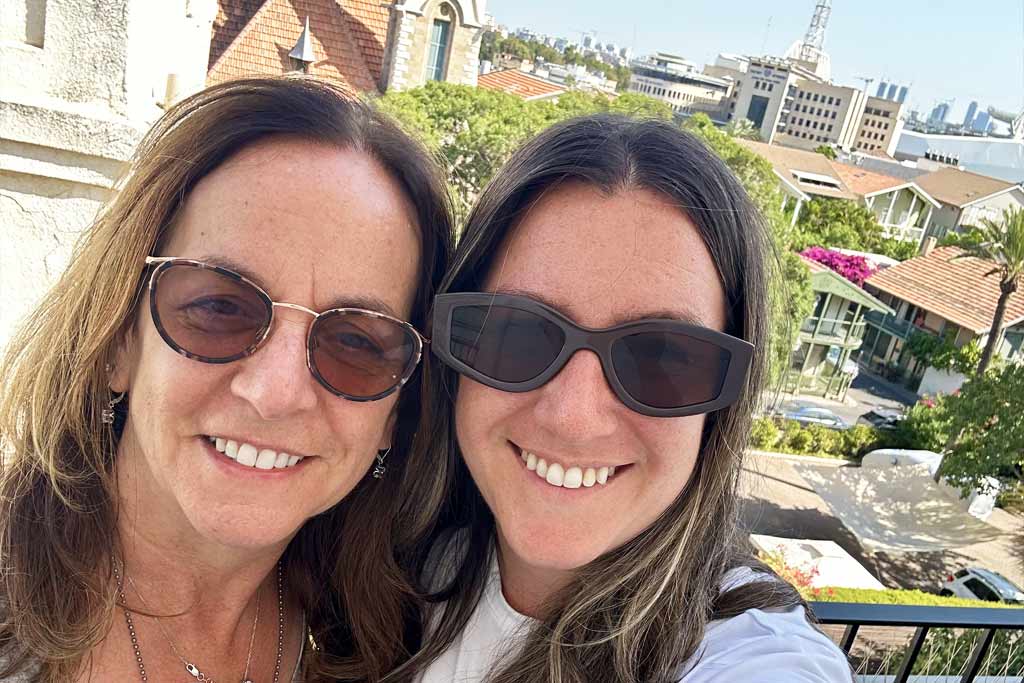
Sixteen-year-old Joselin Linder and her family had just arrived at home, after a flight back from Israel, when her father suddenly passed out at the top of the stairs. Over the next five years, he battled against systemic swelling and an inability to receive nutrition from food, before dying of a previously unknown genetic disease at age 49. He was the first person diagnosed with this disease, but as Linder would learn, he was not the first in her family affected by it.
Linder will share the story of her family’s genetic disease and her journey to find a cure on Thursday, May 11 at Gene Scene: Find Out What You’re Made Of, this year’s annual event from the Norton & Elaine Sarnoff Center for Jewish Genetics. The event, previously known as Jean Therapy, will focus on networking, education, and inspiration instead of shopping.
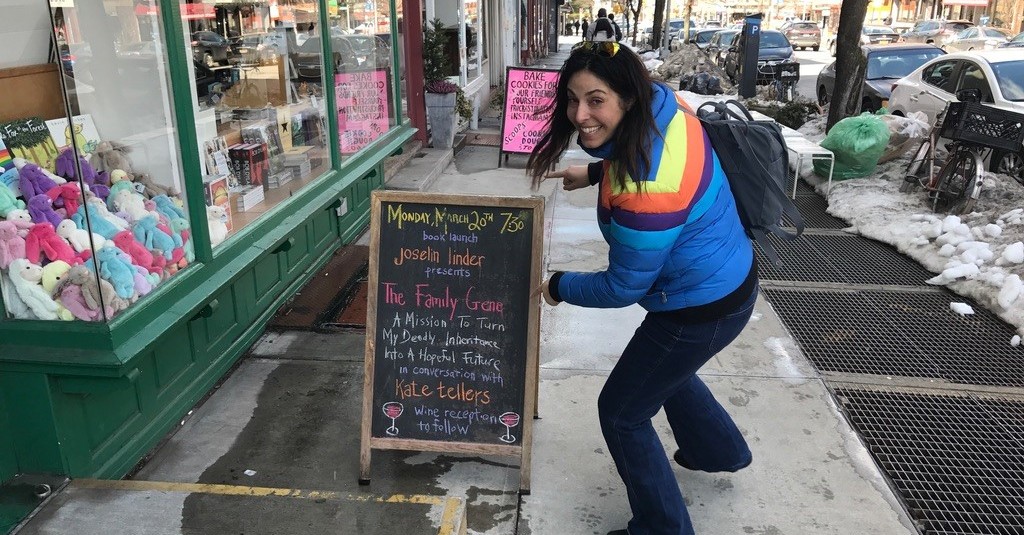
“When you have a rare disease, there’s a constant battle for attention and resources, and I felt like we needed to amplify our voices,” said Linder, who began sharing her family’s journey at the TEDX GOWANUS event almost a decade ago. She started writing her book, The Family Gene: A Mission to Turn My Deadly Inheritance into a Hopeful Future (ECCO), nine years after her father died-and eight years after she found out she, too, has the family gene.
In the last year of Linder’s father’s life, geneticists at Harvard University’s Seidman Laboratory discovered the disease’s origin by checking individual genes through a microscope, as the human genome had not yet been sequenced. The nameless condition has affected only 14 people in the world, all descended from Linder’s great-great-grandmother Ester Bloom.
The condition–which has been featured on an episode of CNN’s series Something’s Killing Me –involves a patient’s veins breaking; fluid spreads throughout the body and nutrients cannot be properly absorbed.
Since learning this information, Linder has pushed for more research-leading to a discovery that Singulair, a common asthma medication, keeps the condition from progressing-and some of her family members have had children through IVF with genetic testing to avoid passing the gene to a new generation.
Jason Rothstein, Executive Director of the Sarnoff Center, hopes stories like Linder’s will inspire people to learn about their own genetic risks and take control of what may feel beyond control.
“Even though her story isn’t about a traditionally Jewish disorder,” he said, “it’s an example of somebody finding out devastating health news related to a genetic condition, and using that information to empower themselves and their families to make better decisions and seek the answers that they need.”
The Sarnoff Center primarily raises awareness about genetic health risks of importance to the Jewish community, including genetic disorders and hereditary cancers more common in people of Jewish descent. They also work to correct misinformation–like that a family history of breast and ovarian cancer is not relevant for men, or that having children with someone who is not Jewish means that traditionally Jewish genetic disorders cannot strike–and connect people to resources for genetic testing and counseling.
But just like with Linder’s family, even something that may seem hopeless and insurmountable may be treatable with research and support. “We couldn’t be luckier in our unluckiness” to find a treatment, said Linder, whose family references her book in doctor appointments to advocate for better healthcare.
“There’s a popular belief that ‘if it’s in your genes, it’s fate,'” Rothstein said, “but there are actions you can take to protect your health and the health of your family to come.”
Stay tuned for more information about Gene Scene. Location TBD. 6 p.m. reception, 7 p.m. program. Heavy hors d’oeuvres and drinks will be served; dietary laws observed. Cost: $25 for 1 ticket or $36 for 2 tickets. For more information, contact [email protected] or 312-357-4718. To learn more about the Sarnoff Center, visit jewishgenetics.org.
The Norton & Elaine Sarnoff Center for Jewish Genetics is a supporting foundation of the Jewish United Fund, and is supported in part by the Michael Reese Health Trust.
In this issue
-
An ‘awesome’ new fellowship for teens
AKLA Chicago will be a free, five-week experiential experience for ages 12–14
Read more -
-