A primer to understand and fight the ‘oldest hatred’
JAY TCATH
In her timely-and unfortunately timeless-book, Antisemitism, An American Tradition , Professor Pamela Nadell asserts that American Jews long believed that the worst was behind us.
In 1999, over 50% of American Jews did not foresee the new millennium’s increase in antisemitism. Ten percent foresaw a decrease. One book proclaimed The Death of Antisemitism .
Catapulted into today’s cauldron of antisemitism, many have romanticized a tranquil pre-October 7 past. It wasn’t.
Nadell, a professor at The American University, explains, “Golden ages appear in retrospect, when turmoil in the current moment propels longing for an imagined idyllic past.”
Her 250 pages, covering 370 years, details how Jews have experienced antisemitism. Nadell also outlines how antisemitism’s sources (theological, racial, economic) and manifestations (violence, discrimination, disenfranchisement) have both evolved and remained constant.
Her revealing examples:
-
In 1654, the first Jews to arrive on America’s shores were turned away, told that their “deceitful race [should not] infect this new colony.” Foreshadowing the role that American Jews would take upon themselves, it was the forceful advocacy of Dutch Jews that secured their right to settle in New Amsterdam.
-
Jews faced political and economic prejudice: 11 of the original 13 colonies prohibited their voting. “Blue laws” prohibiting commerce on Sundays placed burdens on Shabbat-observers.
-
In 1820 the innocuously labeled ‘American Society for Meliorating the Condition of the Jews’ was launched. Fifty years later, the less tactfully named ‘American Society for the Suppression of the Jews’ was formed.
-
In the 1920s, 75% of Chicago Tribune want ads for female employment insisted “no Jews.” Today, it is campus and “social justice” groups that specify “Zionists need not apply.”
-
In the 1930s, 25% of all Americans tuned in weekly for Father Coughlin’s antisemitic “sermons.” It was not poor ratings that forced him off the air, but his Catholic elders, who, belatedly, had heard enough. Coughlin, like today’s anti-Zionists, had his own token Jew-a pulpit rabbi no less-vouching for him.
-
As Jews powerlessly watched the destruction of European Jewry unfold, Americans became increasingly convinced that we wielded too much power: In 1938, 35% thought so; in 1945, after the Holocaust, 67% did.
-
In the 1950s, to reverse the influx of Jewish dentists, 65% of all Jewish dental students began failing their tests. Only 15% of others did.
-
While deadly antisemitic attacks were rare before the 21st Century, the frequency of firebombing synagogues was much higher. Three synagogue firebombings happened in Chicago alone between 1961 and 1962.
-
The phenomenon of blaming Jews/Zionists for the misdeeds of their enemies is a constant. An Arab American leader, in the aftermath of Robert Kennedy’s 1968 assassination by Palestinian Sirhan Sirhan, called Kennedy “… an indirect victim of Zionism.”
Nadell-who was a professor of mine and with whom I maintain an episodic correspondence-has authored several books on American Jewish history, most notably on Jewish women. In this book, she appropriately highlights the outsized role they played in countering antisemitism.
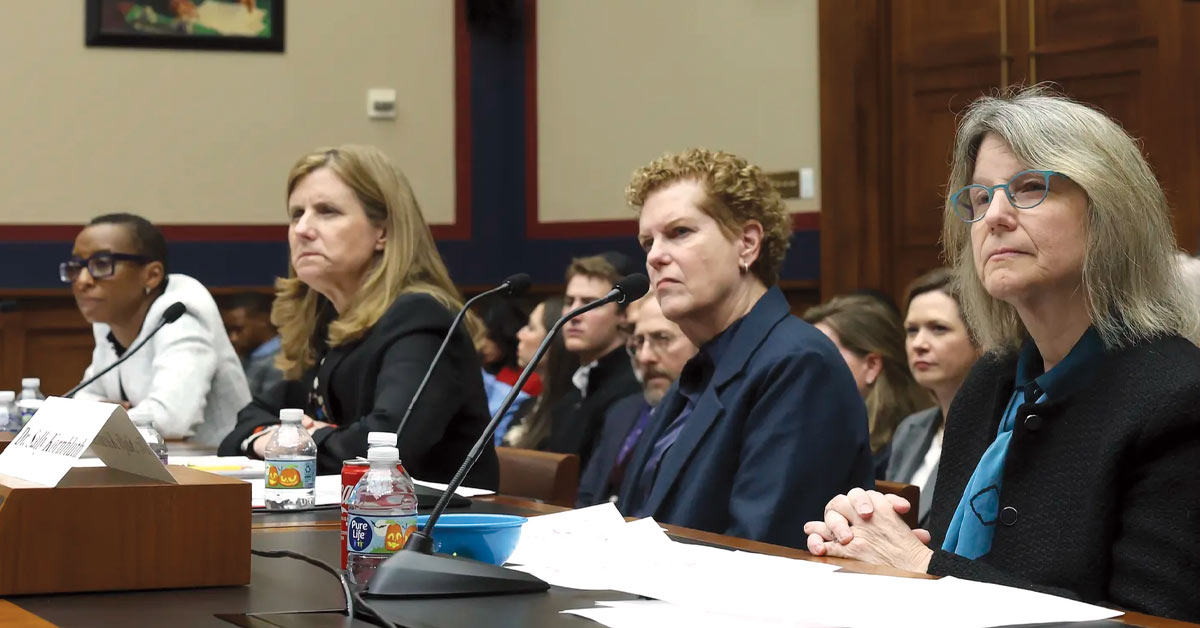
Nadell herself was the expert witness on antisemitism, sitting aside the three female Ivy League presidents during their infamous 2024 Congressional hearing that led to each of their ousters.
Her book renders convincing verdicts on successful and failed efforts combating American antisemitism. In the latter category, Nadell cites a failed 1892 campaign convinced that if everyone only knew of the contributions Jews made to Christopher Columbus’s journey four hundred years earlier, antisemitism would diminish. Comparable misplaced hopes linger today.
Six hundred-word op-eds, blogs, and social media rants (and book reviews like this) about antisemitism are ubiquitous. For those who have not yet entered the fray and for those who have, reading Antisemitism, An American Tradition is a necessary step to doing so more smartly and impactfully.
Jay Tcath is JUF’s Executive Vice President.
In this issue
-
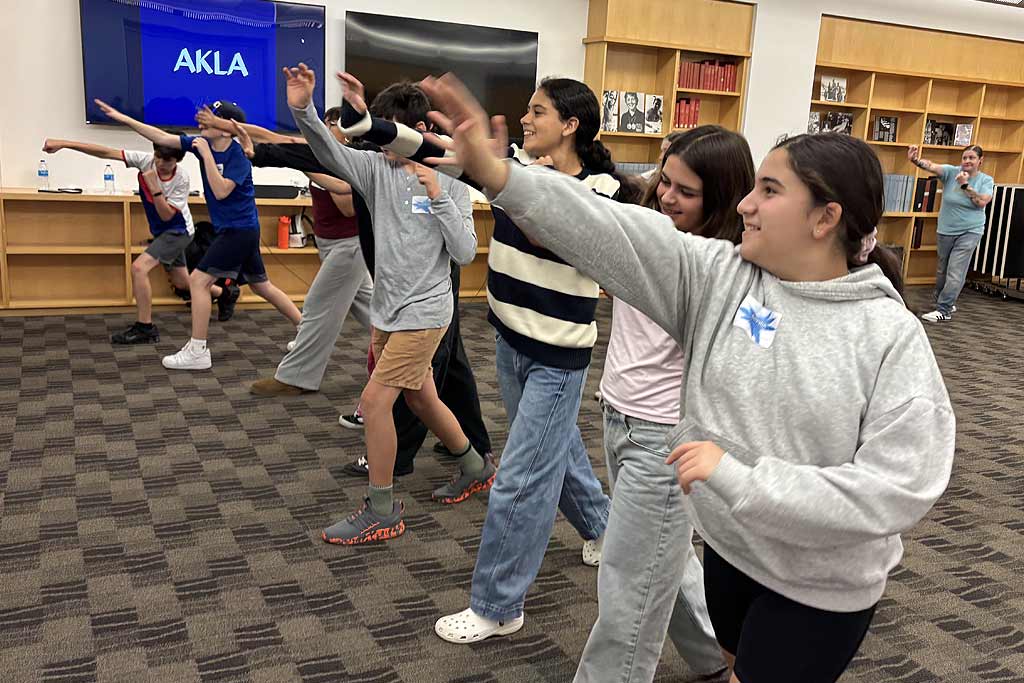
An ‘awesome’ new fellowship for teens
AKLA Chicago will be a free, five-week experiential experience for ages 12–14
Read more -
-