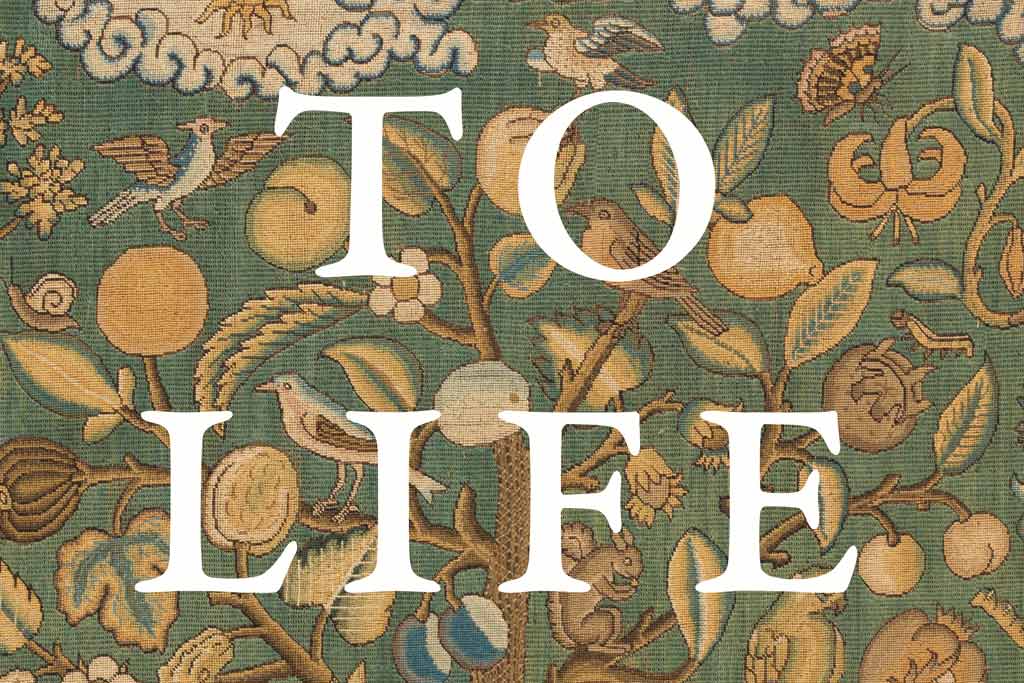
Longtime Skokie resident Hymen Marx, son of a kosher butcher, was an all-around nice guy—fun-loving and gregarious, devoted to his wife and two children. His warm personality even extended to the cold-blooded… as in snakes, for which he had a lifelong affinity, as well as to other reptiles and amphibians.
Famous for his jocularity, Marx, who passed away in 2007, was even better known as one of the most respected herpetologists in the country. Though he only held a bachelor’s degree—from Roosevelt University, in biology—he became a curator at the Field Museum of Natural History, making significant advances in the study of snakes. As Chicago naturalist and natural history writer Joel Greenberg recounts in To Life: Jews Exploring Nature (Rutgers University Press), Marx named one of his discoveries, Atractus obesus (fat ground snake), after his mother-in-law, Idelle. She “was not amused,” Greenberg wrote, “but did forgive him for the joke.”
Marx’s profile is one of a number of portraits of zoologists, ornithologists, entomologists, and other scientists of the natural world, half of whom had ties to Chicago. Greenberg researched and wrote all the biographies but one—that of the late zoologist Libbie Hyman (1888-1969)—which was penned by marine-invertebrate scholar Judith Winston.
Greenberg’s other works include A Feathered River Across the Sky: The Passenger Pigeon’s Flight to Extinction (Bloomsbury USA, 2013) and A Natural History of the Chicago Region (University of Chicago Press, 2004). The seed of this new book was his observation that, while there was plenty of literature about Jewish contributions to science and medicine, there was little written about Jews who study nature. Greenberg’s introduction for To Life lays out the multiple reasons for this dearth. (One, he contends is an uneasiness between Jews and the natural world dates back to early Jewish texts decrying idolatrous, pantheistic relationships with nature.)
Greenberg, a lifelong Chicagoan who spent his formative years in Skokie, set out to correct this error of omission. Before he whittled his book down to eight subjects, he amassed information about 70 Jews worldwide who’d made notable accomplishments in the natural sciences.
From the start, To Life was a labor of love. Greenberg holds dual degrees in law and environmental policy from Washington University and worked for years at a number of public agencies. For as much time as he’s spent at desks, he has relished every opportunity to be in nature—or to reflect and write about it. One of his partners in crime, he said, was his late mother, Miriam, who helped him collect data for A Natural History of the Chicago Region.
Greenberg said that both she and his late father, Sam, encouraged his early love for all things scientific, though neither had college degrees. If he expressed an interest in birds, they didn’t think twice about calling the Evanston North Shore Bird Club to introduce him to other ornithophiles or taking him on field trips to catch a glimpse of a rare species.
“I was collecting butterflies for a while,” Greenberg recounted, “so my father called the Chicago Academy of Sciences” to find out how he might whet his son’s curiosity about lepidoptery, the scientific study of butterflies and moths. A typical shopping day for the family would involve dropping off the young Greenberg at a bookstore, where he would pass the hours immersed in books about living things, large and small, while his parents bought groceries.
Greenberg looks back at the efforts of his parents, children of immigrant Jews, with tremendous love and affection. A keepsake from his childhood years is a stuffed toy Steiff okapi, which his parents bought him around the time they shlepped down to the Brookfield Zoo simply because he wanted to see the “zebra-giraffe” indigenous to Central Africa.
“I wasn’t born with a silver platter, but a plastic platter,” said Greenberg, explaining that his family’s modest circumstances never prevented them from doing what they thought was best for him and his younger sister.
Robert Nagler Miller is a journalist and editor who writes frequently about arts and Jewish-related topics from his home in New York.
In this issue
-
This Passover, four more questions
The youngest guests at our seders will likely ask the four traditional questions, but here are four other questions to chew on over matzah this holiday.
Read more -
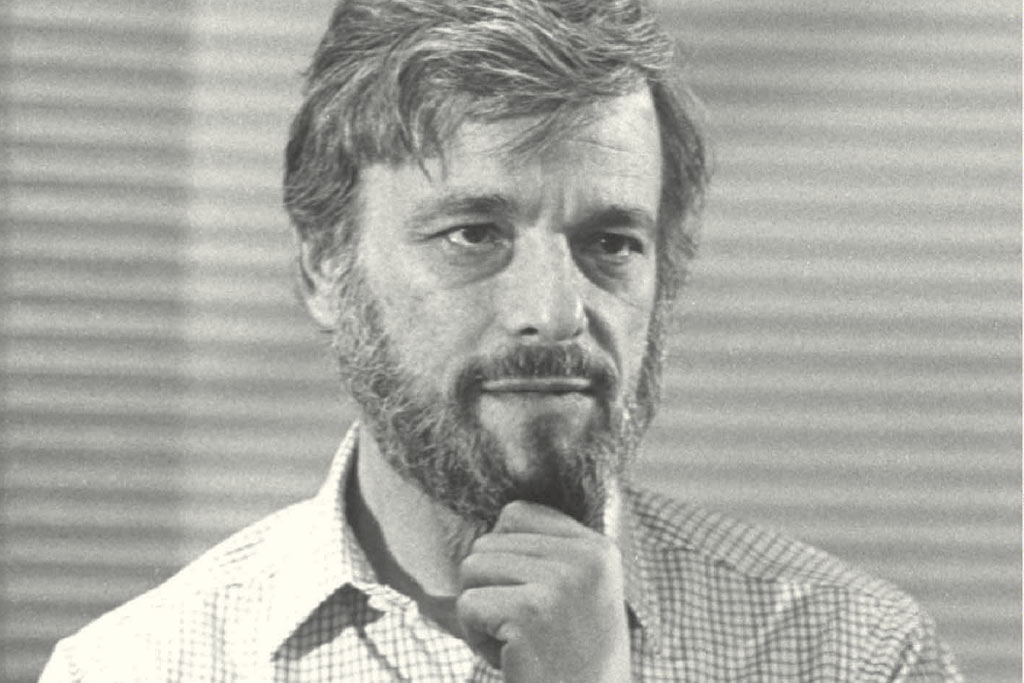
New Stephen Sondheim biography details the towering figure
‘Walking encyclopedia of musical theater’: New Stephen Sondheim biography details the towering figure
Read more -

Celebrating spring and a crop of new productions
A celebration of Passover, warmer weather, and a crop of new productions
Read more