All the news (un)fit to post
DANIEL G. GOLDWIN
In September, JUF led a small but important delegation to Israel. JUF Rabbinic Scholar Rabbi Yehiel E. Poupko and I accompanied two representatives from Christianity Today–the largest Evangelical media platform in the United States–to Israel, in advance of the platform opening a Jerusalem office. During the visit, we introduced the delegation to several potential partners, sources, and Israeli officials.
The trip was intended to be educational, informational, and helpful for them. But, along the way, I had two unique experiences that helped me better understand how news reporting from Israel can be understood, manipulated, and even subject to intimidation, both intentionally and not.
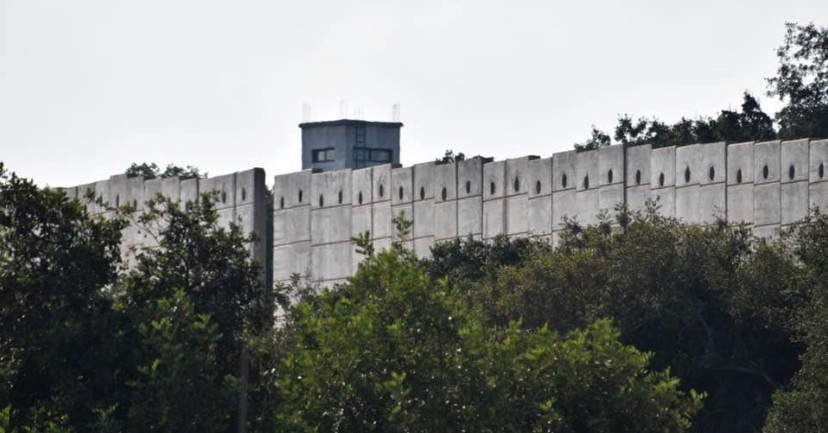
Our small delegation visited Israel’s borders with Lebanon and Gaza. In both cases we witnessed just how threatening Israel’s terrorist neighbors can be. Along the Lebanese border we saw a Hezbollah watchtower that abuts the Israel’s border wall, allowing Hezbollah terrorists to track people driving along Israel’s northern border. Later we visited Nativ Ha’Asara, a moshav along Israel’s border with northern Gaza. Similarly, we saw a Hamas watchtower that peered into this farming community, never allowing its residents to forget how close they are to terrorists.
I posted pictures of both watchtowers on Facebook with nearly identical captions, “Hezbollah/Hamas looking at me looking at Hezbollah/Hamas.” However, Facebook took down my post about Hamas, saying that it violated their “community standards.” Facebook also restricted my account for 30 days. Facebook later rejected my appeal, which I had based on the assertion that Facebook misunderstood my post.
It’s good that Facebook is paying attention to the word “Hamas,” though I do wonder why they ignored “Hezbollah.” However, it’s not enough for Facebook to just pay attention, they need to understand context. For example, if the lesson learned from this suspension is that writing about Hamas on Facebook at all will get your account restricted (or worse), we are losing an important tool–Facebook’s reach–to educate the world about Hamas and how it kills, maims, and terrifies Israelis and Palestinians.
In case I needed more proof of why Hamas needs to be exposed as a terrorist organization, not the benevolent rulers of Gaza, I got it while meeting with Israel’s Ministry of Foreign Affairs.
During the August 2022 conflict between Israel and Palestinian Islamic Jihad in Gaza, Hamas issued rules for how journalists must report from Gaza. Though Hamas stayed out of the actual fight, they wanted to ensure that only anti-Israel stories were told in the press.
All reporters working in Gaza must be accompanied by a Hamas approved “sponsor” at all times. As the conflict started, Hamas issued special rules and guidelines that all sponsors were required to enforce for their journalists. (See screenshots #3 & 4) The rules included:
-
“It’s totally forbidden to do stories mentioning the reasons for martyrdom are local [Palestinian] fire.”
-
“It’s totally forbidden to do a story showing that resistance forces [Hamas or Palestinian Islamic Jihad] caused the wave of escalation…or holding them responsible for what happened.”
-
“If the journalist or the foreign medium wrote about this topic, the local sponsorship would be halted.”
Though Hamas officially rescinded the rules a few days after issuing them, the damage was done. Going forward, reporters and sponsors now know exactly what is expected of them, or they will lose their access to report in Gaza. Journalists, government officials, community leaders, and others need to understand how terror groups manipulate information and use their authority to repress the truth. Social media is one way that we can expose Hamas and its tactics, unless of course we cannot use the word “Hamas” while writing about them on those platforms.
This trip was made possible in part by the Midge Perlman Shafton Non-Jewish Influentials Israel Missions Fund.
Daniel G. Goldwin is Executive Director of Public Affairs for JUF.