An apology…a half century later
OFER BAVLY
In September, Israelis marked the 50th anniversary of a tragedy well known even to those born years after. The 1972 Olympic Games hosted in Munich, Germany, were planned as a global event of friendly competition. For the Israeli Olympic team, they ended in a massacre that resonates to this day.
The games were West Germany’s opportunity to show the world it had truly transformed itself after World War II, to showcase a new democratic Germany, provide an additional narrative to the bitter memory of the 1936 Berlin Olympics. Those games, exploited by Hitler to demonstrate Nazi strength, had been the last before the war.
In 1972, Germany sought to host a different kind of Olympics, dubbing it “The Happy Games.” That approach meant running the Olympics with as little armed or uniformed presence as possible. Some 4,000 policemen guarded the event, in civilian clothes and unarmed. That decision turned out to be fateful-and fatal.
On September 5, a group of Palestinians, belonging to the “Black September” terror organization, effortlessly entered the Olympic village and the building with the Israeli team. The terrorists burst into the team’s room, immediately killing two of them. Other team members–including athletes, trainers, and Olympic judges–put up a brave fight, but were overwhelmed by the heavily armed terrorists.
Some Israelis managed to escape, but nine were held hostage for more than 19 hours. The terrorists’ demand? The release of 200 of their comrades from Israeli jails, including the future (and infamous) Chicagoan Rasmea Odeh. It was later learned that the hostages had been tortured during their captivity.
When Israel offered the Germans the assistance of an elite hostage rescue team, the Germans refused and, instead, mounted their own operation. A series of failures on the part of the German military and police, including lack of training, led to the deaths of the remaining nine hostages.
The Munich massacre was one of the worst acts of terror the world had ever seen. Then, the International Olympic Committee (IOC) added insult to injury for the Israelis by waiting a full seven hours before temporarily halting the games–only to resume competition the very next day.
The very concept of the Olympic Games–established in Ancient Greece to bring warring states to a truce–was tarnished by a massacre not deemed important enough by the IOC to stop the games.
Worse still, the German government didn’t admit any wrongdoing for 50 years. Germany’s compensation to the victims’ families was ridiculously low; the victims’ families threatened to boycott the 50th anniversary memorial service. Israel’s President Isaac Herzog, likewise, threatened to boycott the memorial service unless Germany admitted responsibility for the botched affair–with compensation commensurate with the magnitude its culpability.
Last month, on the 50th anniversary of the bloodshed, the German government finally apologized for the massacre. Germany, led by President Frank-Walter Steinmeier, took full responsibility. He signed a compensation agreement with all the families–five times their initial offer. Perhaps most importantly, the German government agreed to create a joint German-Israeli team of historians to examine all the sealed papers and records to finally tell the entire story of that tragic event.
In the aftermath of the massacre, then-Prime Minister Golda Meir launched Operation “Wrath of God.” The operation aimed to hunt down and kill the Palestinian terrorists responsible. Over seven years, Israel’s Mossad intelligence agency found and killed eight of them–including their mastermind, Ali Hassan Salameh.
Fifty years later, we still remember what happened–and we will soon know the full details. May the families of the victims be comforted by Germany’s belated acceptance of responsibility and the Jewish people’s enduring solidarity.
Ofer Bavly is the Director General of the JUF Israel Office.
In this issue
-
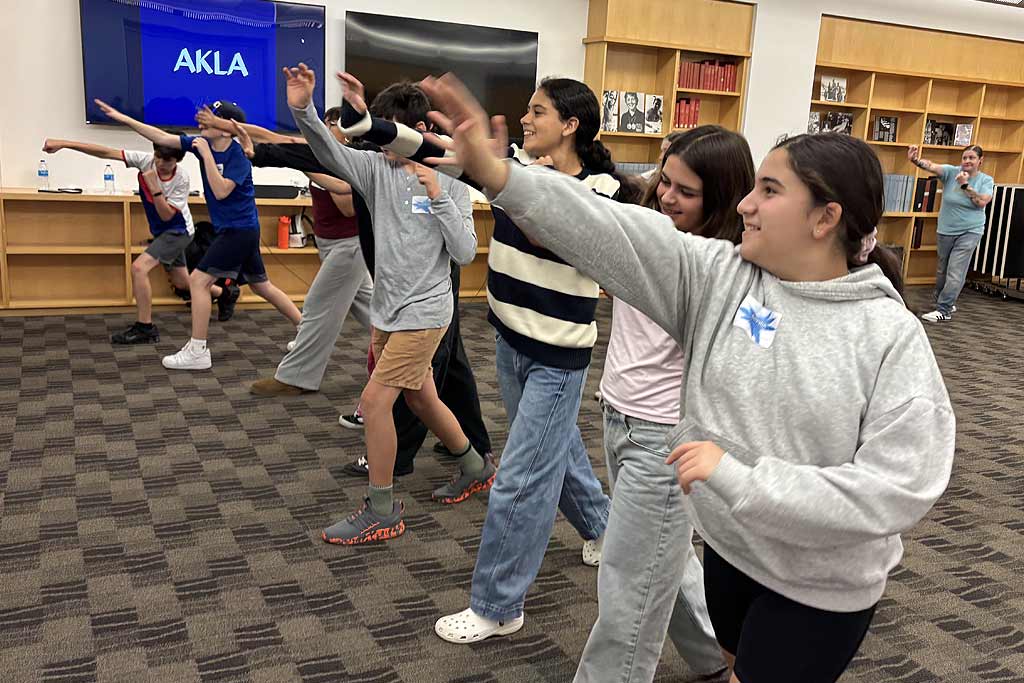
An ‘awesome’ new fellowship for teens
AKLA Chicago will be a free, five-week experiential experience for ages 12–14
Read more -

-