Art in extraordinary times
BETSY GOMBERG
Have you been watching the Netflix series Transatlantic ?
It centers on Varian Fry, an American journalist who travels to Marseille in 1940 under the auspices of the Emergency Rescue Committee to rescue blacklisted artists and intellectuals from the Nazis. Fry and his colleagues represent a mix of nationalities, religions, and motivations. At great peril, they provide hiding places, visas, financial assistance, and ways to escape to thousands, including artists Max Ernst, André Breton, Marcel Duchamp, and Marc Chagall.
Transatlantic is fiction, adapted by Anna Winger (Unorthodox) from the novel The Flight Portfolio . But its characters are based on real people and its story on real events. Throughout, it portrays the power of art during dark times.
While the specifics are dramatized (I don’t know if Peggy Guggenheim actually threw Max Ernst a Surrealist-themed costume party with a guest list of art-world refugees), the frenetic creativity rings true.
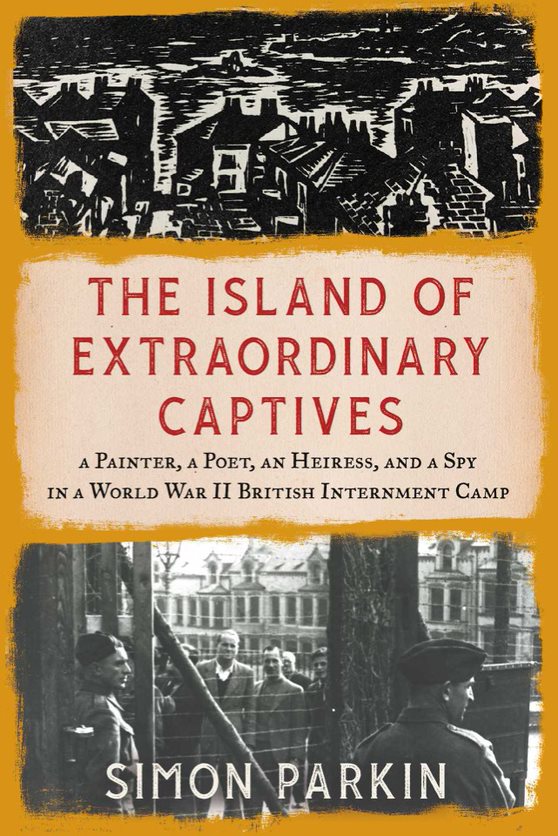
The Island of Extraordinary Captives by journalist Simon Parkin also centers on creativity in desperate times. The book is set in Britain at the same time as Transatlantic . Drawing on declassified documents, it adheres closer to the historical record. The less well-known story it tells is equally remarkable.
During World War II, Britain declared that German and Austrian men over the age of 16 were “enemy aliens.” As with the xenophobic actions against Japanese Americans in the U.S. and Italians in Canada, these men were imprisoned or interned. (Shockingly, the policy didn’t separate those fleeing Nazi oppression from those with fascists leanings, thus imprisoning Jewish refugees with Nazis.)
Peter Fleischmann is an art student from Berlin, brought to England on the Kindertransport rescue. He is imprisoned on the Isle of Man among artists, scholars, writers, and musicians, including luminaries of the German and Austrian avant-garde. Camp commander Captain Hubert Daniel encourages the internees’ artistic and intellectual ambitions, and they transform “a prison into a university, a boarding house into an art gallery…and a jumble of wires into a broadcasting station.”
You will meet an astonishing cast of characters who provide Peter with an art education unlike any other. They create abstract works in stairwells, recite Dadaist poems, use portraits as currency, and present increasingly sophisticated theatrical performances at the “Barbed-Wire Cabaret.”
They even conjure up an artists’ café based on Café du Dôme in Paris. Although situated in a laundry, it is equally filled with intense debate, as they weigh the injustice that brings them together and connections and creativity that will influence their lives and careers.
Betsy Gomberg reads (and sometimes writes about) Jewish books. She is Spertus Institute’s Director of Marketing & Communications.