At Negev Summit, four Arab leaders met on Israeli soil
OFER BAVLY
Israeli leaders have been taking on a more prominent role both regionally and internationally. While President Herzog met Jordan’s King Abdullah and Turkish President Erdoğan, Prime Minister Naftali Bennett visited Bahrain on a first-ever visit by an Israeli Prime Minister, and then Egypt to meet President Al-Sisi and the Heir to the Throne of the United Arab Emirates.
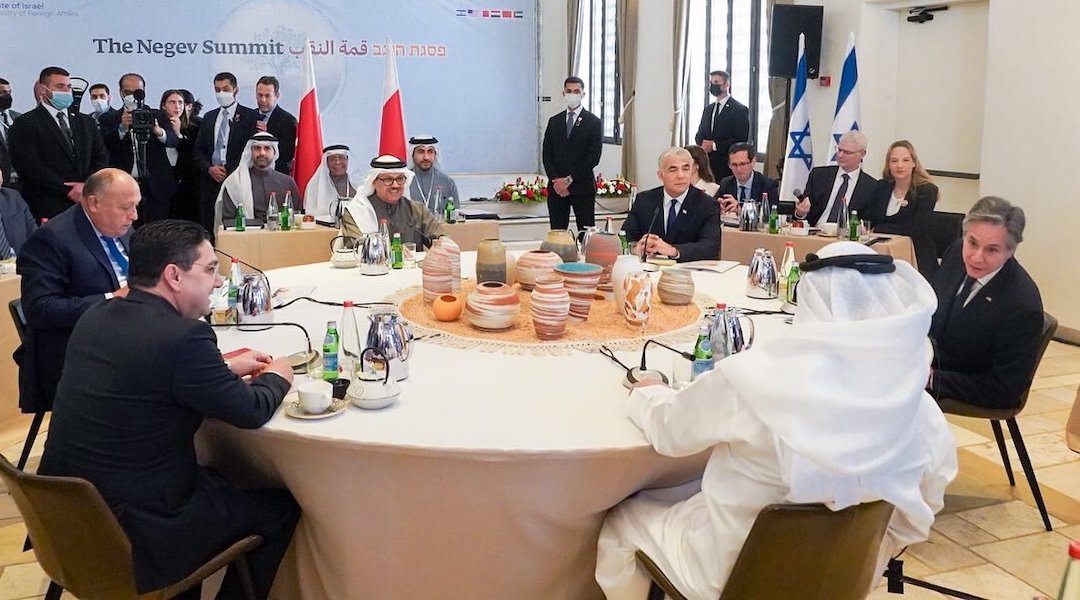
The pinnacle of this recent diplomatic activity was the “Negev Summit.” The high-level meeting hosted by Foreign Minister Yair Lapid at the Sde Boker kibbutz in the Negev included U.S. Secretary of State Anthony Blinken and the Foreign Ministers of the UAE, Bahrain, Morocco, and Egypt.
The location of the Negev summit carries historical symbolism as the place to which Israel’s founding father David Ben Gurion retired when he left politics. His vision was to see the Negev desert blossom as a symbol of the resurrection of the Jewish people in its historic homeland. Convening an international summit with four Arab foreign ministers near Ben Gurion’s symbol-laden tomb, is a potent message to the peoples of the region.
The importance of the summit cannot be overstated. As recently as two years ago, such a meeting of four Arab foreign ministers on Israeli soil was unimaginable. The immediate reason for the summit was to discuss Iran, the one topic that unites both the moderate Arab regimes and Israel. There is growing concern among them that if the nuclear deal fails to strongly address the key issues, Iran will increasingly play a destructive, destabilizing role throughout the region.
The participation of Secretary Blinken allowed the foreign ministers to impress upon the U.S.-directly and discretely-their concerns about the impending Iran deal. While as of the first of April, a deal seems unlikely to satisfy Israel and her neighbors, there are additional topics related to Iran that are of considerable concern to summit participants-especially whether to de-list the Iranian Revolutionary Guard Council from the so-called black-list of terror organizations.
The summit is another example of Israel playing an unprecedented role on the regional stage. With Prime Minister Naftali Bennett recruited by both Putin and Zelensky to facilitate a cease-fire, Jerusalem is taking on an outsized diplomatic role on the global stage. Those efforts included a first visit by a foreign head of state (Bennett) to Moscow after Russia’s invasion of Ukraine. Multiple telephone conversations between Bennett and Putin, and between Bennett and Zelensky, followed.
Israel, not a direct party to the dispute and not a part of the European Union or NATO, is considered by both Russia and Ukraine as an “honest broker,” allowing it to play a pivotal role which may or may not end up in success but has surely highlighted the unique, positive role Israel does – and can increasingly – play on the international stage.
Israel, once treated by many as a pariah state, especially in the Middle East, and still subject to the slander of practicing apartheid, is finally recognized as a trusted, helpful actor in global affairs. We have certainly come a long way from the days of isolation and ostracism.
While there is still far to go, Israel is helping address the world’s two most pressing international security issues- Ukraine and Iran. The Jewish State is helping in multiple ways, ways that are good for the Jewish State, the region it resides in, and the community of nations for which it still strives to be a light unto.
Ofer Bavly is the Director General of the JUF Israel Office.
In this issue
-
An ‘awesome’ new fellowship for teens
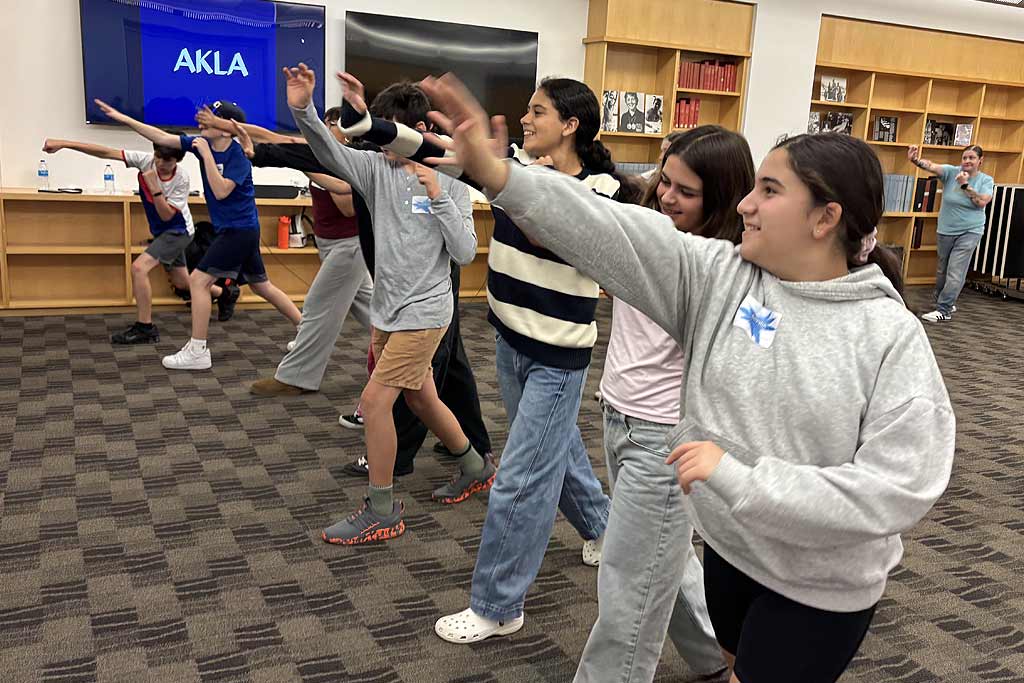
AKLA Chicago will be a free, five-week experiential experience for ages 12–14
Read more -
-