Chagim will remind us how Jews both adapt to the new and return to the familiar
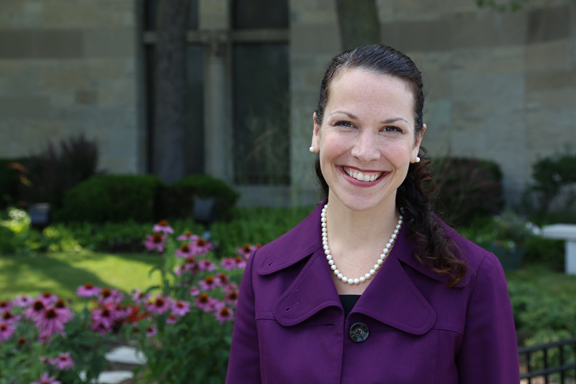
RABBI SHOSHANAH CONOVER
Some people say that the chagim arrive early this year. Others say that the Jewish holidays always come right on time in our Jewish calendar. Either way, we can all agree that this year’s holiday season is nothing like we could have imagined-even after the Yamim Noraim (High Holy Days) of 5781.
Yet, on Sukkot, we will hear the words of Kohelet who, with a tone of ennui, wrote: “What has been will be again, and what has occurred will occur-there is nothing new under the sun.” (Ecclesiastes 1:9)
In some sense, of course, this is true. This is not the first time that the world and the Jews living within it have been forced to adapt. In fact, adaptation is what has allowed Jews to survive, and at times thrive, in the Diaspora and in Israel. So, innovating in the face of adversity has become part of our Jewish DNA.
At the same time, we return to the same treasured rituals, prayers, and traditions that ground us in our seasons. In fact, the prayerbook that we use during the High Holy Days is called a machzor , which comes from the Hebrew word for “return.” In these times of both distress and hope, we return to the prayers that have carried our people through countless tragedies and opportunities.
In the opening pages of the Reform Rosh Hashanah Machzor , Mishkan HaNefesh , we read words that come later in Ecclesiastes:
There is a time for everything,
and a season for every activity under the heavens:
a time to be born and a time to die,
a time to plant and a time to uproot…
a time to tear down and a time to build,
a time to weep and a time to laugh,
a time to mourn and a time to dance…
a time to embrace and a time to refrain from embracing,
a time to search and a time to give up,
a time to keep and a time to throw away,
a time to tear and a time to mend.
a time to love and a time to hate,
a time for war and a time for peace (Ecclesiastes 3).
Ecclesiastes sets each aspect of life against its opposite. Seemingly, with a great sigh, he lists a litany of what life offers us over the tedium of time in a normal life. The order of the universe is so predictable that it becomes boring.
However, 5781 has felt anything but normal. The Israeli poet Yehuda Amichai calls out the disordered nature of life. He writes:
A man doesn’t have time in his life
to have time for everything.
He doesn’t have seasons enough to have
a season for every purpose. Ecclesiastes
was wrong about that.
A man needs to love and to hate at the same moment,
to laugh and cry with the same eyes,
with the same hands to throw stones and to gather them,
to make love in war and war in love.
In these disordered times that often feel as chaotic as they do hopeful, Amichai’s words resonate. We seek to integrate opposing forces in one inspired whole. Over the stretch of these days of the Yamim Noraim , we will weep and laugh in the same service, search for the best within ourselves as we give up on unrealistic goals from yesteryear. We will feel both the intimacy and the grandeur of this sacred season-with melodies and prayers that both soothe and awaken our souls.
This year, may we find ways to return to the holy as we enter the year 5782 under the same sun.
Shanah tovah !
Rabbi Shoshanah Conover is the Senior Rabbi of Temple Sholom of Chicago.
In this issue
-
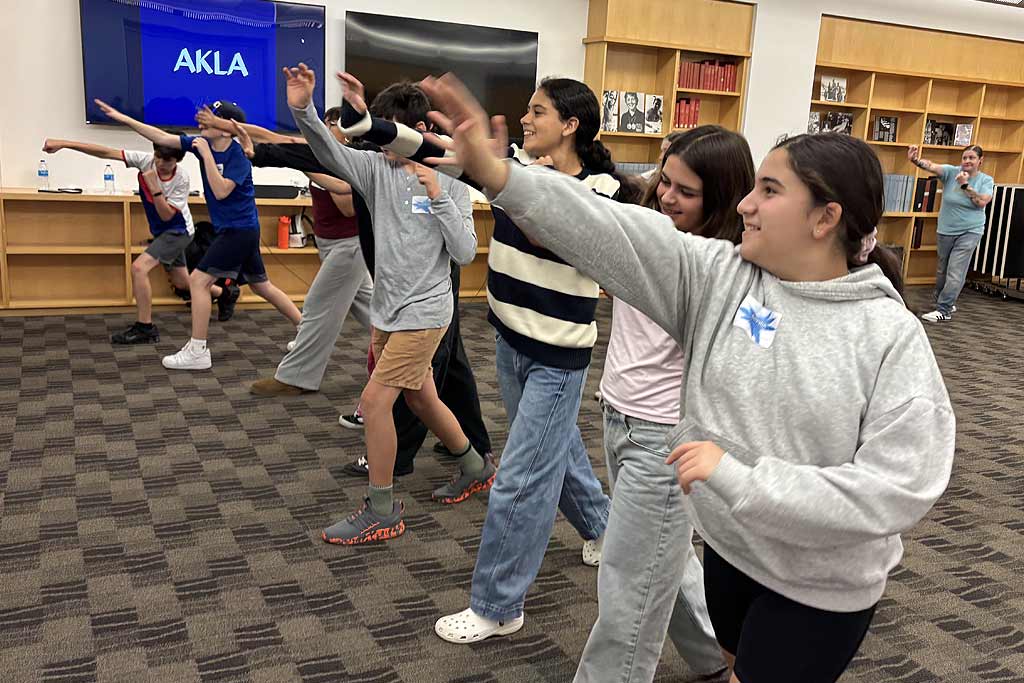
An ‘awesome’ new fellowship for teens
AKLA Chicago will be a free, five-week experiential experience for ages 12–14
Read more -
-