Chanukah gifts in multiple art forms
HEDY WEISS
It wouldn’t be Chanukah without a beloved family menorah gradually becoming filled with colorful (if precariously tilting) candles, the irresistible scent of latkes frying, the spinning of dreidels, and the promise of chocolate gelt wrapped in gold foil. But there are plenty of additional ways for those of all ages to celebrate this beloved Jewish holiday, and here is a rundown of some of the possibilities:
A ‘Hanukkah a cappella’ concert
Founded in the early 1990s, Chicago a cappella is an ensemble comprised of ten exceptional vocalists who are “dedicated to the art and appreciation of ensemble singing” and draw on the music of a wide range of religions and cultures. This year the ensemble, led by music director John William Trotter, will perform its newest concert, “Hanukkah a cappella,” at two synagogues–one in the Hyde Park neighborhood and another in Wilmette.
With the goal of “digging deeper than ‘The Dreidel Song,’ and aiming at the full meaning of the Festival of Lights, the concert will feature works by eight living composers. And, as described by Matt Greenberg, Chicago a cappella’s executive director, the songs “delve into the rich heritage of Jewish music for Chanukah, both traditional and modern, with its humor, expressiveness, and eloquence.” And these songs range from “heartfelt prayers to jazzy and playful holiday tunes that showcase the creativity and vitality of American Jewish music while revealing the multi-layered joy, richness, and meaning of this festival.”
Among the dozen pieces on the concert’s song list are several that have been arranged by jazz pianist/composer Robert Applebaum, including ” Ma’oz Tzur ” (a Jewish liturgical poem), and “Oh Chanukah” (a traditional Hebrew folk song), along with ” Haneirot Halalu ” (in honor of the miracles and delivery), ” Al Hanusim ” (thanks for the miracles), and “Funky Dreidl (I Had a Little Dreidl).”
Performances are at Congregation Rodfei Zedek, 5200 S. Hyde Park Blvd. in Chicago (Sat., Dec. 10, at 8 p.m.), and Congregation Sukkat Shalom, 1001 Central Ave. in Wilmette (Sun., Dec. 11 at 4 p.m.). Performances also will be available “on demand.” For tickets visit Chicagoacappella.org/tickets or call 773-281-7820.
The return of ‘Hershel’
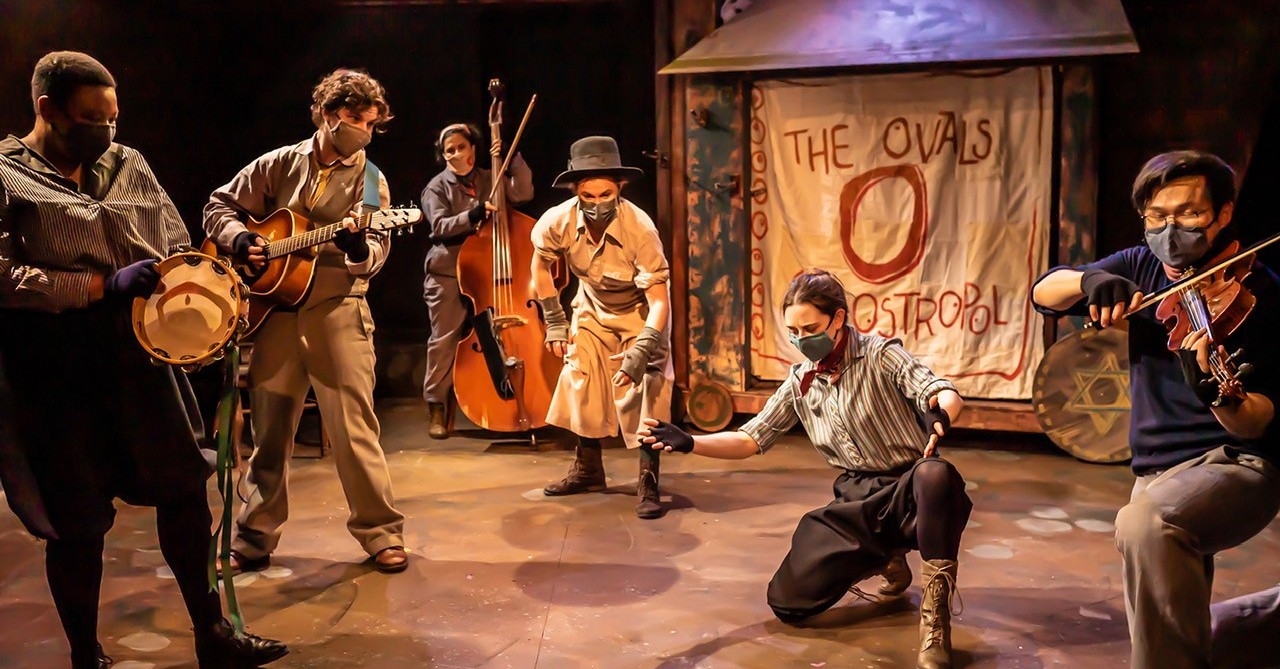
For those in search of an ideal family entertainment there is the return (for the fifth time) of Strawdog Theatre’s popular production of ” Hershel and the Hanukah Goblins ,” the hourlong show based on the Caldecott Honor-winning children’s book by Eric Kimmel. The show-which features live actors, puppets, and a bit of magic-spins the story of traveling actors who arrive in a town where they find that no one is celebrating Chanukah. And the question is this: Can Hershel of Ostropol, a fabled Ukrainian city, outsmart the goblins who haunt the town’s old synagogue? The play is adapted by ensemble member Michael Dailey, with a score by Jacob Combs and direction by Hannah Todd.
The show runs Dec. 10-31 at The Edge Off Broadway Theater, 1133 W. Catalpa. For tickets visit strawdog.org.
Celebrating Irving Berlin
He was born Yisrael (Isadore) Baline, but the world knows him as Irving Berlin. He was one of eight children in a Yiddish-speaking Orthodox Jewish family from a shtetl in what is today Belarus. And in 1893, at the age of five, he arrived, like many thousands of other Eastern European Jews, on Ellis Island.
Berlin grew up impoverished on New York’s Lower East Side, had barely any formal education, and began working at the age of eight to help support his family. Yet he had an ear for the music he heard on the street. And by 1911, he had become a self-taught songwriter, penning a little number titled “Alexander’s Ragtime Band,” that turned him into an overnight celebrity.
The irony, of course, is that Berlin, who would live to the age of 101, would go on to write “White Christmas” and “Easter Parade,” famously celebrating two decidedly non-Jewish holidays. He also would be heralded by composers George Gershwin and Jerome Kern, his brilliant contemporaries, also of Jewish parentage. Kern described him in this way: “Irving Berlin has no ‘place’ in American music; he ‘is’ American music.”
This month, Music Theatre Works will present Irving Berlin’s “White Christmas” at the North Shore Center for the Performing Arts in Skokie., the musical based on the classic 1954 film whose score includes such classics as “Blue Skies,” “I Love a Piano,” “How Deep is the Ocean” and, of course, the title song. The show, with a live orchestra, will run Dec. 15-Jan. 1. For tickets visit musictheaterworks.com or call 847-673-6300.
Bob Dylan captured through seven songs
Of course, if “the weather outside is frightful,” as some forecasters have predicted for this winter in Chicago, there is always that other great medium of entertainment-a book. And a good place to start might be with Greil Marcus’ Folk Music, A Bob Dylan Biography in Seven Songs , a recent release from Yale University Press. The biography marks the latest of cultural critic Greil Marcus’ many books about the iconic singer-songwriter and recipient of the 2016 Pulitzer Prize for Literature, cited “for having created new poetic expressions within the great American song tradition.” Of course, it also bears noting that Dylan, born Robert Allen Zimmerman in 1944–the grandson of Jewish immigrants from Lithuania and Ukraine, who grew up in Minnesota, and arrived in New York City in 1961–famously embraced evangelical Christianity from 1979-1981, before returning to his roots.
The seven songs that are the focus of Marcus’ book range from “Blowin’ in the Wind” (1962) to “The Lonesome Death of Hattie Carroll” and “The Times They Are A-Changing” (both from 1964), to “Desolation Row” (1965), “Jim Jones” (1992), “Ain’t Talkin'” (2006), and “Murder Most Foul” (2020). And as Marcus writes in the opening chapter of his book (a work that does not always flow entirely smoothly), “The engine of Dylan’s songs is empathy; the desire and the ability to enter other lives, even to restage and re-enact the dramas others have played out, in search of different endings.”
Hedy Weiss, a longtime Chicago arts critic, was the Theater and Dance Critic for the Chicago Sun-Times from 1984 to 2018, and currently writes for WTTW-TV’s website and contributes to the Chicago Tonight program.
In this issue
-

This Passover, four more questions
The youngest guests at our seders will likely ask the four traditional questions, but here are four other questions to chew on over matzah this holiday.
Read more -
New Stephen Sondheim biography details the towering figure
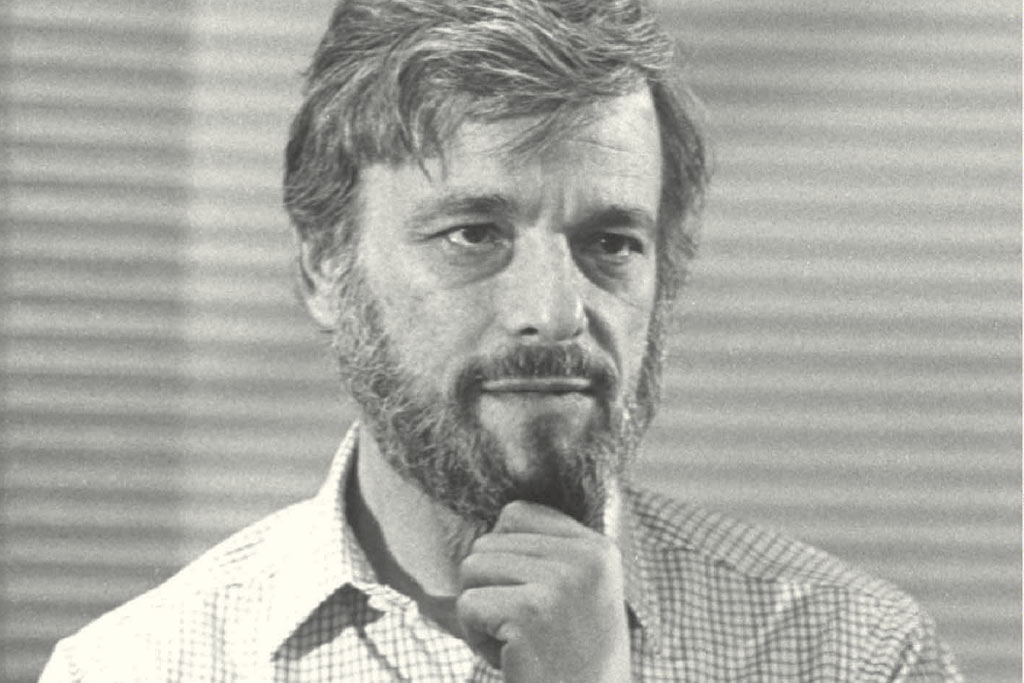
‘Walking encyclopedia of musical theater’: New Stephen Sondheim biography details the towering figure
Read more -
Celebrating spring and a crop of new productions
A celebration of Passover, warmer weather, and a crop of new productions
Read more