Choosing Judaism away from home
ELIANA STERN
As a Skokie native, I grew up alongside people from different backgrounds and cultures, but everywhere I turned, I was surrounded by Jewish community.
Several years ago, I embarked on a new adventure as a student at Lawrence University. Driving through Wisconsin, I thought to myself, “Where are the synagogues, kosher market, and bagel shop?” They were nowhere to be found along I-41.
Starting school in September meant that the High Holidays were right around the corner, but so were move-in, organizing class schedules, and meeting and reuniting with friends. Looking back on freshman year, I wasn’t sure how I was supposed to celebrate my Judaism around the High Holidays. When you grow up with traditions from a young age and then leave home, it can be disorienting-but also exciting. You have a new opportunity to choose what traditions you celebrate, and how.
I remember my first Shabbat on campus. I was confused by the differences in Shabbat there, versus what I have practiced for the last 18 years. Why were people saying “b’tayavon” instead of “amen?” What if I wanted to stick to my traditions? On the other hand, what if I could learn other rituals, ways to celebrate, or even create my own tradition with a new Jewish community?
My small-but-mighty Hillel embraced the opportunity for students to learn from each other. It is a place where all ways of observing Judaism are welcome. Without being open to trying something new, I wouldn’t have learned other versions of Shabbat prayers, spent nights looking at stars under the sukkah, or learned new recipes. I consciously made a choice to observe holidays differently, and to expose people to my own traditions.
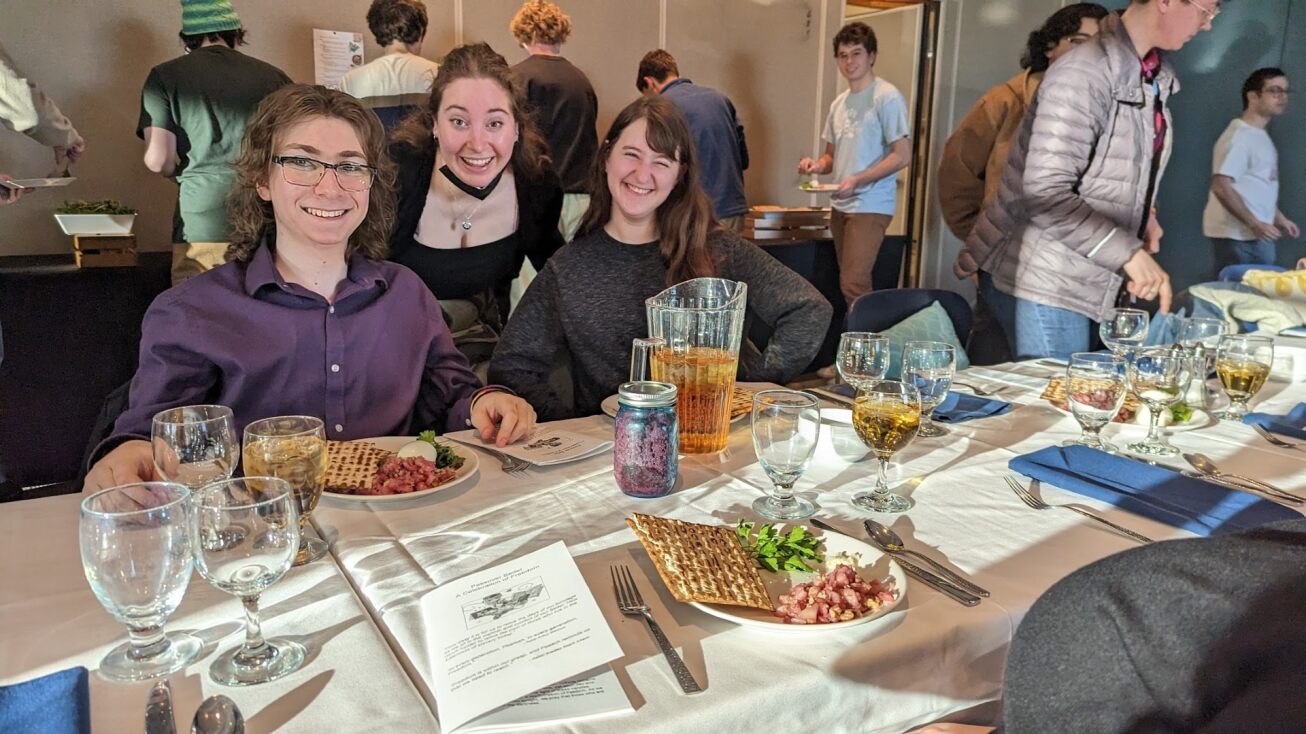
For example, Passover in Skokie meant observing the traditional rules around food, because it was accessible to me. There were less opportunities to find kosher food in Appleton, Wisc., so I had to adapt. Although this did not always align with my values at home, I came to appreciate and bond with others over new holiday recipes.
Experiencing a Jewish community in college means taking risks. Whether it’s your first time walking into the spiritual space on campus or wearing your Jewish star, you make a choice to display Judaism publicly. Especially now with antisemitism on the rise, and its prominent role on college campuses, it can feel like a risk just being Jewish.
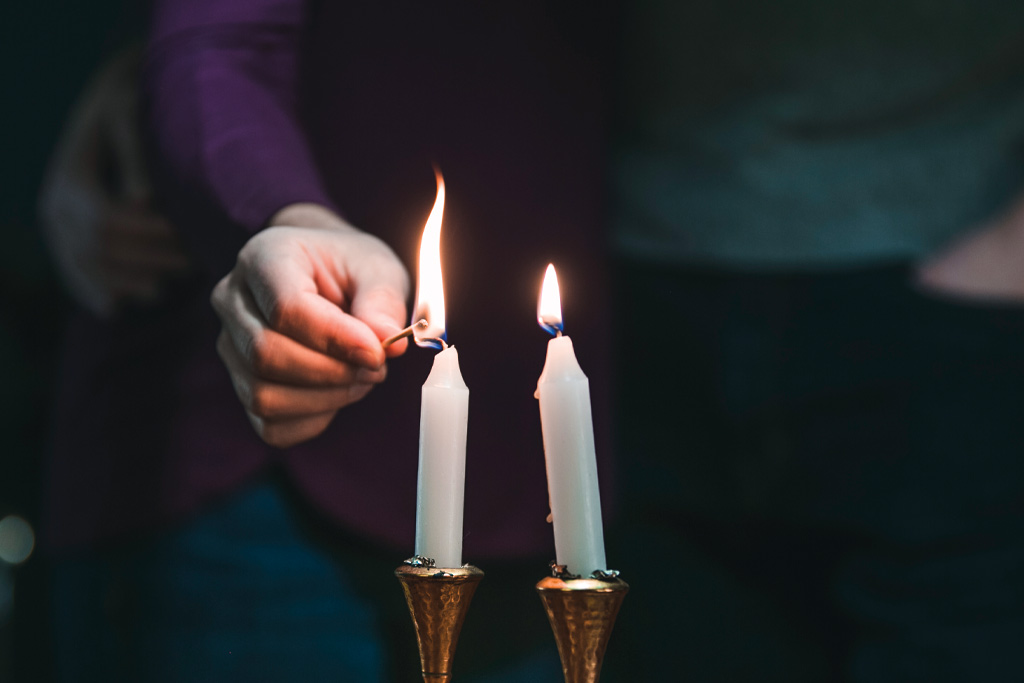
For me, being Jewish on campus is about community. It is about setting aside intentional time for Shabbat, singing songs, using my Yiddish slang (without having to explain the meaning), and noshing together. In Jewish spaces this year, I am sure each college will acknowledge the hurt our community feels. It was hard for me to see the hurt and not feel the classic Jewish guilt when celebrating a holiday.
As Jews we can hold space for both joyous occasions and solemn ones. Isn’t that what Judaism is all about?
For me, I will miss those Shabbat nights when I said “amen” and others said “b’tayavon,” knowing that we each come from a place of love and appreciation for our Jewish community, despite our debates over what to say at the end of the prayer.
Eliana Stern, a 2024 graduate of Lawrence University, spent this summer as a program assistant for JUF’s Lewis Summer Internship Program. She is currently studying for her master’s degree in clinical mental health counseling at Northwestern University’s The Family Institute.