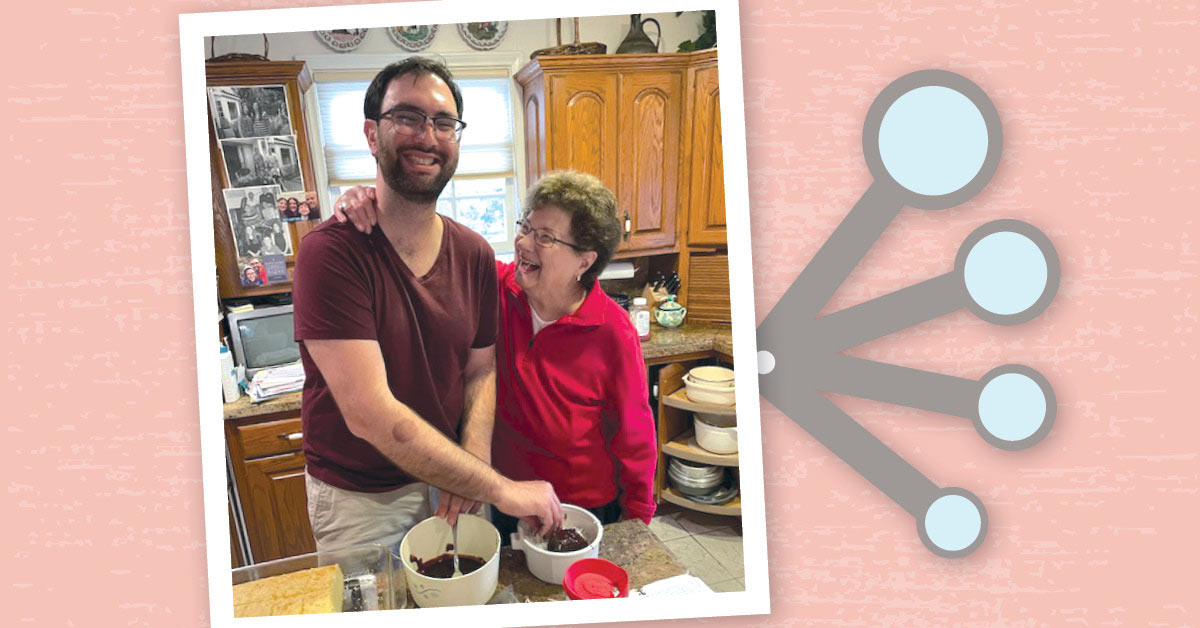
We found the cookbooks three years ago, shortly after my mother-in-law died. At the time, they felt too heavy to open-emotionally, not physically. They were tucked into boxes, moved from her home to ours, then through two different houses as my husband and I built our life together. Each time we unpacked, the boxes came along, quietly waiting.
This summer, I finally was ready to look inside. I expected the usual relics of family life-holiday cards, handwritten notes, maybe a few sentimental keepsakes. What I didn’t expect were cookbooks published by the Temple Isaiah Sisterhood in Los Angeles and National Council of Jewish Women.
These weren’t just cookbooks; they were time capsules. Inside were recipes submitted by generations of women, including my grandmother- and great-grandmother-in-law. Leafing through the pages felt like stepping back in time. Recipes were credited to “Mrs. [husband’s name].” Though the women were hidden behind this formality, their personal flavors, techniques, and humor leapt off the page.
Some dishes felt timeless: brisket, chopped liver, stuffed cabbage, kugel, and rugelach. It struck me how deeply these traditions had endured, quietly passed down from generation to generation.
Entire sections dedicated to molded salads, a midcentury phenomenon that married gelatin with just about anything. These weren’t salads so much as architectural feats. There was molded avocado salad, a concoction of lime Jell-O, mashed avocado, cream cheese, mayonnaise, and a few drops of onion juice. The vegetable salad mold called for gelatin, cottage cheese, mayonnaise, and chopped olives, layered for visual effect.
Even among the questionable Jell-O combinations, I found an undeniable beauty. These cookbooks weren’t about perfection; they were about connection. They captured what mattered most: community, creativity, and continuity.
The recipes felt like conversations with the women who came before me. Each one whisking, kneading, and tasting her way into family history. They didn’t have social media or food blogs; they had xeroxed pages and potlucks. But the spirit was the same: sharing stories through food.
These cookbooks reminded me that food isn’t just sustenance. It’s memory, identity, and love passed from one kitchen to the next.
While I won’t be making molded salad anytime soon, I rediscovered a recipe that deserves to live on. This stuffed cabbage recipe belongs to my grandmother-in-law, and I have fond memories of her teaching me how to make it in her kitchen.
Karol’s Stuffed Cabbage
1 pound ground beef (I use 85/15)
½ cup matzah meal
1 teaspoon kosher salt
½ teaspoon ground black pepper
1 egg, beaten
1 small onion, grated
1 head of green cabbage
1 liter bottle ginger ale
1 20-ounce bottle of ketchup
1. Using a food processor with the shredder attachment, grate onion. Set aside.
2. In a large bowl, mix ground beef, egg, matzah meal, grated onion, salt, and pepper until just combined. If overmixed, the beef will become tough. Set mixture aside.
3. Fill a stock pot with water and bring to almost a boil. Take the entire head of cabbage and place it in the hot water for 2 to 3 minutes. Remove from water and begin to peel leaves off one by one, making sure to keep them as intact as possible.
4. Place ¼ cup of the beef mixture in the middle of a cabbage leaf. Roll the leaf over the meat, making sure to fold the sides in as you roll.
5. Once all cabbage is rolled, place in a large stock pot. Cover cabbage rolls with the entire bottle of ginger ale and entire bottle of ketchup. Bring to a boil and cook for 1½ to 2 hours.
6. Enjoy with a side of rice.
Marissa Wojcik is the founder of the Jewish baking blog “North Shore to South Bay” ( northshoretosouthbay.com ), in which she shares her modern and updated versions of beloved Jewish classics. She is also the author of Modern Jewish Breads , available on Amazon.
In this issue
-
An ‘awesome’ new fellowship for teens
AKLA Chicago will be a free, five-week experiential experience for ages 12–14
Read more -
-