Confronting economic vulnerability
Marna Goldwin
As the leader of a Jewish human services agency, I meet with many of our Jewish neighbors who have hit hard times. Recently, I was talking with a client who had spent years building a stable life-until a diagnosis upended everything.
“I was devastated to learn that my insurance wouldn’t cover the care I needed,” he shared. As his health declined, so did his ability to work. Our Jewish community stepped in. At The Ark, he accessed a free pharmacy for essential medication. When he could no longer afford rent and groceries, support from the community covered his basic expenses. “That support gave me the strength to keep fighting until I could return to work.”
His story is not an outlier. Economic instability can often arise from sudden, unforeseen life events-a job loss, a medical crisis, a divorce. Financial hardship does not discriminate. It can affect anyone, regardless of past stability and without regard to the added costs of living Jewishly.
The study “On the Edge: Voices of Economic Vulnerability in U.S. Jewish Communities” reveals that 22% of economically vulnerable Jews face situational vulnerability, with the death of a loved one, mental health challenges, unemployment, chronic illness, or long-term disability among the most prevalent of 10 factors.
The study–conducted by Tulane University and Rosov Consulting—also affirms what Jewish social service organizations have long understood: one in five Jewish Americans live in a state of economic vulnerability, with 21% of all Jewish households classified as low-income. These findings align with the 2020 Metropolitan Chicago Jewish Population Study, which similarly documented widespread financial insecurity in our own community.
On the Edge paints a stark picture: 23% of respondents cannot afford food, 25% struggle with medical care, and 27% cannot pay their utility bills.
This is where our Jewish social services agencies step in. The interconnected network of organizations like JUF, JCFS Chicago, CJE SeniorLife, EZRA Multi-Service Center, and The Ark help community members find a way forward-from financial assistance and government benefits to mental health care, spiritual guidance, kosher food pantries, housing support, legal advice, and employment services.
As a Jewish community, we can strengthen our support network by learning about available services, guiding those in need of help, and eliminating the stigma of financial instability. These resources exist because we are meant to be here for one another, and to offer a hand up, not a handout.
Isolation is one of the most damaging but least discussed effects of economic instability. With 11% of vulnerable respondents unable to participate in lifecycle celebrations and Jewish life due to cost barriers, those already marginalized get pushed further to the periphery, separated from the support networks they need most.
Confronting Jewish poverty must be a communitywide effort. Every Jewish institution–synagogues, schools, youth groups, and community centers–plays a pivotal role in strengthening our people. As our tradition teaches us, kol yisrael arevim zeh bazeh , all the people of Israel are responsible for one another. By ensuring that every Jew seeking connection finds an open door, we build both economic stability and lasting communal strength.
It is not difficult to do our part. A simple conversation, a check-in, or an offer of support can be the moment that shifts someone’s path, reaffirming that assistance is within grasp. When we take proactive steps to catch those on the edge before they fall, we uphold our communal responsibility in the most meaningful way.
As a Jewish nonprofit, it is The Ark’s goal is to help every member of our community become self-reliant. But we also recognize that life’s challenges are an unavoidable reality. What we all can do is create a community where no one has to navigate these challenges alone, where everyone regardless of means is met with kindness, dignity, and value.
Together, we will build a future where every community member belongs.
Marna Goldwin is CEO at The Ark, a human services organization that serves over 5,000 Jews in the Chicago area facing life’s challenges. The Ark–a JUF partner–provides free professional care and services to help individuals and families on their path toward self-reliance from offices in West Rogers Park and Northbrook. To learn more, visit arkchicago.org .
In this issue
-
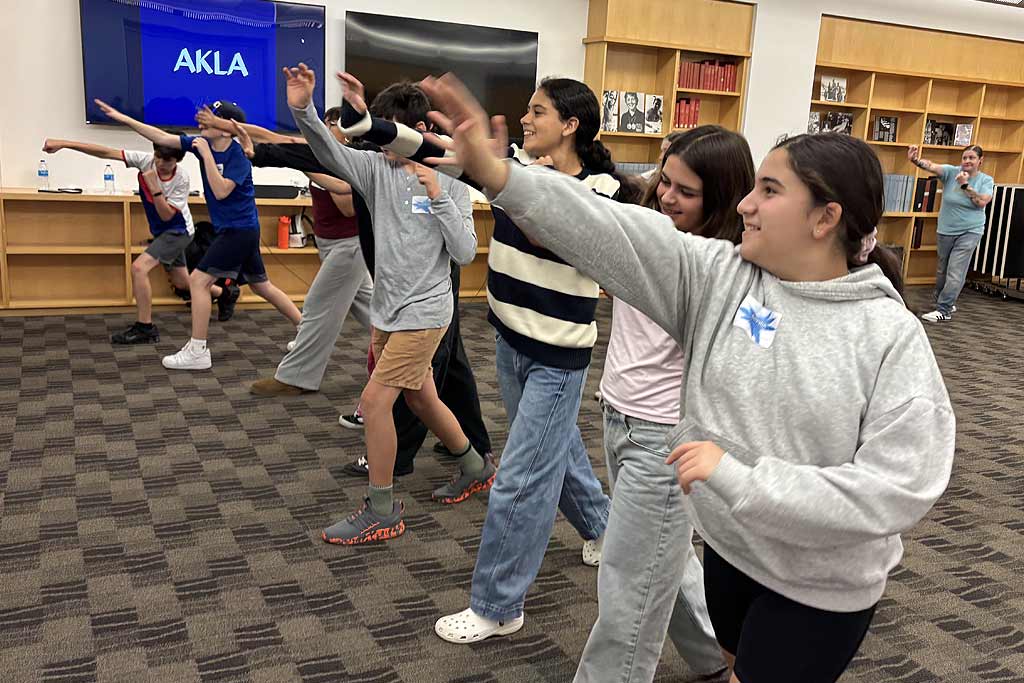
An ‘awesome’ new fellowship for teens
AKLA Chicago will be a free, five-week experiential experience for ages 12–14
Read more -
-