Empowering youth to safeguard democracy
Back-to-school season has elevated conversations about how challenging the current climate is for high school students. High school is always a time when students learn about themselves and the world around them, and navigate complex conversations about their role in helping to make the world a better place.
This year, the election, the rise in antisemitism, and simply being overwhelmed by the problems in the world have created even greater challenges-and uncertainty about the impact teens can have.
JUF Teens has been piloting opportunities for Jewish teens to become agents of change, and to develop skills that can help them play a role in tikkun olam, repairing the world, through advocacy and action. This fall, we introduced new civic-engagement programming around public policy advocacy and the non-partisan election process.
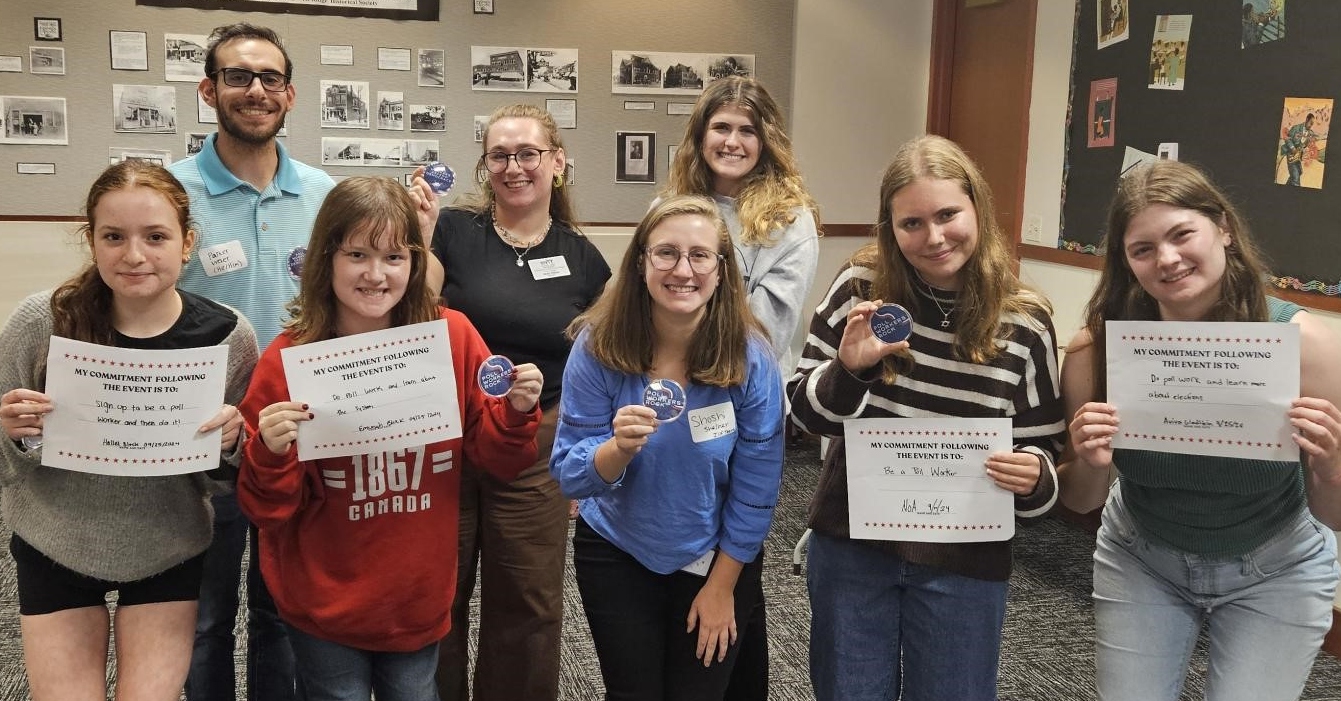
In September, we partnered with community organizations including synagogues, youth groups like NFTY, USY and BBYO, and Keshet, to host a workshop on poll working. Poll workers enable fair and safe elections, and in Illinois teens 16 and older can serve as election judges on election days. To us, this provided a tangible and impactful step teens could take to participate in the election.
Through discussion of Jewish and secular texts, teens were able to voice why poll working felt meaningful to them.
-
“[Poll working] is something I can do to participate when my 18th birthday is a few months after the election.”
-
“The [Hillel] text ‘If I am not for myself then who will be, and if I am for myself alone, what am I’ speaks to me, because I live in a community, and poll working is about more than myself.
-
“Tikkun olam [resonates] because voting is about building the world you believe in.”
There are long-term benefits to teens participating in civic engagement programs at this stage in their lives. Survey data from the Center for Information & Research on Civic Learning and Engagement shows that there is a strong correlation between teens learning about voting and civic engagement in high school, and being more civically engaged as a young adult. One of their surveys reported that 78% of respondents, age 18-29, who were taught or encouraged to vote in high school talked to friends about elections, 23% registered others to vote, 54% tried to convince other young people to vote, and 66% helped someone who was in need.
The diversity of perspectives our teens shared makes for a stronger democracy now and in the future. We encourage you to think and share your reasons for participating in civic engagement with teens around you. Talking to them is one small action you can take to make an impact.
Shoshi Shapiro is Program Director for JUF Teen Social Change Initiatives.
Sarina Gerson is Associate Vice President of JUF Community Outreach and Engagement.