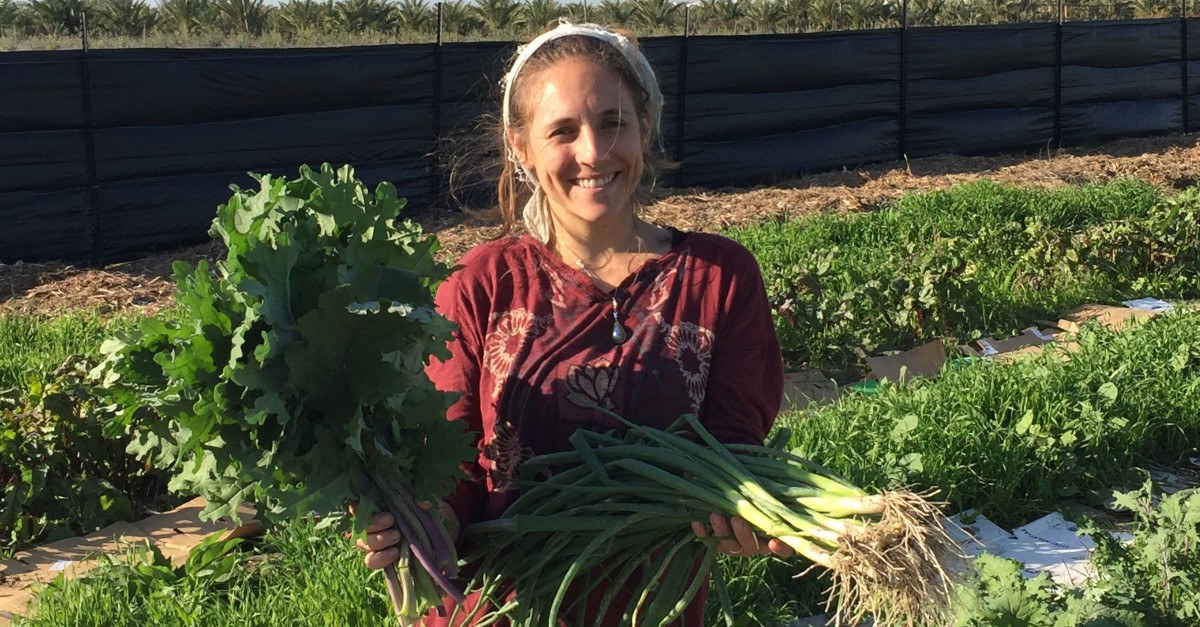
Farming in Israel during shmita year—a Skokie girl’s journey
Yvette Alt Miller
To Jews around the world, the current Jewish year, 5782, might not seem to have great significance, but among Israeli farmers, this year is a momentous one. We’re currently in a shmita year-a full calendar year when Jewish farmers in the land of Israel may not plant or reap their crops for profit.
Shmita is an ancient commandment, with roots in the Jewish Bible:
For six years you shall sow your field, and for six years you shall prune your vineyard, and gather in its produce. But in the seventh year, the land shall have a complete rest, a Shabbat to the Lord. (Leviticus 25:3-4)
For Abby Sapir, an Israeli farmer who grew up in north suburban Skokie, and her husband Eli, this Shmita year is proving to be a time of intense challenge-and also of growth.
“We started our farm two years ago,” said Abby. Becoming an Israeli organic farmer might not have seemed like a natural career choice for the Ida Crown Jewish Academy alum, but for Abby farming in Israel feels exactly right.
She and her husband Eli moved to Israel after their wedding; Abby studied art at the prestigious Bezalel Academy of Arts and Design in Jerusalem, while Eli studied permaculture. Two years ago, they moved to a moshava (a colony of farmers) in Israel’s north, and rented a land to start an organic farm. “It’s important to us to know where our food is coming from, and to feel that spiritual connection with the earth,” Abby said of their decision to grow organically.
Over the past two years, Abby and Eli have turned their farm, Havat Iyar, into a successful business, selling kale, chard, leeks, fennel, and a range of other vegetables and herbs to local families.
“We were just getting into the flow” of the business, when shmita arrived. Some farmers find workarounds to keep growing during shmita , such as growing food in containers in greenhouses or temporarily selling the land to a non-Jew.
But the Sapirs are fully embracing this year of rest-along with the uncertainty that a year of not cultivating crops has brought. “We’re feeling vulnerability, fear, and confusion,” Abby said. “But also gratitude, emuna (faith), and empowerment.” She said she feels privileged “to perform this mitzvah and proclaim that this is what we’re supposed to be doing: it’s really Shabbat for the land.”
It’s all part of what makes farming-and living-in Israel special. “We love the Jewish connection to the earth; there are so many mitzvot we can only do in Israel, like maaser (dedicating a portion of crops to God) and shmita ,” said Abby.
Farming in this timeless Jewish manner is also a way to afford new insights into the rhythms of the land. “It’s an opportunity to take a step back and listen and see the natural things on the land… How water flows, the animals that are coming. All the things that are growing wild [this year],” she said. “In our regular hustle and bustle, the [typical state of the] land doesn’t get the same amount of attention it does now.”
With shmita preventing the Sapirs from doing most work on their farm, they have had to find other business outlets: Abby has been giving art classes in her home, and Eli has taken on some local work in high tech. They have also relied on Keren Hashviis, an organization that helps financially support Israeli farmers observing shmita .
While shmita can be stressful, Abby and Eli have discover they have more time this year to spend with their young children, a five-year-old, and one-year-old twins. People have also reached out from around the world, asking Abby to pray for them. ” Shmita farmers’ prayers are heightened,” she noted. It’s a powerful way for friends across the world to tap into the spirituality of Abby’s and Eli’s shmita year.
For more information about Havat Iyar farm, visit facebook.com/HavatIyar.
Yvette Alt Miller, Ph.D. lives with her family in the northern suburbs of Chicago.
In this issue
-

This Passover, four more questions
The youngest guests at our seders will likely ask the four traditional questions, but here are four other questions to chew on over matzah this holiday.
Read more -
New Stephen Sondheim biography details the towering figure
‘Walking encyclopedia of musical theater’: New Stephen Sondheim biography details the towering figure
Read more -
Celebrating spring and a crop of new productions
A celebration of Passover, warmer weather, and a crop of new productions
Read more