From camp to campus
JORDAN ROBINSON
Going to a Jewish summer camp in Michigan for 16 years, my annual routine as a camper went something like this: I would arrive at camp a week or so after school ended. Then, I’d get to spend every day being a kid–going swimming in a freezing cold pool, participating in Shabbat every Friday, learning how to canoe, building lifelong friendships, and embracing all that defines Jewish summer camp. That was all I knew.
Transitioning from camper to staff member felt like a giant leap. As a camper, all we knew is what was presented to us. Our day was planned out for us from the moment we entered the campgrounds to the moment we went home. As a staffer, the roles were reversed: We were coordinating every minute of the campers’ day, planning activities and events for them, and striving to ensure they had the best summer ever.
Little did I know how much the leadership skills I fostered at camp would shape me as a young leader in college and beyond.
Being comfortable with the uncomfortable
As a camper, everything is new, and I was always trying new things. Just about everything was uncomfortable, but in a good way because I was always laughing, playing, and surrounded by friends and counselors who were going through all the new experiences with me.
Trying new challenges at camp prepared me for trying new experiences in college where students are constantly put into new situations–such as navigating new classes, new clubs, and an overall new chapter in life.
Problem solving
As camp staff, we constantly had to put out (figurative) fires at camp: A program isn’t going according to plan, a camper is having a rough time, some of the staff aren’t getting on the same page.
The skills that I gleaned in problem solving such as interacting with people different from me, and thinking critically and strategically came into play in my battle of combating antisemitism on my college campus.
Constantly having to work with many different people on campus, deescalate tensions, and ensure the safety and security of over 3,000 Jewish students is no easy task. But the skills that I learned at camp directly translated to college and allowed me to get big results for my community.
Program planning
Planning programs for an entire day of camp is very stressful. I was always striving to meet the needs of the campers, engage them, and ensure that activities for them were unique and abundant.
In college, through my leadership positions at my campus Hillel, I would create detailed program outlines, think outside the box, and drill the concept of engagement into everything I did. College students don’t want to attend the same program every week, so I’d always try to come up with something unique.
Camp taught me to create different types of compelling programs that attracted new students each time. Who would’ve thought to do an ax-throwing program or CharJEWterie Board Making with a professional charcuterie board maker?
Camp grew me as a person and as a Jew in so many ways, but one of the most important lessons it taught me was how to lead once my days of camping were behind me.
Jordan Robinson spent 16 years at JCC Day Camps Powered by Tamarack. He was a JUF Lewis Summer Intern in 2020 and a Program Assistant for the 2021 Lewis Summer Intern Program. Robinson is currently a fourth year undergraduate at Michigan State University pursing a major in Interdisciplinary Studies.
In this issue
-
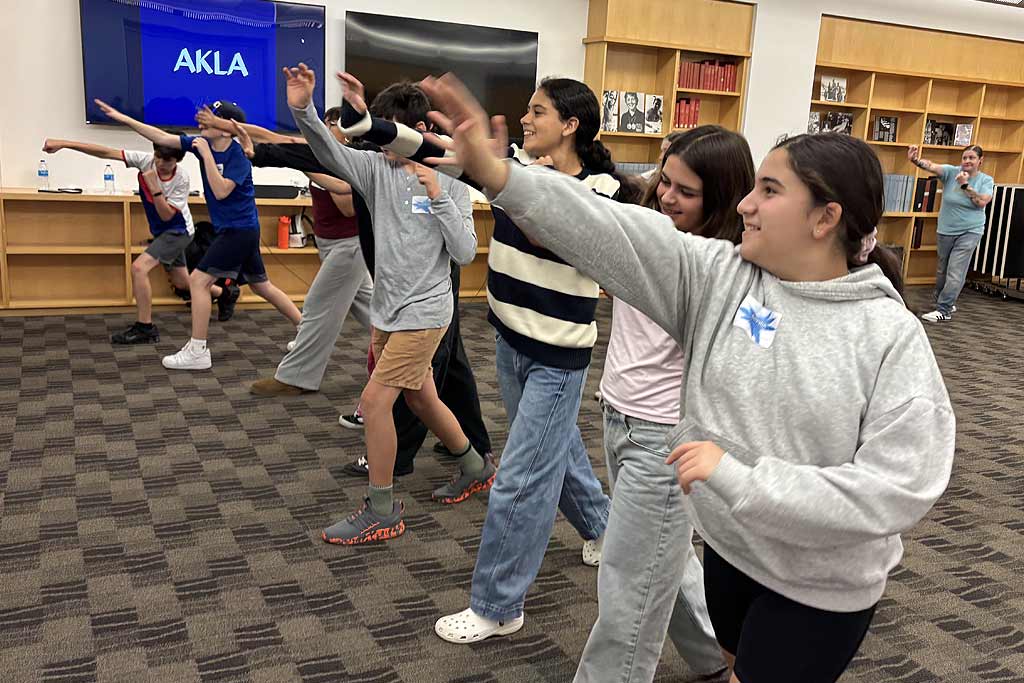
An ‘awesome’ new fellowship for teens
AKLA Chicago will be a free, five-week experiential experience for ages 12–14
Read more -
-