Going global:
Yvette Alt Miller
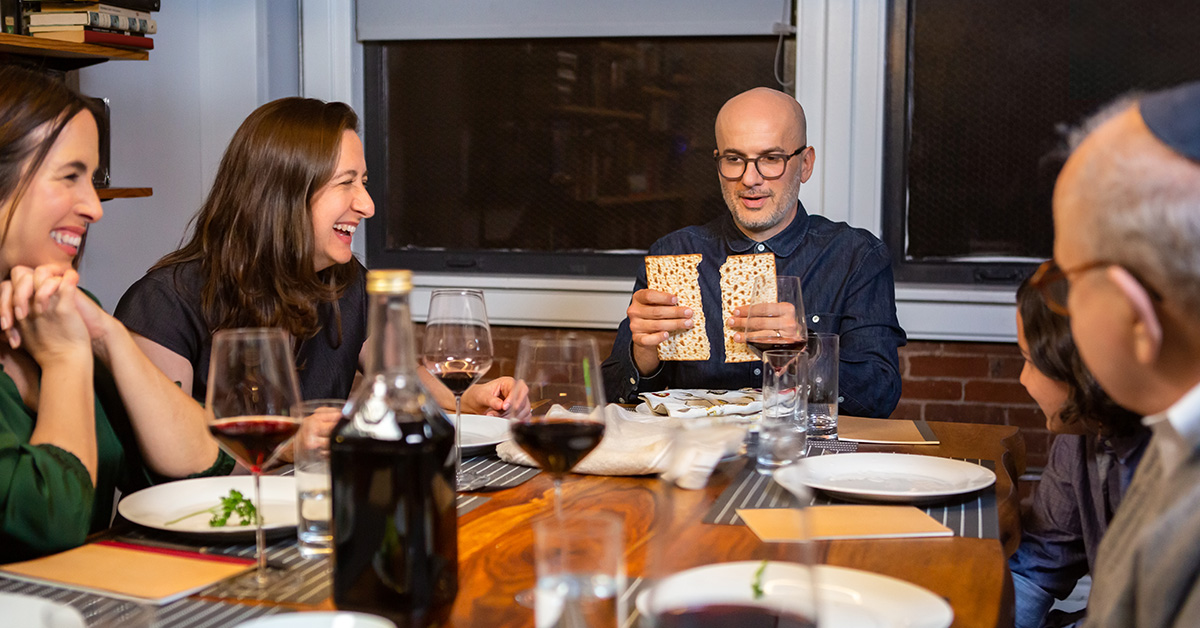
The afikomen is a piece of matzah that’s eaten as the food at the Passover seder, after the festive meal is finished. It’s designated at the beginning of the seder, when the seder leader takes the three matzot, which are stacked on the table, breaks the middle one, and places the larger half aside as the afikomen.
Afikomen is replete with tradition. Here are a few customs from around the Jewish world.
Wrapping the afikomen
It’s customary to wrap the afikomen in a cloth, recreating the actions of our ancestors who “picked up (the matzah) dough before it could become leavened (and) bound it in cloths on their shoulders.” ( Exodus 12:34 )
Israeli Jews: Wrapping the afikomen
An old Israeli custom involves wrapping the afikomen in white fabric then passing it around the table, having each guest place the bundle on their shoulders as if they’re carrying it. Afterwards, everyone, together, recites, “Their leftovers were bound in cloths on their shoulders.”
In some families, the seder leader asks, “Where have you come from?” Guests reply, “From Egypt!” The leader then asks, “And where are you going?” The guests reply, “To Jerusalem! Next year in Jerusalem!”
Baghdadi Jews follow a similar custom.
Eating the afikomen in haste
Some families eat their afikomen very quickly, standing and holding a walking staff to recreate the Torah’s description of ancient Israelites hastily eating their final meal in Egypt.
Kurdish Jews: Blessing for marriage
Kurdish Jews tie the afikomen to the arm of a young man, then bless him saying, “So, too, may you tie a ketubah (marriage contract) to the arm of your bride.”
Tunisian Jews: Visiting friends
Some Tunisian Jewish families tie the afikomen to the arm of a family member, who will visit friends and relatives, joyfully proclaiming the Jewish belief in the Messiah .
Ashkenazi Jews: Hiding the afikomen
Many Ashkenazi families hide the afikomen during the meal and then have children go and look for it. This custom is discussed in the Talmud, where Rabbi Eliezer says that children should be encouraged to “grab” the afikomen during the seder to make the night more special and keep the kids interested ( Talmud Pesachim 109a ).
Children may even demand a prize in return for replacing the afikomen on the seder table. Many families purchase toys or books ahead of time to exchange for the afikomen.
In some Hasidic Jewish families, children hide the afikomen again after they’ve found it, this time encouraging adults to look high and low and find the afikomen so they can conclude the seder.
Sephardic Jews: Involving the children
Some Sephardi Jews tie the afikomen to the shoulder of a young child who pretends to be an ancient Israelite, explaining to the company that he is on a journey, coming from Egypt and heading to the Land of Israel.
Bukharan Jews: Saving the afimonen
Some Bukharan Jews from Central Asia embrace the custom of keeping a small piece of afikomen for the entire year to remember the powerful symbolism of the matzah and for good luck.
Dr. Yvette Alt Miller lives with her family in suburban Chicago. Her latest book, Portraits of Valor: Heroic Jewish Women You Should Know , describes the lives of 40 remarkable women who inhabited different eras and lands, giving a sense of the vast diversity of Jewish experience.
In this issue
-
This Passover, four more questions
The youngest guests at our seders will likely ask the four traditional questions, but here are four other questions to chew on over matzah this holiday.
Read more -

New Stephen Sondheim biography details the towering figure
‘Walking encyclopedia of musical theater’: New Stephen Sondheim biography details the towering figure
Read more -
Celebrating spring and a crop of new productions
A celebration of Passover, warmer weather, and a crop of new productions
Read more