Harnessing social media for good, instead
Aaron B. Cohen
Since recorded time, humans have used every new communications medium both for good and for ill.
Three millennia ago, Egyptians made “Execration Texts,” inscribing the names of enemies on pieces of pottery, which were then ritually broken to invoke a curse. Today, social media is the conduit to disseminate hate.
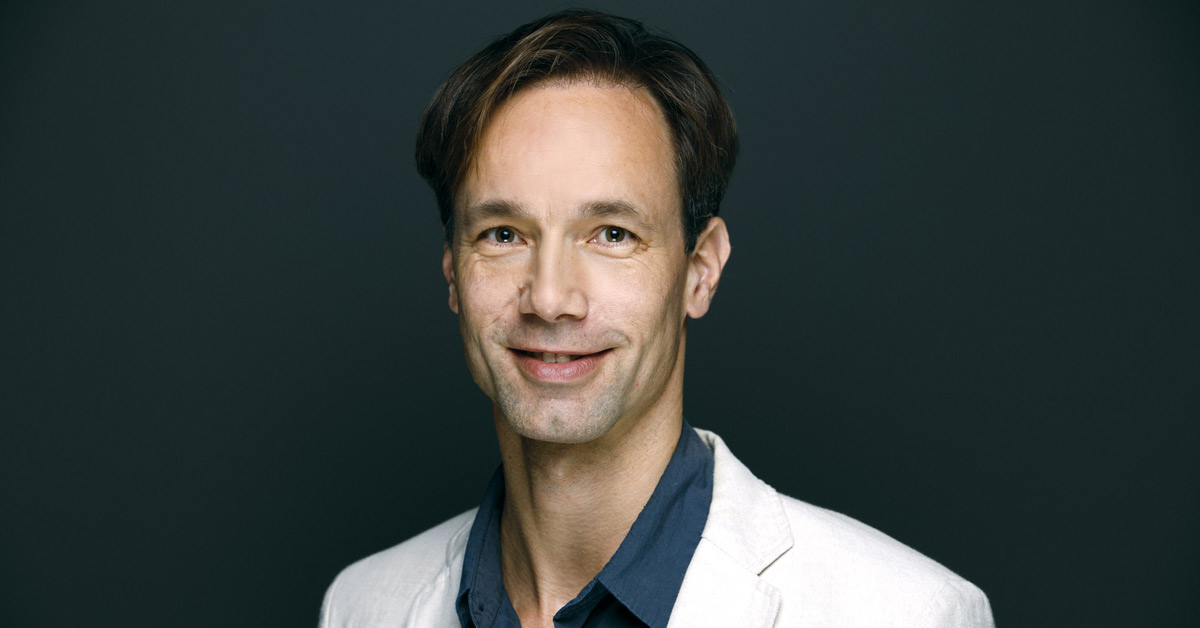
“Social media, in some ways, is nothing new,” said Günther Jikeli of Indiana University in Bloomington. “Since people began to speak, there has been rumor and chatter, which shape narratives that are hugely important for individual lives and for the cohesion, or breakdown, of societies.”
Jikeli is Associate Director of IU’s Institute for the Study of Contemporary Antisemitism (ISCA), the Erna B. Rosenfeld Associate Professor for the Study of Antisemitism, and Associate Professor in the Borns Jewish Studies Program, and in Germanic Studies.
“The hatred of Jews is one of the early signs of radical, anti-democratic movements,” asserts Jikeli, who is from Cologne, Germany. “So, it’s important not only for Jews and Jewish institutions to understand and track it, but also for all democratic societies to observe the dissemination of hate, and to seek to counteract it.”
Jikeli points to a deadly line connecting social-media hate speech and real-world hate crimes, citing the attack on the Tree of Life-Or L’Simcha Congregation in Pittsburgh, where Robert Bowers murdered 11 worshippers in October 2018. Bowers signaled his intention in antisemitic posts on GAB, “a fringe platform with millions of followers that push a Christian nationalist agenda,” Jikeli said.
According to the FBI, reported hate crime incidents in the U.S hit a record high of 11,862 in 2023, with 1,832 reported single-bias anti-Jewish hate crimes. That was an increase of 63 percent from 2022, and the highest number ever recorded. Although Jews comprise around 2% of the U.S. population, anti-Jewish hate crimes accounted for 15 percent of all hate crimes, and 68 percent of all reported religion-based hate crimes, in 2023.
Jikeli reports that since the October 7 Hamas attack against Israel, and the subsequent war in Gaza, explicit calls for violence and mass murder of Jews have increased on social media.
“The data tell us that Holocaust denial and Holocaust distortion are increasing, and that the remembrance of the Holocaust is used to mobilize for the killing of Jews. We see it in memes and posts,” Jikeli said.
His findings, published one year ago, “underscore the urgent need for social media platforms to implement more effective measures to combat Holocaust denial and distortion, as the weaponization of these harmful narratives poses a significant threat to the preservation of historical truth and the promotion of tolerance, non-violence, and understanding,” he wrote.
To that end, Jikeli and his colleagues created The Datathon & Machine Learning Competition to engage high school and college students around the world in research at ISCA. That research includes using human and artificial intelligence inputs to identify and observe social media trends early and accurately.
So far there have been three competitions, each lasting three weeks, with another planned for next summer. Each competition has included: workshops on the definition and online manifestation of antisemitism; the uses and challenges of machine learning in observing and combatting antisemitism; the importance of manual annotation in developing tools for automated content detection; and the building and uses of computing techniques for analyzing online content with machine-learning algorithms.
“Automatic detection of hate speech is indispensable, but these models are not perfect and must be part of a larger framework of human review and oversight,” cautions Jikeli. “It’s important that these models are trained in diverse, representative data, and that their results are interpretable and transparent.”
“I’m not in the lobbying business, trying to convince companies or government agencies to take posts down,” Jikeli said. “My goal is for my research to deepen the understanding of the online world and its risks, with a particular focus on the dangers of highly destructive political antisemitism, thereby empowering people to make informed decisions.”
“Like any communications tool, people can choose to use social media to divide people, or to connect people. We need to think about how to use it constructively,” he said.
Aaron B. Cohen is a freelance writer.