Hidur mitzvah
YVETTE ALT MILLER
The Talmud encourages us to “perform (a) mitzvah as beautifully as possible” (Shabbat 133b:5). Whether that’s setting a beautiful table for Shabbat, cooking delicious food for Jewish holidays, or weaving beauty into our daily life, hiddur mitzvah –literally “adorning a mitzvah”–is an important part of Jewish life. Here are a few unique ways local families perform hiddur mitzvah in their own lives and homes.
Beautifying a synagogue – Temple Emanuel, Chicago
“We call it ‘the best kept secret on Sheridan Road,'” said Des Plaines resident Devorah Heyman, who’s been a member of Chicago’s Temple Emanuel for over 50 years. The sanctuary–which was recently renovated–boasts a stunning prayer space decorated with stained glass, beautifying the mitzvah to pray. “Our rabbi talked about finding the ‘wow’ in every day; moments like that sometimes happen in the chapel,” sparked by the room’s beautiful decor.
Enhancing Passover seders with music and decoration
Penina Levy of lives in Evanston; her father, Isaac Moses Levy (pictured), escaped Nazi-occupied Greece. To honor his Sephardi heritage, Penina’s family sings “Ha Lachma” in the Passover Haggadah in Ladino, the language of her father’s youth. The haunting tune enhances their seder: “We feel the legacy is riding on our shoulders,” she said. “it is a beautiful melody.”
Also in Evanston, the Marshall family adorns their Passover table with a unique tableau depicting the Exodus from Egypt. It’s a creative, new way to illustrate the Passover story.
Adorned challah loaves
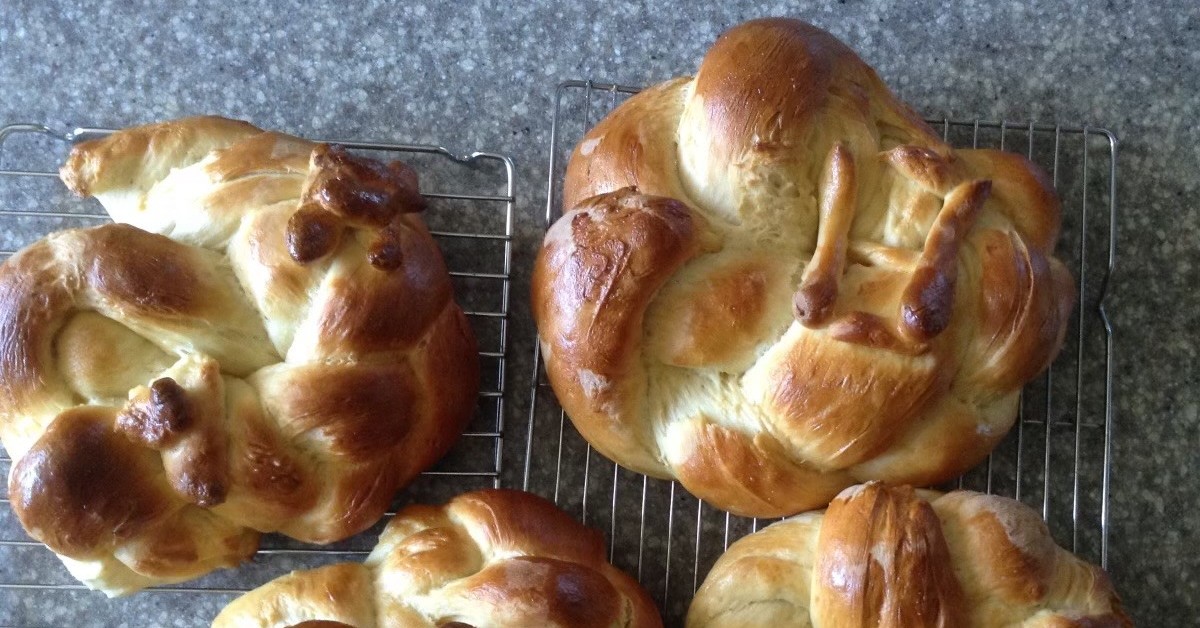
“I put a bird on top of one of my Rosh Hashana challahs,” said Northbrook resident Charlene Sales, “and I put a ladder on top of the other challah.” Charlene’s grandmother used to add these decorative ornaments to her holiday loaves.
One year, Charlene was surprised to read an explanation of this Jewish custom, which originated in Russia, in the cookbook The Jewish Holiday Kitchen by Joan Nathan. Birds symbolize G-d’s protection of his people, and ladders symbolize people rising up during the holidays. ”I felt like my grandmother was talking to me,” Sales recalled.
Picture-worthy tefillin bags
Skokie grandma Faye Levinson loves needlepoint and craftwork. When her sons and grandsons reached bar mitzvah age, she created beautiful bags for them to store their tefillin. The unique craftworks were instant hits: one grandson made his tefillin bag (pictured) his profile picture on social media. One of Faye’s daughters in law wanted to hang the bag on the wall as art: “They’re so appreciative.” For Levinson, beautifying mitzvot comes naturally: “I feel very Jewish,” she said. “I love the Hebrew language, so I love doing things with Hebrew letters” artistically.
Personalized sukkah art
Each Sukkot, the Nemerow family in Highland Park hangs a white sheet in their sukkah. “Everyone who visits signs [it] or writes a note,” said mom Allison Nemerow. “It’s become a treasure,” and a fun and unique way to adorn their sukkah.
Chicago-Area trends
Josh Zwelling, the owner of Rosenblum’s World of Judaica in Skokie, notes that the market for beautiful Jewish ritual items has exploded in recent years–and that Chicagoans have eagerly jumped on the latest trends. Some of the areas Zwelling sees the most change include Chanukah-related ornaments and new styles of mezuzot .
“When it comes to Chanukah, there are various menorahs, different colors of oil, decorative candles: it’s all part of hidur mitzvah ; they want something beautiful,” Zwelling noted. When it comes to mezuzot , his customers often embrace modern-looking casings by current Israeli artists, incorporating new materials such as fused glass, aluminum, and Jerusalem stone. ” Mezuzot have become a lot more artistic; they’ve upped their game.”
Chicagoans are following suit, incorporating hidur mitzvah into their Jewish life in myriad ways.
Dr. Yvette Alt Miller lives with her family in suburban Chicago. Her latest book, Portraits of Valor: Heroic Jewish Women You Should Know , describes the lives of 40 remarkable women who inhabited different eras and lands, giving a sense of the vast diversity of Jewish experience.