i-Shine spotlights siblings of sick children
MICHELLE COHEN
When a child is seriously ill, that child is often the focus of well-meaning attention by their caretakers and the people who love them. But what about the siblings of children who are ill?
Adina Block has three daughters–one who has a pediatric disease, and another two who are healthy. Two Wednesdays a month, her healthy daughters get a ride to her school, have assistance with her homework, and connect with other children in similar life circumstances over dinner and social activities.
“[My daughter] always walks in the door beaming, ready for ‘show & tell’…. She goes to bed on Wednesday nights a happy camper,” Block said.
Block’s daughters and many other Jewish elementary and middle school-aged children-often the siblings of ill children–participate in the i-Shine afterschool program. The participants have the chance to be the center of attention and to experience consistency in an often-fluctuating family routine.
The program was created by Chai Lifeline, a national organization providing support for families living with serious illness and loss, with a Midwest chapter serving the Chicagoland area.
“We have found that siblings are affected tremendously when a sibling has an illness,” said Keren Bider, i-Shine Programming and Volunteer Coordinator of the Chai Lifeline Midwest Region. “[The sick sibling] gets more attention by default. Our goal is to fulfill some of the void that comes along with working with a family where a child has an illness.”
The i-Shine program pairs the young participants with high school-aged volunteer mentors and counselors. “It was a great way for my kids to know and realize that although life is busy with a child with medical needs, they are not forgotten,” said Elana Baver, whose older daughter became an i-Shine volunteer when she aged out of the program.
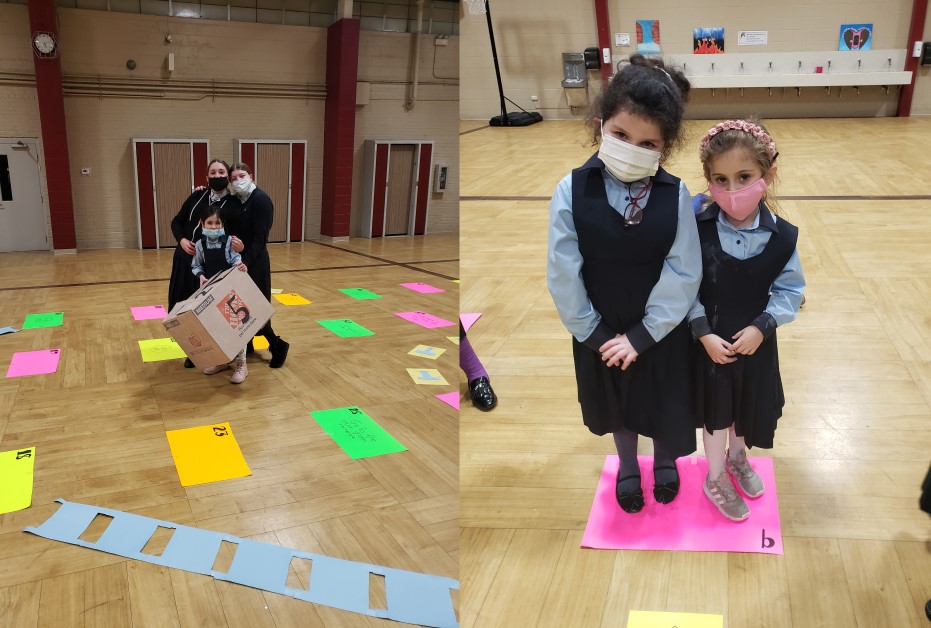
Chanaleh Jakofsky, the head of i-Shine Girls, started her journey with the program as a volunteer. She, along with longtime volunteer and assistant head Nechama Segal, started mentoring when they were in high school. Nowadays, their job is to coordinate carpool and food, brainstorm extra-curricular ideas, and help the kids enjoy a fun night out.
“It’s nice to see the kids having a good time and making sure that they’re enjoying themselves,” Jakofsky said. “It’s supposed to be a time where they can just have fun.”
During the pandemic lockdowns, i-Shine continued to run virtually, with volunteers delivering activity kits in advance. Then, the whole family could join in to, for example, decorate hamentashen, take a cooking class, or paint along with an artist.
One of Segal’s favorite programs during lockdown was a Chanukah celebration where coordinators and volunteers rented a party bus and brought it to each family. Everyone got to come on board to the sound of loud music, play with toys, eat donuts, and win prizes. “We had to wipe down the bus after every house and wear masks, but that didn’t stop anyone. We kept going, and the kids and families loved it,” she said.
Thanks to i-Shine, siblings and children of a sick child or parent get their chance to shine. As Block said, “We are endlessly grateful to be a part of Chai Lifeline and i-Shine, the family we never wanted, but one we now couldn’t imagine living without.”
For more information about i-Shine, visit chailifeline.org/i-Shine.
In this issue
-
An ‘awesome’ new fellowship for teens
AKLA Chicago will be a free, five-week experiential experience for ages 12–14
Read more -
-