'I wanted to be part of the solution’
ROBERT NAGLER MILLER
A few years ago, Allan B. found himself in a position he’d never imagined. A seasoned nonprofit executive who’d worked for years in the Jewish community, he was struggling after a layoff, borrowing money from family and friends to pay his mortgage, make car payments, and manage daily living expenses-all while seeking gainful employment.
“It was very hard for me, emotionally,” Allan recounted. “I didn’t want to ask for help. …It was almost humiliating.”
But after a friend suggested that he seek assistance at Jewish Free Loan Chicago (JFLC), a nonprofit offering financial support to both Jewish and non-Jewish members of the community, Allan had a change of outlook about his situation. Gratitude soon eclipsed shame.
“The approach was with such dignity, respect, compassion, empathy with my situation,” said Allan, explaining the process to apply for an interest-free JFLC loan. “She really wanted to understand. She wanted to know me and my family as people.”
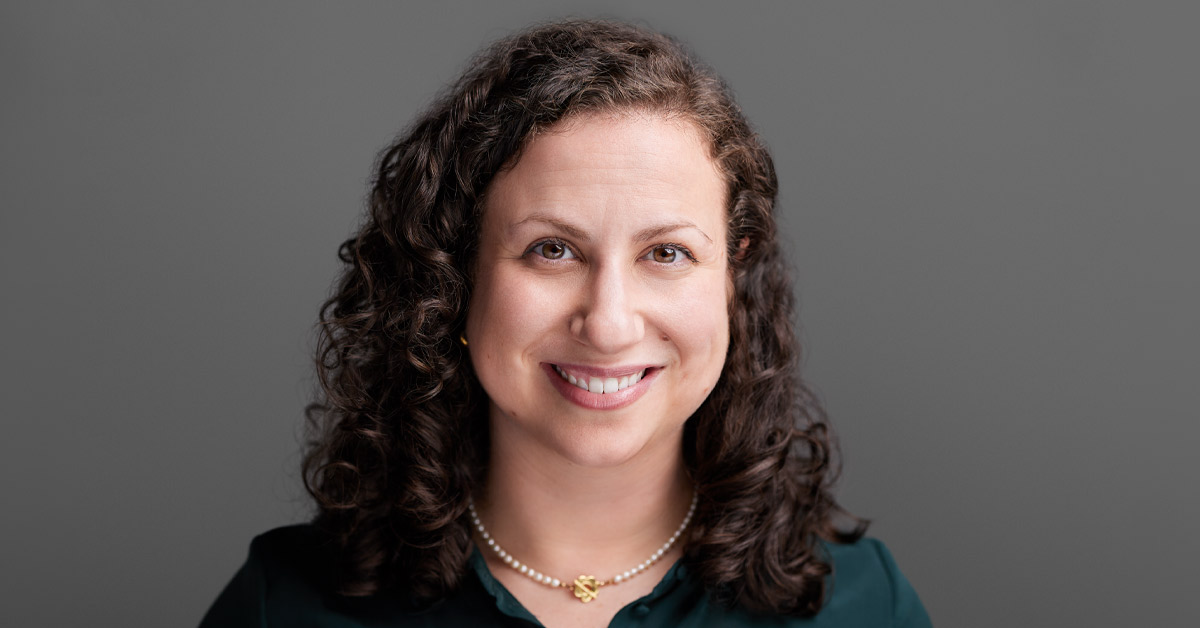
The “she” in question is Leah Greenblum, the 37-year-old founder and executive director of JFLC and a 36 Under 36 alum, who established the organization in 2022 after recognizing the need for such a nonprofit in an otherwise very robust, full-service Chicago Jewish community. She was inspired to do so, she said, by Rabbi David Rosenn, the head of New York’s Hebrew Free Loan Society, whom she met at a meeting of Jewish communal professionals. “He was so inspiring,” she said, and she thought to herself, “Does Chicago have this?”
This was not Greenblum’s first foray into nonprofit entrepreneurship. Still in her 20s at the time, she was the founding executive director of the Midwest Access Coalition, an organization providing support services-including food, lodging, and funds-to women seeking access to abortions. She previously worked at other social service organizations, Avodah and The Harbour.
Greenblum, who lives on Chicago’s North Side with her wife, Sandra Tsung, acknowledged that her commitment to helping others in distress was informed by her upbringing in a more isolated part of Florida, where she and her family once found a swastika in their mailbox. But beyond the antisemitism and other forms of prejudice she encountered growing up Jewish in an overwhelmingly white Christian community, she was struck by the high levels of poverty. While she and her family were doing well-her father was the town’s psychiatrist-most of her friends’ families struggled to make ends meet.
“This wasn’t right,” she said. “I wanted to be part of the solution.”
In the three years that Greenblum has been at the helm of JFLC, she, her board of directors, and volunteers have awarded interest-free loans of up to $6,000 to 100 Chicago-area recipients, most of whom, like Allan, experienced a sudden reversal and needed a cushion to pay rent or tuition before regaining their footing. Half the beneficiaries are Jewish; half are not. That’s the way it should be, said Greenblum. “We believe that we are all created in the image of the divine,” irrespective of faith traditions, she said.
Describing JFLC “on the precipice of growth,” Greenblum pointed out that her group was recently awarded a $50,000 JUF Poverty grant, along with significant backing from a number of other major funders, including the Walder Foundation, whose CEO, Elizabeth Walder, said, “Jewish Free Loan Chicago is a ray of sunshine for so many people.”
That’s a sentiment shared by many who have worked with JFLC, including its board chair, Dr. Hilarie Lieb, a labor economist, who said of Greenblum, “She has been amazing. She knows how to get people engaged.”
The bottom line, said Lieb, is that JFLC’s work shows that “a small investment [in people] can lead to a good outcome.”
Robert Nagler Miller is a journalist and editor who writes frequently about arts- and Jewish-related topics from his home in New York.
In this issue
-
-
-
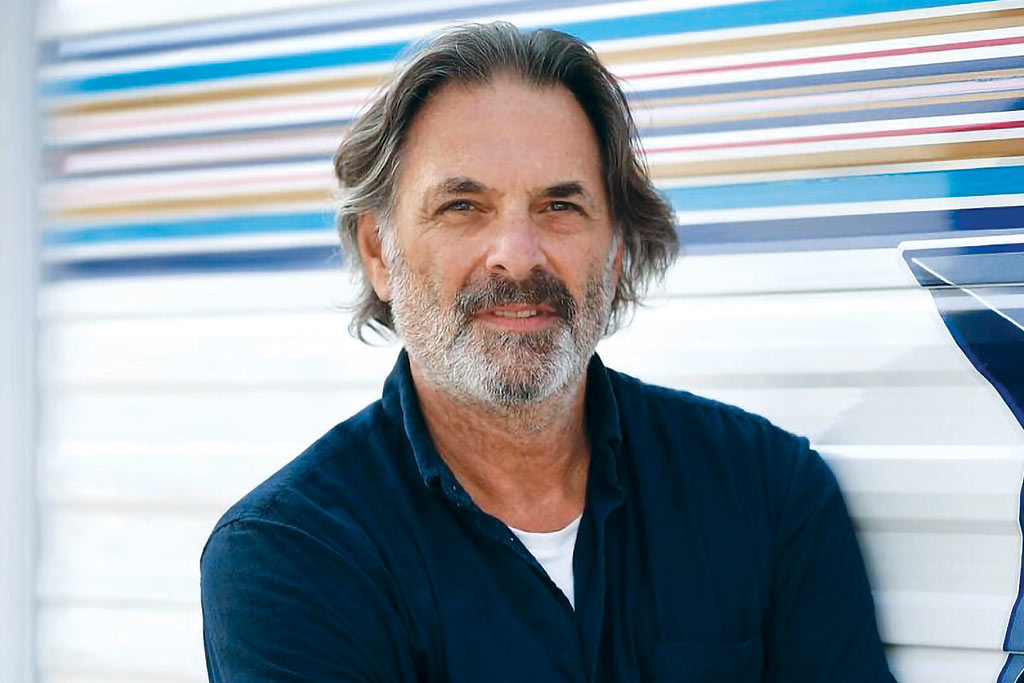
Catching up with Ken Olin
Before shaping some of TV’s most memorable stories, he was a Chicago kid with Hollywood dreams
Read more