Israel now, after one year at war
OFER BAVLY
Just as Americans used to ask, “Where were you when JFK was shot?” Israelis will forever remember where they were on Saturday, October 7, 2023.
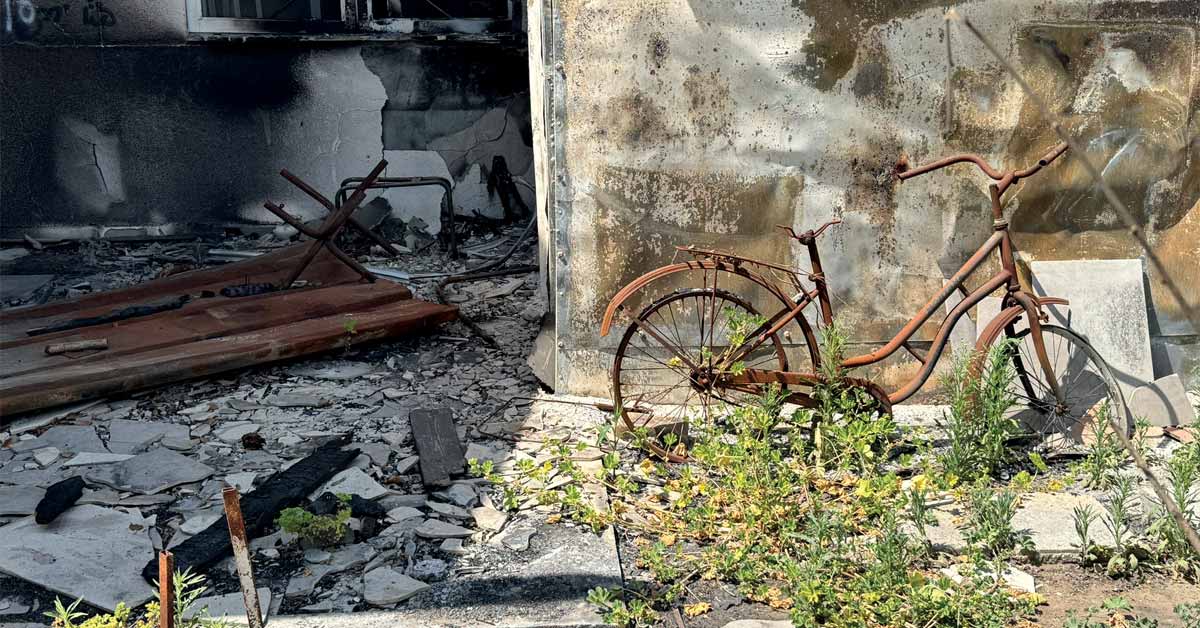
As hard as it is to believe, we are now one year after the worst massacre in Israeli history, and the launch of the “Iron Swords” war. Yet, we are still living on that day. Our calendars show October 365.
In a country of “one degree of separation” at most, we all know someone who was butchered, raped, maimed, or taken hostage into Gaza. We all know one of the 10,000 soldiers of the IDF wounded-or one of the more than 700 soldiers killed in battle-in the past year. We cannot avoid or escape it. We’ve all been to funerals and shivas, we’ve all heard the name of a fallen soldier on the radio and gasped in recognition: We who lived through October 7 can never forget, let alone get past it.
The estimate is that over 100,000 Israelis now suffer PTSD. But those are only the ones who were diagnosed. The actual number is probably 10 or 20 times greater, but for most of us, we are still not at the post-traumatic stress stage. We are still in the trauma.
Every day, Israel’s three main TV channels dedicate hours of programing to the war. None of them has resumed regular programming since October 7, and the time dedicated to expert panels averages 4-5 hours daily.
And then there are the family members of the massacred, the fallen soldiers, and the hostages. They all wear the ubiquitous “Bring Them Home Now” T-shirt and the dog tags that most Israelis wear these days, along with the yellow ribbon that made its first appearance when Americans were waiting for their hostages to be released from Iran in 1979.
Through the family members’ tales of loved ones killed or captured, we have become all too familiar with the 101 hostages still in Gaza and countless soldiers who have sacrificed their lives. We hear those snippets of information about their character, hobbies, professions, loves, and families, to a point where they feel like relatives of ours.
When we hear their stories and see their pictures, on TV, on posters at bus stops, and garden fences, we cannot “go back to normal.” We continue to live the tragedy and horrors of October 7 and its aftermath-whether we lost a family member or only know a victim by proxy.
This is how we will continue to live, as long as 101 hostages are in captivity and as long as 18-year-old soldiers and 40-year-old reservists with spouses and children are killed in battle.
On October 7, our government and our defense forces failed to protect us. Today, the majority of Israelis believe that the same government must reach a deal to release our hostages, and save as many of their lives as possible as time is running out, even at the cost of the enemy declaring victory.
Others say a Hamas victory will only embolden the terrorists to seek our annihilation again next year. In their eyes, the remaining hostages are a mere fraction of the number of Israelis who could be massacred in a future invasion, should Hamas come out victorious.
One year into the multi-arena war being waged from Gaza, to southern Lebanon, the West Bank, and Yemen, Israelis continue to debate how to bring back our hostages without giving in to our ruthless enemies-while also fighting a pandemic of anxiety.
There will be time for investigation into the failings of the government and the army but as long as the war continues, we cannot begin our healing and cannot resume anything resembling normalcy.
One year into the war, we know that somehow, some day, we will overcome all these challenges. For now, the best that we can hope for is normalcy.
Ofer Bavly is a JUF Vice President and the Director General of the JUF Israel Office.