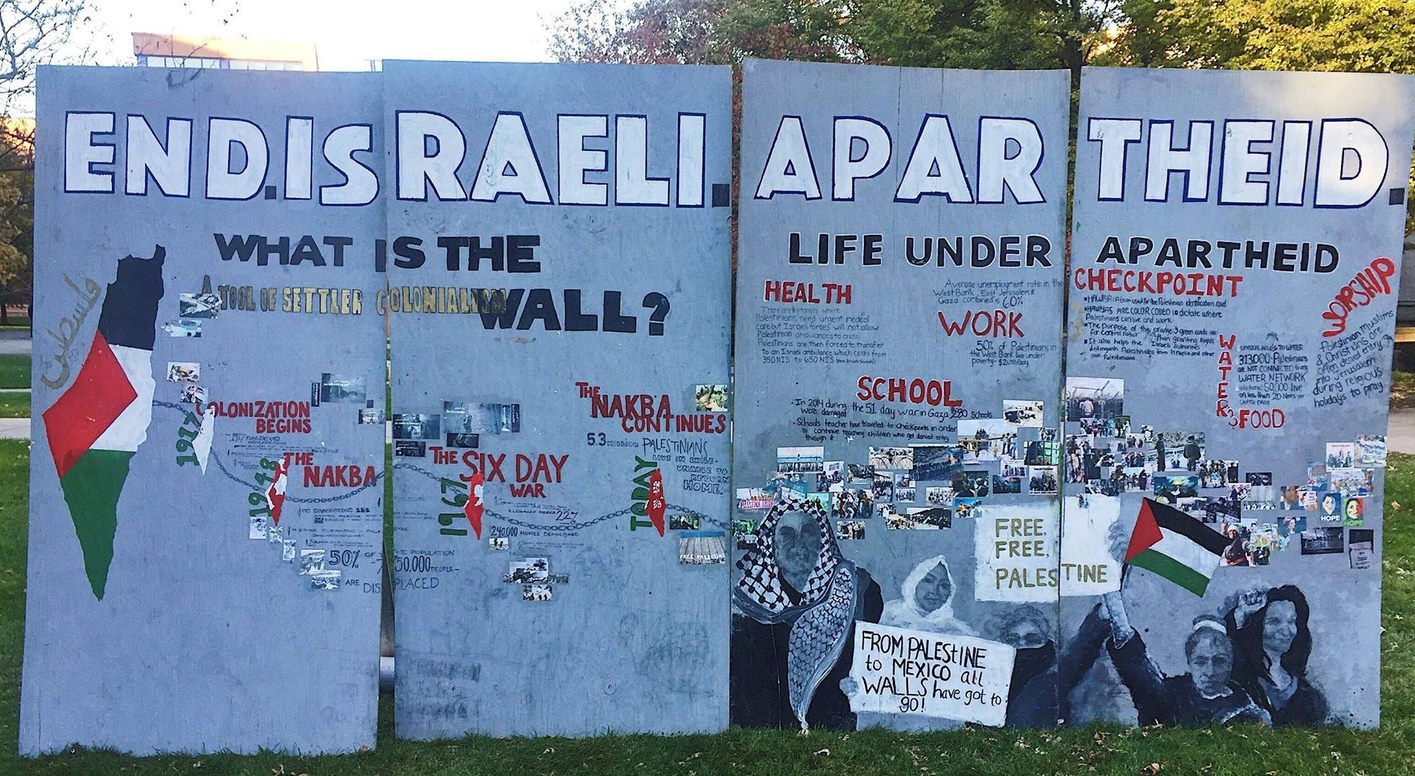
Israel=Apartheid is the mother of bad analogies(1)
Jay Tcath
Analogies are standard fare in arguments. They can illuminate a confusing situation.
But analogies can also be squeezed into arguments where they just don’t fit.
Avoiding “another Vietnam” or “Munich appeasement” are more likely glib references than accurate insights to today’s challenges.
Politicized analogies are especially prone to oversimplifying issues. Often this is by design, to deceptively label victims and villains.
Exploiting analogies is a popular weapon of anti-Israel advocates. Their perverse comparisons include “Zionism is racism,” the IDF is the “S.S.,” Gaza is the “Warsaw Ghetto,” abhorrent settler attacks on Palestinians are “pogroms,” the IDF’s unintentional killing of fewer than 100 Gazan civilians this past May is a “genocide,” and a private real estate dispute between property owners and 13 long term tenants is “ethnic cleansing.”
(Commandeering phrases referencing the worst moments of Jewish history apparently doesn’t count as “cultural appropriation,” even when the term is transformed into a verbal attack on the descendants of the original victims.)
Another ginned-up anti-Israel analogy is that Jews returning to their historical homeland are “colonialists” and “imperialists.” From which homeland country did those making aliyah supposedly do this colonializing and imperializing? Beyond an uninterrupted 3,000-year Jewish presence in the land of Israel, since most Israeli Jews originate from the Middle East itself, the analogy must mean these returning Jews are colonializing and imperializing on behalf of such well-known Zionist home bases as Iraq, Yemen, and Iran. The very possibilities put the lie to the analogy.
Such weaponized analogies are unserious.
But they have been mere prelude to a new orchestrated campaign to analogize Israel to apartheid-era South Africa.
Few political phrases are as universally reviled as apartheid. Its associations are, appropriately, irredeemably, wholly foul.
That is how it should be. That is what apartheid was. That is why calling Israel “apartheid” is not simply objectively wrong. It purposefully distorts reality, incites emotions (on all sides), and impedes the already Herculean task of peace-making.
Among others the past year jumping on the “Israel is apartheid” analogy bandwagon were B’tselem, Human Rights Watch, Congresswoman Alexandria Ocasio-Cortez, the United Church of Christ and, most recently, Amnesty International. We will surely see others joining that bandwagon in 2022.
The push is so apparent that Foreign Minister Yair Lapid, in his New Year’s briefing with Israeli journalists, warned “there will be [a] debate that is unprecedented in its venom and in its radioactivity around the words ‘Israel as an apartheid state.'”
Co-opting “apartheid” for your side of an argument is a smart but sinister tactic.
Life for Palestinians is not always easy or just. But not every hardship is genocide, a war crime, or apartheid. Palestinians elect their own politicians, control their own national institutions, and, in Gaza, arm their own military. Comparing that to what Blacks endured under South African apartheid is inaccurate and (mis)appropriating someone else’s misery to advance your own cause.
Just as every person with a differing opinion isn’t a Nazi or a communist, neither should every controversial situation be made relatable by invoking a hyperbolic historical analogy. Such important, singular issues merit their own narrative, a unique analysis of its own special circumstances, decoupled from someone else’s experience.
Sadly, it seems that with the “Israel is apartheid” lie, like the 30- year lifespan of the U.N.’s “Zionism is racism” lie, anti-Israel forces are investing in demonization, not reconciliation.
It’s like they have learned nothing from history. It’s analogous to…
Jay Tcath is the Executive Vice President of the Jewish United Fund of Chicago.
In this issue
-

An ‘awesome’ new fellowship for teens
AKLA Chicago will be a free, five-week experiential experience for ages 12–14
Read more -

-