JCERT offers hope and healing after Highland Park shooting
MICHELLE COHEN
After 9/11, local Jewish leaders started thinking about a scary but important question: What if a disaster happened closer to home?
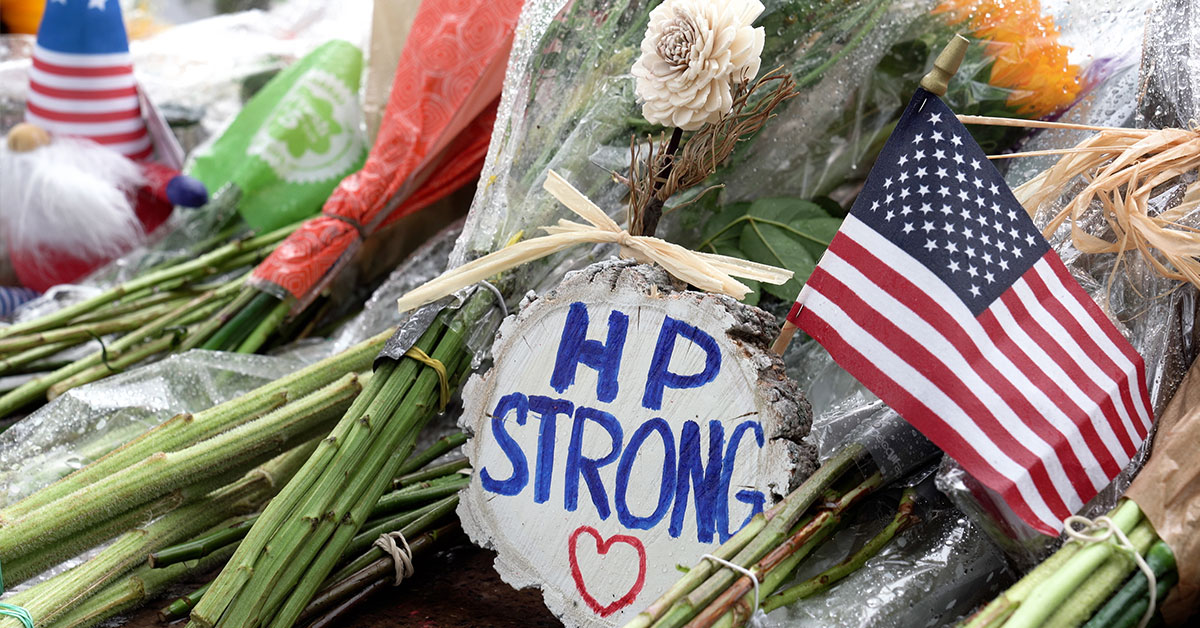
Twenty-one years later, the Jewish Community Emergency Resiliency Team (JCERT) has stepped up to help the community of Highland Park–and the entire Chicagoland area-recover after the devastating shooting in July.
JCERT-conceptualized by then-JUF Senior Vice President, Joel Carp, and started as a service of JUF in collaboration with JCFS Chicago, JCC Chicago, EZRA, The Ark, and Associated Talmud Torahs–responds to incidents that affect the Jewish community in Chicago and elsewhere in the country, including hurricanes in Florida in 2004 and the Virginia Tech shooting in 2007.
In the past, JCERT professionals have conducted fact-finding missions and supported teams on the ground in other areas. But for Chicago’s Jewish community, recovering from the July 4th shooting has involved directly taking care of people who were impacted by the tragedy.
“I can’t tell you how many people I know who were traumatized by this,” said Lonnie Nasatir, JUF President. Through his work, Nasatir has spoken to families who ran and hid with their kids, who have later had a difficult time understanding what happened. “It’s just beyond words–the fear and then the discussions we’re having to have with those children afterwards to explain what happened.”
JCERT–now coordinated by JCFS Chicago–is stepping in to have these discussions with children, families, and community members in two different ways. The first, Group Crisis Intervention, was adapted from the National Organization for Victim Assistance in 2021.
In a session of Group Crisis Intervention, “we walk through what has happened,” said Tracey Lipsig Kite, LCSW, JCFS Training Coordinator and JCERT Co-Coordinator. “We teach people realization skills, abilities to ground themselves in the here and now… we also give them some education in basic trauma, so they have a way to put their experiences into context.” Participants then discuss what may help them in moving forward, like self-care and getting involved with community rebuilding efforts.
JCERT is bringing these educational and supportive workshops throughout the Chicagoland area. “JCERT is at camps, at synagogues… they’re trying to go to every portal where there’s Jewish life, and also trying to be there for the community at large, and JUF is proud to partner with JCERT,” said Nasatir.
Some of these workshops have focused on camps where staff and families attended the Highland Park parade; others have taken place at synagogues and senior living facilities. For all of these people, it’s important to feel a sense of control, as “one of the key experiences of trauma is how out of control you feel,” said Kite.
In addition to Group Crisis Intervention, JCERT sends staff members to various organizations to offer trauma training to community leaders. These current and former mental health professionals include retired “alums” whose contributions enable other staff members to research solutions that worked after similar incidents in other cities and conduct research on new intervention methods.
One of these methods, Immediate Restructuring of Traumatic Experiences (IRTE), has proved beneficial in Highland Park. Developed at the Center for Trauma and Disaster Intervention in Tel Aviv, IRTE works with recent developments in the research of trauma and trauma response.
“The field of trauma has developed and changed so much in the last 20 years and that’s great because we understand trauma better,” Kite said. “We understand how we can help the body respond and normalize. Trauma response can feel like you’re crazy and you’re not. It’s your body’s natural response.”
Thanks to specific and targeted intervention JCERT programs that take place in groups, people feel less alone and can tap into their natural resilience to start moving on. Along with other community initiatives, like mental health drop-ins at Highland Park libraries and call lines from JCFS, the Jewish community is taking a strong stand on supporting mental health in the wake of the shooting.
If you are seeking mental health help related to the Highland Park shooting or any other concerns, reach out to JCFS at 855-275-5237 or jcfs.org/our-services/counseling-psychological-services.
In this issue
-
An ‘awesome’ new fellowship for teens
AKLA Chicago will be a free, five-week experiential experience for ages 12–14
Read more -
-