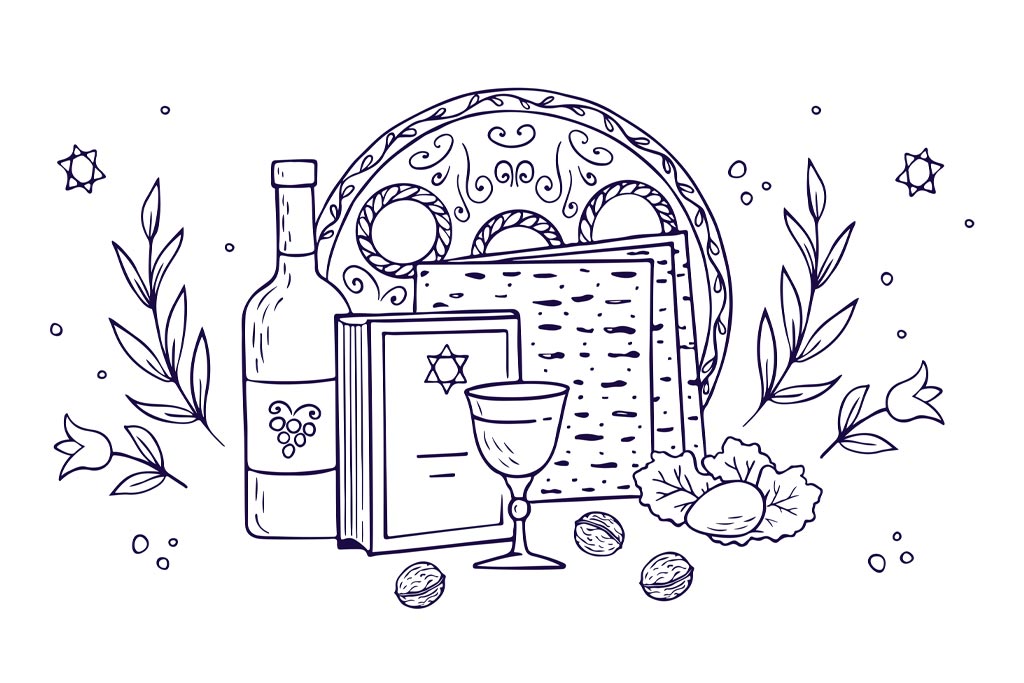
Finding the afikomen? Find a Haggadah first
A central feature of a seder is your Hagaddah, the guidebook used during your meal that outlines the steps and rituals. You don’t have to reinvent the wheel. Instead, use the awesome Haggadahs that are already out there. Hannah’s pick is a Wicked-inspired Haggadah from Recustom, while Spencer loves the JewBelong Passover Haggadah.
Also, check out the OneTable Passover Seder Guide, a step-by-step guide to leading your own Passover seder with rituals, storytelling, and reflections.
Not your bubbe’s seder
Your seder doesn’t have to be a formal, sit-down dinner with white tablecloths or multiple courses. Though you might feel like a “real” seder requires meticulous planning, the truth is that it can be anything you dream it to be. You can host it in a park, ask guests to come dressed as one of the 10 plagues, or end the night with Passover-themed karaoke. The possibilities are endless. The most meaningful seders are the ones that feel authentic to you and your guests.
Invite guests to help shape the experience
Just because you’re the host doesn’t mean you have to do it all. Host a “participation potluck.” This is not the kind with bottles of wine or foil-covered dishes showing up at the door. The answer to “What can I bring?” can be so much more than food to share. Guests can also share their effort, skill, or wisdom. A few meaningful and low-stress ways guests can participate include printing the Haggadahs; welcoming guests as they arrive; leading a ritual, like saying kiddush or blessing the matzah; sharing a poem, short reading, or personal reflection; or creating a music playlist for the evening.
Low-stress cooking
A meaningful seder does not require a multi-day shopping marathon or family heirloom recipes (unless that brings you joy!). Pick up premade charoset, matzah ball soup, or Passover side dishes from a local grocery store or Jewish bakery.
Make it OneTable official
The seder plate helps make hosting easier. In fact, it’s a literal blueprint for what you need, and it’s laid out right in front of you.
For young adults, OneTable works the same way, taking the guesswork out of hosting, so you can focus on gathering people and creating meaning. You may know us as a Friday night Shabbat organization, but we love seders too! We believe they have the same power to bring people together. So, make the seder your own, host with intention, and enjoy some nourishment on us:
OneTable is offering “Nourishing Seders” on April 1 and 2 and Passover Shabbat on April 3. OneTable hosts can receive “Nourishment”—($10/person, up to $100 per dinner)—for one seder (first or second night—your choice) and for Passover Shabbat.
To learn more about OneTable’s Passover offerings, visit onetable.org/Passover.
Hannah Busis—based in Ashville, N.C.—is Shabbat Journey Senior Manager at OneTable, where she helps young adults build community through meaningful Shabbat dinners grounded in joy and connection.
Spencer Perdeck—based in Atlanta, Ga.—is a Shabbat Journey Manager at OneTable who guides young adults to craft intentional Jewish gatherings rooted in connection and ritual.
In this issue
-
This Passover, four more questions
The youngest guests at our seders will likely ask the four traditional questions, but here are four other questions to chew on over matzah this holiday.
Read more -

New Stephen Sondheim biography details the towering figure
‘Walking encyclopedia of musical theater’: New Stephen Sondheim biography details the towering figure
Read more -
Celebrating spring and a crop of new productions
A celebration of Passover, warmer weather, and a crop of new productions
Read more