There are signs of spring everywhere. Tiny buds, longer days, softness and birdsong in the air. I love to lighten up my layers, banish coats to the closet, and embrace spring!
You also can come out of hibernation with your diet. The last cold months are spent at festivals of feasting. From Thanksgiving through the New Year, we gravitate toward heavier, richer comfort foods: hearty stews, baked goods, and holiday indulgences.
And while delicious, these foods are often low in fiber and high in sugar—two factors that don’t exactly make your gut microbiome thrive.
Springtime is the perfect time for a reset. Spring’s fresh produce, increased sunshine, and longer days naturally shift us back into gut-nourishing habits. Springtime gut maintenance is spring cleaning for your insides.
Nutrient absorption and metabolic health are governed by a healthy gut, but so are inflammation, mental health and mood, and disease prevention; did you know that 70% of our immune system is in our gut?
Probiotics, which you may have heard of, are the live microorganisms in our gut that support digestion, health, and immunity. Eating foods that contain probiotics is beneficial to digestion, nutrient absorption, fighting infections, and more.
Such foods include yogurt, kefir, kimchi, sauerkraut, pickles, miso, some aged cheeses, and more.
Less well-known are prebiotics, foods that your body cannot digest, but feed your gut microbiome. These foods are undigestible starches, fiber, and complex carbohydrates. Foods with prebiotics are vegetables, fruits, seeds, whole grains, legumes, and nuts.
The best way to eat for your gut and overall health is to eat real food, less processed and packaged food—instead, eat the rainbow of fruits and vegetables, starting this spring!
Brown Butter-Miso Cabbage
Cabbage is the IT vegetable of 2026. The darling of the food world is on every menu and for good reason. Cabbage is inexpensive, lasts forever in the fridge, and a versatile good-for-you vegetable.
Cabbage has had a bad reputation. People think of cabbage as smelly, funky, and boring. Properly cooked, cabbage is slightly sweet and absolutely flexible for any flavors you are craving. Boiled cabbage or slow-cooked cabbage is where things go bad and bring out the funk.
Rather, coaxing out cabbage’s sweet side and calming down the sulfur compounds needs to be done at high heat. The brown butter sauce further coaxes out the sweet side with a nutty-citrus flavor thanks to ginger and lemon or lime. A touch of maple or honey drives home the flavor.
This delicious and inexpensive dish is perfect with fish, pasta, rice, or as part of a vegetarian meal.
Serves 4
8 tablespoons unsalted butter divided
1 tablespoon miso
1 tablespoon grated ginger
1 tablespoon fresh lemon or fresh lime juice
1 tablespoon maple syrup or honey
1 medium cabbage (savoy or green cabbage)
Garnishes: sliced scallions, squeeze of fresh lemon or lime
- Heat 6 tablespoons butter in a large sauté pan over medium heat and continue cooking until nutty brown and fragrant. Low and slow is the key.
- Whisk in miso, ginger, lemon or lime, and syrup or honey. Transfer to a small bowl.
- Wipe out the pan and add remaining 2 tablespoons butter to the pan over medium high heat.
- Remove outer leaves of cabbage, slicing the head in half through the core, then slicing each half again to create four large wedges, often with the tough core trimmed from each quarter. Place the cut side of each quarter in the pan and cook for 5 minutes until dark golden brown. Turn cabbage wedges and brown the other cut side.
- Place pan if oven-proof or transfer cabbage to an oven-proof casserole, and cook for 10 minutes in preheated oven.
- Brush cabbage wedges with Brown Butter-Miso Sauce and garnish with sliced scallions and a squeeze of lemon or lime.
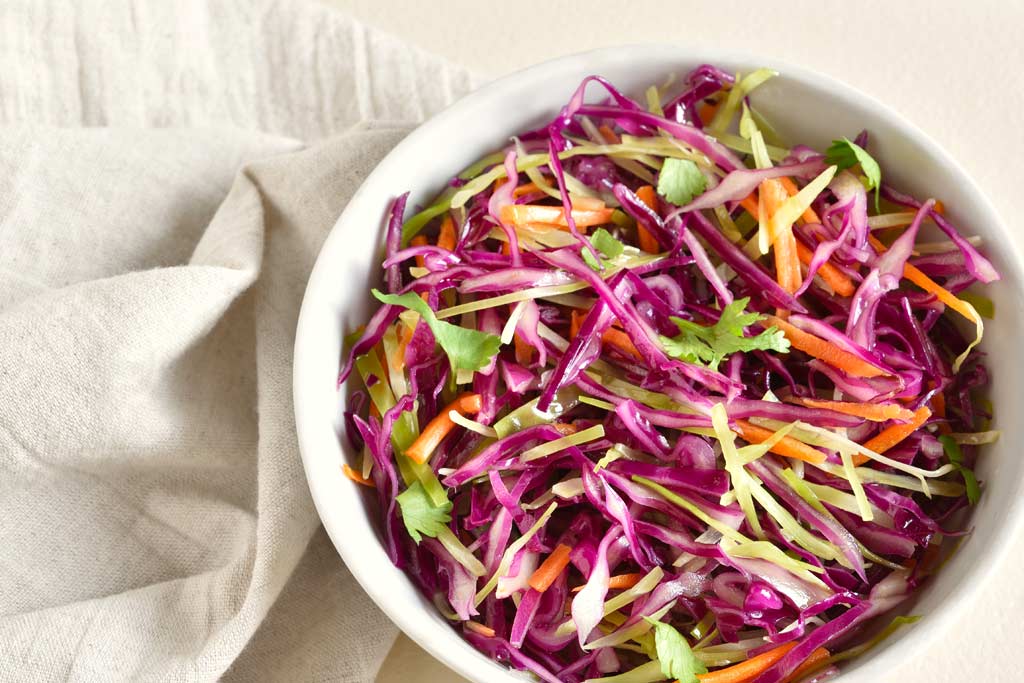
Go-To Slaw
I love crunchy, tangy cabbage. Cabbage salads, or coleslaw, date back to ancient Rome, with flavorful acidic dressings and herbs added to leaf cabbage and vegetables.
Inexpensive, long lasting, and incredibly versatile, slaws go with everything. No, not the overdressed, mayonnaise laden, limp cabbage served in delis. I crave a crisp, crunchy, brightly flavored slaw, an ad hoc inspired side dish or starter. I swap out a few ingredients and can take an Asian-inspired dish to an Italian refreshing and crunchy one. Everyone should have a slaw recipe in their back pocket.
Cabbage is a prebiotic food, with indigestible fibers that act as fuel for beneficial gut bacteria, helping them thrive and maintain a healthy microbiome. It’s also rich in fiber, vitamins, and antioxidants.
My Favorite Basic Vinegar-Based Slaw Dressing
I like my slaw to have a crisp texture and a “yeow!” bite of bright acid. I use equal parts vinegar and oil. Feel free to add more oil to quiet down the bite. You can change this up to pair with whatever you are serving. Use several teaspoons of toasted sesame oil, and add grated ginger for Asian flavors. Use white wine vinegar and walnut oil, and add some sliced apple and celery root, for French flavors. Add some hot sauce and crushed chilies for spicy flavors. Experiment and have some flavorful and gut healthy fun.
Serves 6, with leftover dressing
For the dressing
½ cup apple cider vinegar
2 tablespoons honey
3 teaspoons Dijon mustard, grainy mustard, or a mix
½ teaspoon sea salt
¼ teaspoon freshly cracked black pepper
½ cup extra virgin olive oil
Optional add-ins: celery seeds, yellow mustard, grated ginger, lemon or lime zest, maple syrup, and hot sauce
For the slaw
I use a mandoline to slice my cabbage. You don’t need a fancy, pricey mandoline. An inexpensive Japanese model purchased online works perfectly and lasts for years. (Be careful and use a protective glove or kitchen towel to guard your hand.)
2 cups thinly sliced green cabbage
2 cups thinly sliced red cabbage
2 cups savoy cabbage (my favorite!)
2 carrots, grated
1 red onion, thinly sliced
Optional add-ins: sliced apples, thinly sliced celery root, dried cranberries, thinly sliced radish or daikon, sliced green onions, and more
Champagne Mango Slaw with Crunchy Rice and Lime-Miso Vinaigrette
I crave this salad/slaw all year round. The flavors and colors are bright. The texture has everything you could want, with a mix of tender mangos and crunchy cabbage—and for a fun addition, I add clusters of fried rice.
Leftover rice does this cool trick of becoming prebiotic when cooked, cooled, and then reheated.
When rice cooks, its starch gelatinizes. Cooling the rice creates a process called retrogradation; starch molecules re-crystallize into a form your body can’t digest. This retrograded starch acts as a prebiotic, passing undigested to your large intestine, where beneficial gut bacteria ferment it.
Who knew fried rice was actually good for you! By the way, pasta does this too. The star of the slaw is the champagne mango. Champagne mangoes, or honey mangoes, are small, yellow, and kidney shaped. They are delicately flavored with a floral fragrance, tender and without the stringiness of large green mangoes; they are available from February through July. Mangoes are a delicious prebiotic ingredient, loaded with fiber.
Miso is a good example of an ingredient that is both a prebiotic and probiotic as it fermented and a food source of dietary fiber.
This slaw is a main dish, a side dish, or a filling for a wrap, and perfect any time of day. I serve it with grilled fish, chicken, stir fries, and, of course, solo.
Serves 4-5
(To shred the cabbages and peppers, I use a mandoline)
2 cups shredded napa cabbage
2 cups shredded green cabbage
2 cups shredded red cabbage
2 red peppers, sliced very thinly
3 champagne mangoes, peeled, pitted and cut into thin strips
2 carrots, grated
Garnishes: Cilantro leaves, fresh lime juice, and thinly sliced scallions
For the vinaigrette:
2 tablespoons white miso paste
2 teaspoons honey
¼ cup fresh squeezed lime juice
2 tablespoons extra virgin olive oil
2 teaspoons toasted sesame oil
2 tablespoons hot water
Optional: 1 Fresno chile (looks like a red jalapeno, with a spicy, fruity flavor), sliced thinly
1. Whisk miso, honey, lime juice, EVOO, sesame oil, and hot water to form a vinaigrette.
2. Toss cabbage, peppers, mangoes and carrots to mix. Toss with vinaigrette until well coated.
3. Garnish with cilantro, a drizzle of fresh lime juice and scallions
Tuscan Kale Soup
Tuscan Kale is a member of the cabbage family and is one of my favorite ingredients. I love the sturdy texture—the leaves soften when massaged with olive oil—and subtle sweetness. I use it in salads, stir fries, pasta dishes, and soups.
Loaded with vitamins, calcium and fiber, this nutrient-dense member of the cabbage family will be a versatile ingredient in your menus. This soup is gut health in a bowl. Loaded with vegetables, chickpeas, and extra virgin olive oil, this soup is delicious, easy to make and even tastier the next day.
Serves 6+
Extra virgin olive oil
1 medium fennel bulb, trimmed and cut into medium dice
2 celery ribs, sliced thinly
3 medium carrots, cut into medium dice
2 leeks (white parts only), sliced thinly
Sea salt and freshly cracked black pepper
8 cloves garlic, minced
1 bunch Tuscan kale, leaves stripped,* and chopped
2 tablespoons tomato paste
2 28-ounce cans crushed tomatoes or fresh tomatoes
8 cups vegetable stock
2 15.5-ounce cans (or boiled) chickpeas, drained and rinsed
Bouquet garni: fresh rosemary and thyme sprigs and parsley stems tied together
Garnishes: grated Parmesan, toasted sourdough bread, drizzle of best quality EVOO
1. Heat a large soup pot, lightly coated with EVOO, over medium heat. Caramelize.
2. Stirring occasionally, add fennel, celery, carrots, and leeks until golden brown (about 15-20 minutes).
3. Season vegetables with salt and pepper. Add garlic and continue cooking for another 2-3 minutes to soften.
4. Add tomato paste and stir to coat vegetables. Cook for another 3 minutes to caramelize tomato paste.
5. Add bouquet garni, crushed tomatoes and stock. Reduce heat and simmer until vegetables are tender.
6. Add chickpeas and adjust seasoning with salt and pepper.
Serve with grated parmesan, toasted sour dough, and a drizzle of EVOO.
*The tough fibrous stems are unpleasant to eat (though my dogs love them!) and can be removed by grabbing the bottom of the leaf and stripping it off the stem.
Laura Frankel—a noted kosher chef, and cookbook author—serves as Director of Culinary Operations at Tamarisk NorthShore. She is also a product development specialist and has worked as culinary director for a media company.