Local Jewish teen groups help teens ease their way back to in-person world
MICHELLE COHEN
Even as COVID numbers continue to ebb and flow, local youth professionals and teen group leaders are nurturing the mental, social, and emotional well-being of Chicago Jewish teens, now reacclimating to life outside of quarantine.
“Teens face a variety of challenges, and we want to help them understand their mental health and create environments where they can thrive,” said Ari Handel, BBYO’s Director of Inclusion, a Chicago native now based in Cincinnati.
The self-actualization process, integral to teen development, was impeded during the pandemic, said Julia Draper, LCPC, JCFS Chicago’s Response for Teens Assistant Director. “Self-actualization is the journey of coming into one’s beliefs and self throughout one’s lifetime, but in adolescence, there’s a lot that can get crystallized as our identity begins to form,” she said. “In the pandemic, it’s been difficult because a lot of that [progress] has gotten stalled.”
As life adjusts to a new normal, BBYO and Response for Teens are helping teens readapt to in-person activity. For BBYO, all staff engaged in mental health first-aid training to “recognize the signs and symptoms of a mental health challenge and connect the youth to appropriate help,” Handel said.
Teens also learn to assess their own mental health and that of their friends through a BBYO peer-to-peer youth mental health first-aid program; Chicago is one of the first cities to launch a program of its kind. Its goal is to mitigate the increased loneliness, anxiety, depression, and post-traumatic stress Handel and others are seeing as in-person programming returns.
At ” in real life” gatherings, like summer camp, BBYO has encouraged teens and staff alike to be sensitive to signs of fatigue and depletion in participants. Social workers are available on-site to support those needing guidance.
Staff at Response for Teens-where counseling has always been core to its mission-saw a huge jump in the number of teens seeking counseling throughout the pandemic, said Draper.
In recent months, Response for Teens has added initiatives to help teens reinvigorate their stagnated social skills and engage in stress-reduction exercises. Other programming teaches caregivers ways to help teens navigate an increasingly screen-focused world.
JCC Chicago, too, is helping children and teens adjust to the new normal under the guidance of Rachel Schwartz, LCSW, Director of Social Services.
After a year of spending so much time on screens, Schwartz said, “it may be challenging for [children]… to reacclimate to reading social cues and navigating peer relationships, which naturally occur during face-to-face interactions.”
Thanks to a JUF grant, JCC Chicago has boosted mental health support and resources in early childhood classrooms, camps, and teen programs. JCC staff and educators are engaging in professional development to learn “how to best be emotionally responsive to the unique needs of our children and teens” and to learn practical steps like offering check-ins and monitoring from mental health professionals, while keeping an eye out for symptoms of anxiety, depression, and abuse.
Fostering good mental health in children and teens means “helping children identify and label their feelings, share and take turns, demonstrate empathy toward their peers, regulate their emotions, and navigate peer relationships and conflict,” Schwartz said. Mental health, she adds, is “equally as important as physical health.”
In this issue
-
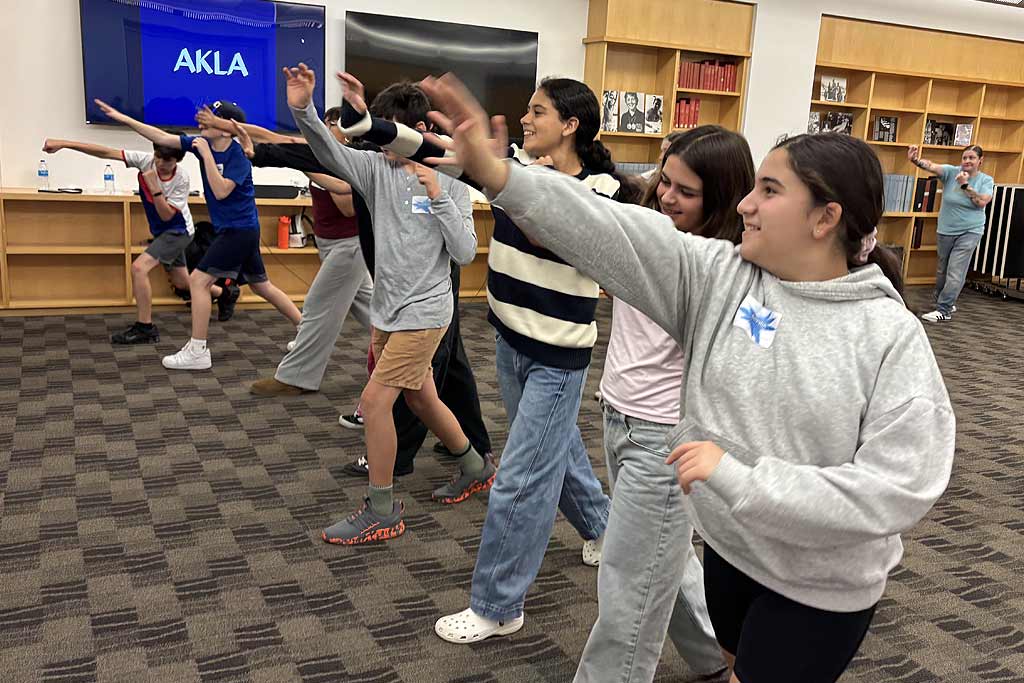
An ‘awesome’ new fellowship for teens
AKLA Chicago will be a free, five-week experiential experience for ages 12–14
Read more -
-