Melody of memory
ROBERT NAGLER MILLER
The bards have rhapsodized about music as the food of love, a universal language, and that which soothes the savage beast.
To such poetry, many might add that music is like a hand that reaches out from the past to touch the soul of the present. The many would no doubt include the more than 180,000 people who participated in at least one of JCC Chicago’s 100-plus Violins of Hope Chicago programs between April and September of this year.
As Jewish Chicago noted earlier this year, Violins of Hope is an Israeli-based father-and-son organization that collects and restores stringed instruments-primarily, but not only, violins- whose owners were Jewish musicians with connections to the Holocaust. Over the years, the father, Amnon Weinstein, and his son, Avshalom, both violinists and violin makers themselves, have amassed and repaired more than 70 Holocaust-era violins. They have transported these across the globe so that other musicians can play them, and audiences can learn more about the rich histories of these instruments and their former owners.
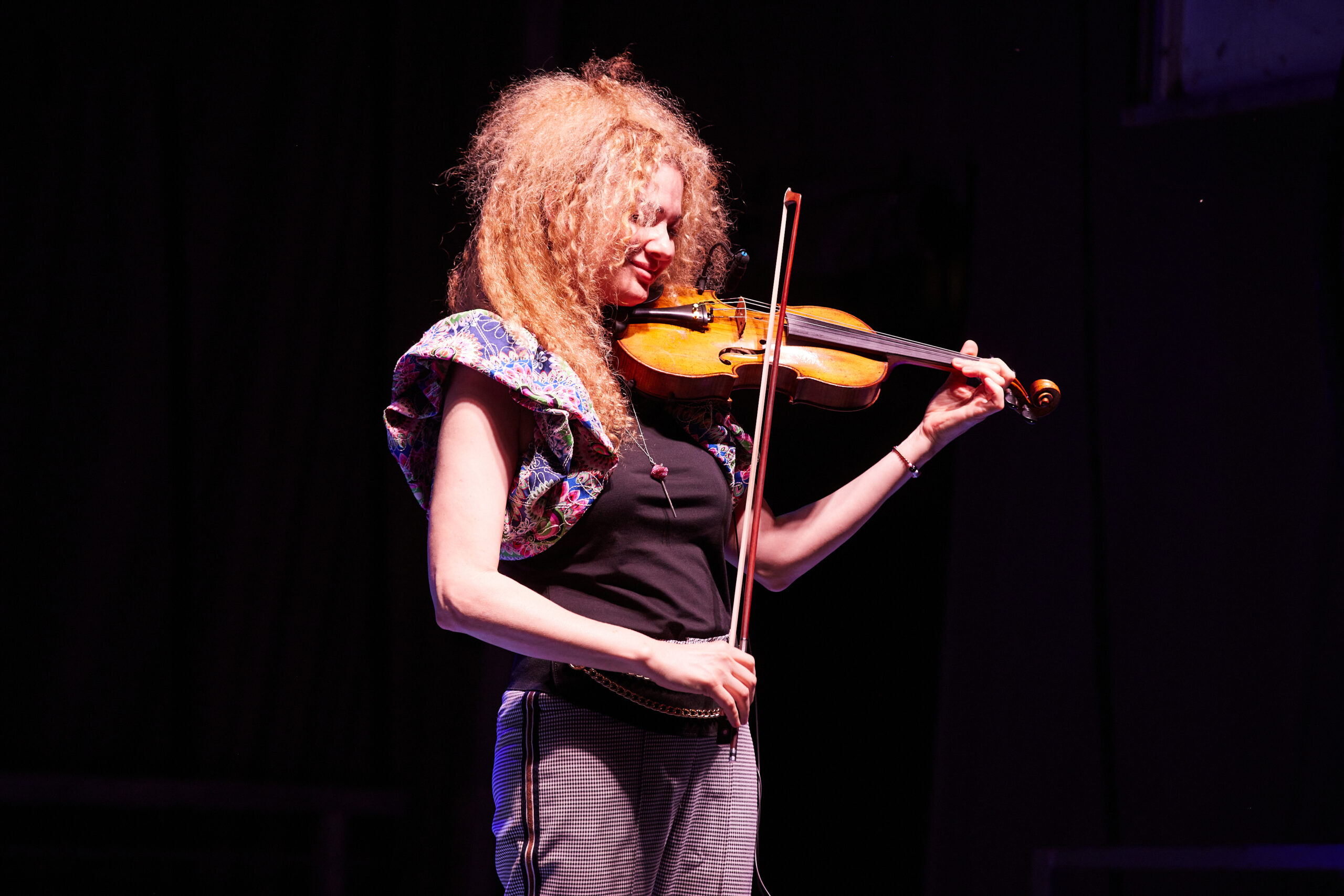
JCC Chicago’s Violins of Hope initiative was unprecedented in its depth and breadth, said Addie Goodman, JCC Chicago President/CEO. For six months, the violins crisscrossed the state, traveling well beyond Chicago and environs to Springfield, Dekalb, Urbana-Champaign, Elgin, and Joliet. Professional musicians from the Chicago Symphony Orchestra and Chicago Lyric Opera Symphony, along with members of smaller musical ensembles and high school violin students, played to packed audiences in churches, synagogues, libraries, parks, museums, and traditional concert halls, many of which also served as venues for the exhibition and demonstration of the instruments.
In Chicago, one audience member whose soul was stirred was Rev. John Cusick, a retired priest from the city’s Old St. Patrick’s Church and longtime leader in Catholic-Jewish relations. Alongside hundreds in the historic church in the West Loop, Rev. Cusick listened to haunting pieces by Jewish composers who had created the music while in concentration and death camps. Only one composer survived.
“I considered it a sacred evening,” said Cusick. “While I was sitting there, I couldn’t help but think of the hands of those who had once used the violins … and those who put pen to paper. It’s staggering. Out of harsh reality came this magnificent music.”
Connecting to the past, finding hope in the midst of despair, and transcending evil to find the good in humankind: Those were the feelings that the organizers of the Violins of Hope Chicago strove to elicit, said Ilene Uhlmann, the J’s Director of Engagement, who oversaw the programs.
Abby Izaks, a Deerfield High School student who played a Violins of Hope instrument during her school’s Holocaust commemoration, felt connected to the past in a deeply personal way. Her great-grandparents, Abe and Frieda Swier, had survived the camps. “It was really important to me” to participate in the Violins of Hope program at the high school, said Abby. Her paternal grandmother, daughter of Abe and Frieda, was in the audience for the performance, and “she was very emotional,” Abby said.
Goodman said she was thrilled to secure so many first-time funders to support Violins of Hope Chicago. For one major supporter, the Pritzker Military Foundation, it was “a natural fit.” Susan Rifkin, Chief Operating Officer of Philanthropic Activities for both the Pritzker and its sister foundation, the Tawani Foundation, observed that both the Pritzker Military Museum & Library and Violins of Hope share a common goal: advancing stories of courage and resilience. She added, “Every individual has a unique story-much like the stories told through the Violins of Hope.”
Chicago audiences will have a final opportunity to hear the Violins of Hope, when “We Are Here: Songs from the Holocaust,” is performed at the Salt Shed on Nov. 6. Learn more at jccchicago.org.
Robert Nagler Miller is a journalist and editor who writes frequently about arts- and Jewish-related topics from his home in New York.