By the age of 11, I had officially dropped out of Sunday school.
It wasn’t a dramatic tween rebellion. There were no tantrums, just a series of arguments that I repeatedly presented to my parents, until we compromised that I could leave in sixth grade.
Aside from this experience, I was a reliable student. I did my work, met expectations, and loved to please. School was a place where effort made sense to me and was something I found extremely rewarding. On the other hand, Sunday school simply didn’t bring me the same satisfaction.
I even refused to have a bat mitzvah, not out of anger or defiance, but indifference. As my homework load increased and extracurricular obligations became more demanding, I reasoned that I was simply too busy to bother with more on my schedule.
The decision sat quietly in the background of my life for many years. I still identified as a Jew, attended synagogue on the High Holidays (most years), and participated in other Jewish traditions like Passover seders. Minimal connection felt sufficient until adulthood introduced a relationship that would invite me to engage much deeper; I met the man who would become my husband.
He came from a Conservative Jewish family in a New York community that he lovingly refers to “Conservadox,” where Jewish life was not just inherited, but actively practiced. As our relationship grew more serious over the course of a couple of years, he asked me to formally convert to Conservative Judaism prior to getting married.
At first, I was admittedly a bit offended. I had heard of various Jewish laws about matrilineal descent, but I also felt like my identity was being questioned. My mother, who was not born Jewish, was arguably the most devoted to maintaining a Jewish household. Still, beneath that initial defensiveness was a quieter realization that I truly was in love.
My conversion initially felt like a technical requisite to check off. Together, my partner and I enrolled in a Jews by Choice program. I approached it the same way as I had many other obligations: I would show up and do what was asked.
But something unexpected happened. For the first time, I was encountering Judaism not as a child fulfilling requirements, but as an adult with questions. The material hadn’t changed, but I had. What I once considered irrelevant now was complex and even compelling. At the age of 28, I was naturally curious—not because I had to be there, but because I wanted to understand.
When I sat before the beit din (rabbinic court of Jewish law) and immersed in the mikvah (ritual bath), I felt closer to G-d than ever before. Judaism was not something I was passively connected to; it was something I was actively choosing.
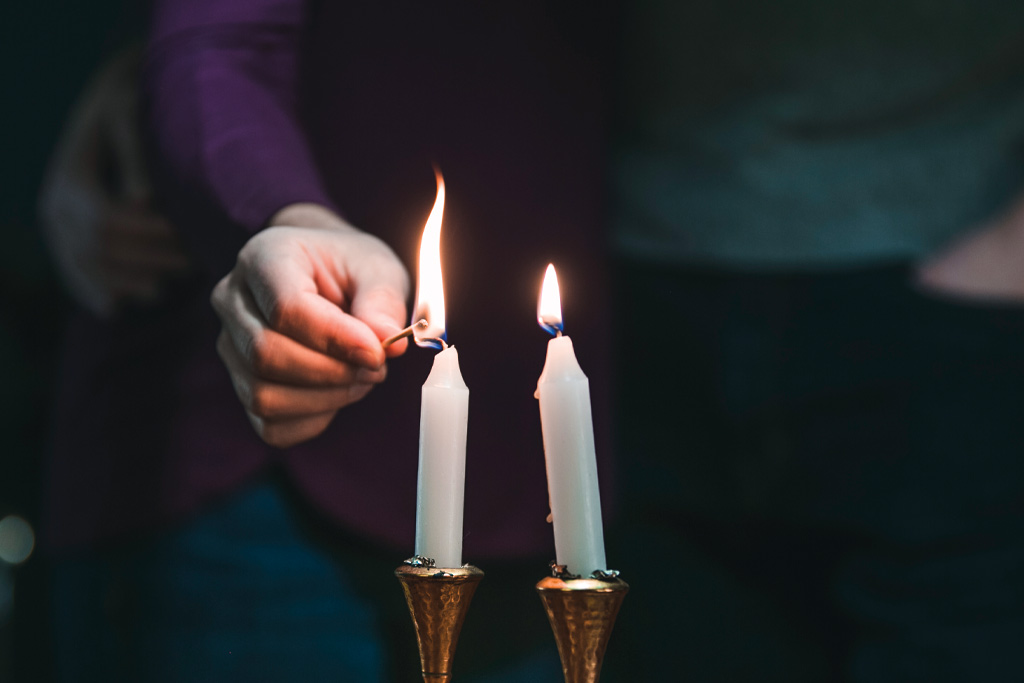
That choice has shaped my life in ways I could never have anticipated. I now am a Jewish communal professional, my daughters attend Jewish day school, and welcoming Shabbat on Friday nights is one of my favorite moments of the week with my little family. The rhythms, values, and traditions that once felt optional now provide me with welcome structure and comfort.
And my Jewish journey still isn’t over. I will soon begin preparing for the bat mitzvah I never had. As a wife and a mother, I look forward to my husband and daughters joining me on this adventure. Perhaps I’m most excited to have the opportunity to model for my children what it looks like to choose Judaism with intention and love.