Personality over party
OFER BAVLY
As Israel prepares to go to the ballot box for a record fifth time in three years, all the political players are trying to evaluate their best strategies. As a multi-party democracy, figuring out possible combinations and permutations for future coalitions is a bit like playing 3-D chess. Now, as voters focus more on political personalities than party ideologies, it is even harder–for pundits and the politicians–to assess a party’s best options.
In the not-so-distant past, parties had a more or less clear ideological line, complete with a platform that could change occasionally, but always within certain known parameters. One could count on the traditionally liberal Labor party of Ben Gurion, Rabin, and Peres to remain within the boundaries of left wing policies on the Palestinian issue, economics, and social policy. Likud, under Begin and Shamir, could be similarly counted on to stick to a traditionally conservative policy on the same issues. The plethora of other parties also held a more or less stable position along the spectrum from far left to far right, and their fluctuating electoral fates created the coalitions that coalesced around the main party on either side of that spectrum-Labor or Likud.
Since the 1995 assassination of Prime Minister Yitzhak Rabin, however, it seems that ideologies are losing importance as voters turn more and more to leaders’ personalities when deciding which party to vote for. In other words, a respected leader such as Ariel Sharon or Ehud Olmert could (and did) win the coveted Prime Ministership even as they broke away from their Likud “mother ship” and shed the party platform-opting instead to rely upon personal appeal.
At no time has this been more apparent than after former Prime Minister Netanyahu was indicted on three counts of corruption. This type of indictment would have brought his Likud or any party to total collapse 20 or 30 years ago. Instead, many voters continued to put their trust in Netanyahu himself as a trusted leader, even at the cost of following him out of power .
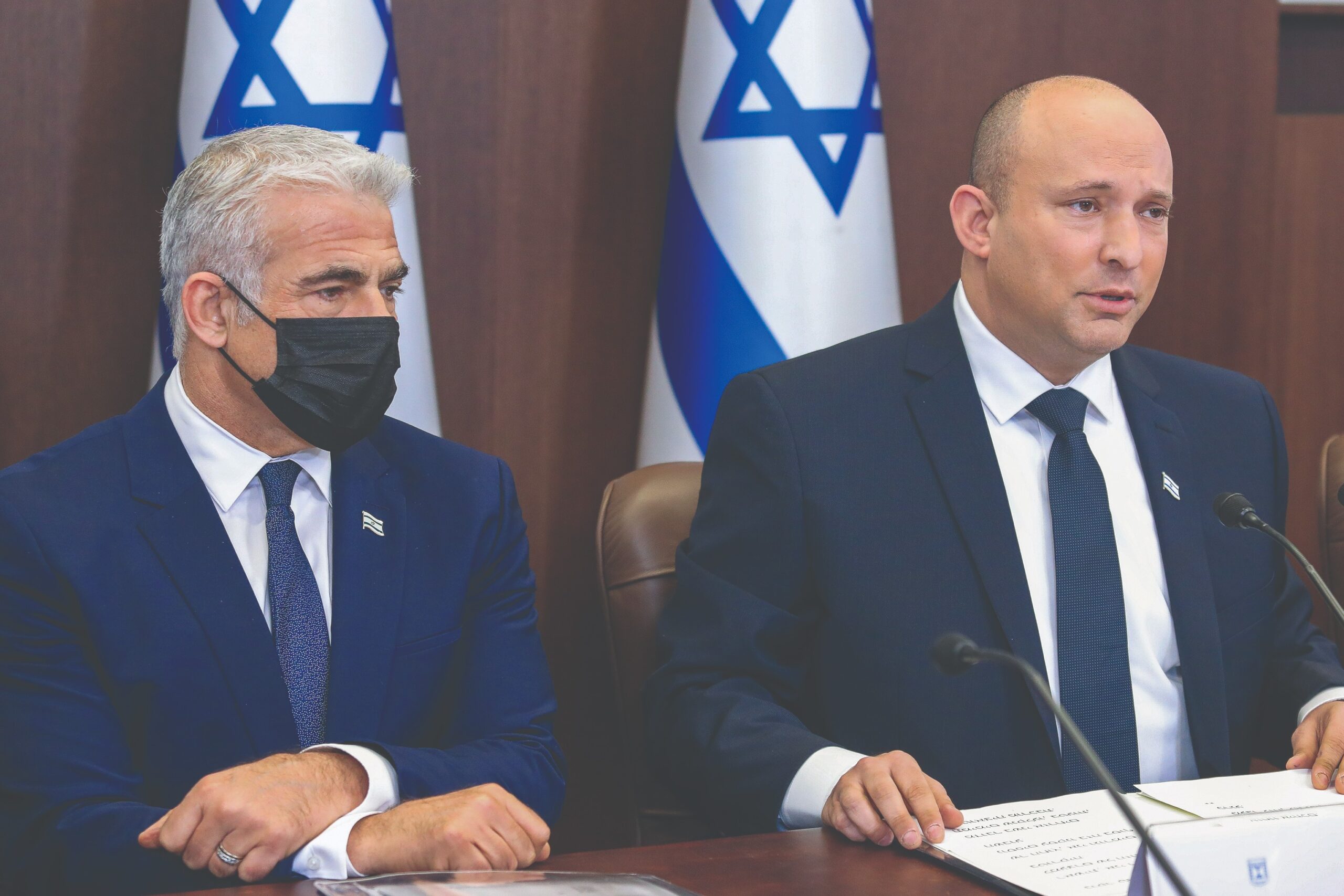
Other leaders, wishing to distance themselves from Netanyahu, broke away from the traditional right-wing bloc to form alternative parties: Bennett’s “Yemina,” Lieberman’s “Israel Beitenu,” and Sa’ar’s “New Hope.” These parties appealed to voters not on the merit of their party platform, which is by and large unknown to the vast majority of Israelis. Instead, the parties’ appeal came from their top leader, their charisma, and their rhetoric. In fact, most Israelis would be hard-pressed to define the party platform of most parties on most issues, but everyone knows the names of the party leaders, and vote for a name rather than a party.
This growing premium placed on party heads rather than party platforms creates a situation in which coalitions can be formed across wide ideological divides. When a voter cares more about the party leader, his or her personality, and their rhetoric than about ideology, that is when coalitions can be formed that were hitherto unimaginable. Such is the makeup of the outgoing government, which saw no less than eight parties in the coalition, ranging all the way from a pro-Palestinian Arab party to a far-right religious Zionist party run by a former head of the settler movement.
Now, as we head to elections, alliances will likely be formed not because of ideological similarities-but in spite of ideological differences. As Netanyahu’s trial continues and as he holds on to his leadership of Likud, it appears more and more likely that the elections will once again revolve around the pro-Netanyahu and anti-Netanyahu demarcation line, and in the case of the latter group, the most compelling political personas.
Ofer Bavly is the Director General of the JUF Israel Office.
In this issue
-

An ‘awesome’ new fellowship for teens
AKLA Chicago will be a free, five-week experiential experience for ages 12–14
Read more -
-