‘Radiating hope and celebration’
OFER BAVLY
When my cousin Dan was appointed CEO of the Diaspora Museum ( Beit Hatfutsot ), it had been 20 years since I last visited there. Visitors to 1970s and 1980s Israel will likely remember the museum, located in the center of Tel Aviv University campus.
Back in 1959, World Jewish Congress Founder Dr. Nahum Goldmann envisaged a museum that would tell the story of pre-Holocaust Diaspora communities as a reminder of the rich culture and history that were forever lost in World War II. A cornerstone was laid in 1966 and when the museum opened its doors in 1978 it was considered innovative and exciting.
It told the story of Diaspora Jewry in an engaging manner and boasted a comprehensive computer database on genealogy in which visitors could find their ancestry and origins. But by the 1990s, the museum had lost much of its appeal and a dwindling number of visitors led to it falling off the beaten track of tourists and locals.
In 2005, the Knesset passed the ” Beit Hatfutsot Law” which designated the museum as “the national center for Jewish communities in Israel and around the world.” The law signaled a renewal of the museum — in form as well as in concept.
In recent months, following an extensive 10-year renovation costing $100 million funded by the Israeli government, by the Nadav Foundation, and by private philanthropy, the 72,000-square-foot museum was reopened and rebranded “ANU — Museum of the Jewish People.” It is the largest museum of its kind in the world.
ANU (Hebrew for “we”) seeks to present visitors with the entirety of the story of the Jewish people. Rather than ending the story with the destruction of European Jewry in the Holocaust as the previous incarnation of the museum did, ANU tells the story of the lost communities — but also of the rebirth of the Jewish people after the war. Rather than a story that ends in the Shoah , the museum tells the story of a people who cannot be destroyed and will not disappear.
Whereas the previous museum told a tale of lost culture and heritage, the new museum celebrates the past, present, and future in a way that makes every visitor truly feel part of a larger collective — part of a people united by a past and together forging a future.
In keeping with the idea of “Anu ” and togetherness, the museum also celebrates our diversity, and the many ways Jews define themselves and their identity. Serving also as an educational center, ANU provides space and resources for ongoing learning for all ages.
Arguably the most memorable aspect of the old Beit Hatfutsot was the unique collection of handmade miniature models of synagogues from around the world. Visitors to ANU will be delighted to see those models on display, with a prominent place in the newly designed museum, which now boasts three new floors and four new wings.
Among the new additions to the museum is a children’s wing titled “Heroes -Trailblazers of the Jewish People” — a permanent interactive exhibit showcasing Jewish heroes of the past and present, men and women, religious and secular, Ashkenazi and Sephardic, from authors to scientists, inventors to comedians. The exhibit explores Jewish trailblazers in a fun and engaging manner that provides children with Jewish role models in a diverse range of fields and walks of life.
The new iteration of Beit Hatfutsot is different not only in its concept — expressing the richness of our people over the course of four millennia — but the museum diverges in physical appearance, too.
Whereas the old museum was a dark space with few windows and almost no external light, serving as a backdrop to a tale of rich heritage ending in tragedy, the new museum is light and airy, colorful and modern. With a huge skylight in the center of the museum, ANU is a bright and inviting space designed not only to explore our people’s tragic times but also to celebrate our people’s strength, resourcefulness, and diversity. With many interactive and colorful displays, ANU is a space radiating hope and celebration.
There is much to see in Israel, where new and exciting venues open on a monthly basis. Once travel is easier and you come to visit, make it a point to stop by ANU — the Museum of the Jewish People. You will be surprised, amazed, and invigorated to see how far our people have come — and what we can achieve when we are one.
Ofer Bavly is the Director General of the JUF Israel Office.
In this issue
-
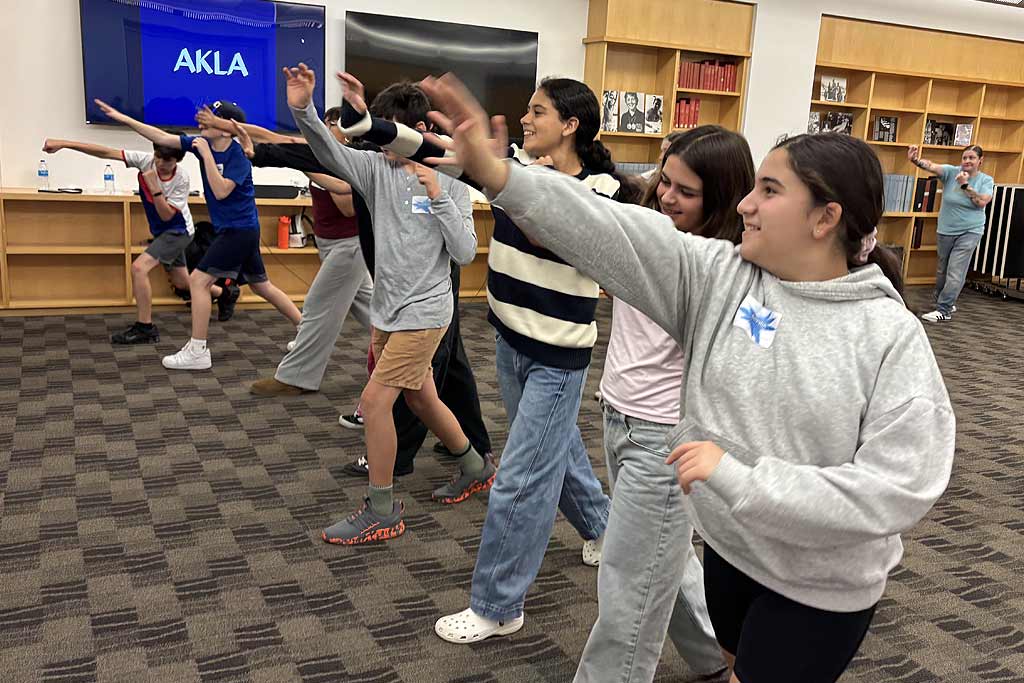
An ‘awesome’ new fellowship for teens
AKLA Chicago will be a free, five-week experiential experience for ages 12–14
Read more -
-