
Responding to ‘I’m sorry’
Rabbi Joseph S. Ozarowski
What does it mean to say, “I am sorry?” What does it mean to offer forgiveness? What do we mean by atonement? In Hebrew, we sometimes use three terms interchangeably– slicha, mechila, and kapara . Using psychological insights, we may be able to develop a richer approach to all three themes during the Days of Awe.
Slicha is usually rendered as “forgiveness.” It is noted in the liturgy as ” Slach Lanu – (O God) Forgive us!” Maimonides has a distinct method for achieving forgiveness. In the first chapters of his Laws of Teshuva (‘Repentance’ or ‘Return,’ part of his major Code of Jewish Law), he notes that there is a formula for obtaining forgiveness when one has sinned or wronged someone: one must articulate the misdeed, express regret, resolve to change, and then behaviorally change. It could be said that that this resembles some parts of cognitive behavioral therapy. Thus, we might term this “earned forgiveness.” Whether one has wronged God or a fellow human being, one must first act in their hearts, their minds, and then in their behavior, in order to be forgiven. Saying one is sorry is an essential part of this process, but by itself in not sufficient. It must be accompanied by resolve, and then action.
Mechila is also often translated as “forgiveness.” But it is a different kind of forgiveness, since it is an act of the forgiver offered freely, not connected to actions by the one who did wrong. When offered by God, it may resemble the Christian concept of “grace.” When offered by a person to another person, it may be much closer to the psychological concept of “letting go.” It is a choice we get to make for ourselves, in order to move forward. It could be termed, “unearned forgiveness.”
Kapara is usually translated as “atonement.” Think Yom Kippur–the Day of Atonement. Many have noted that the English word can be re-phrased as “at one -ment,” invoking reconciliation, reconnection, and wholeness.
But there may be yet another approach. The Hebrew root K-P-R is also connected to a word for “cover.” The Kaporet was a covering for the Ark in the ancient Tabernacle. Thus, we might look at this word to refer to a different kind of forgiveness. Not a full forgiveness or wiping clean, but one in which the wronged being (human or even God) puts the misdeed or issue, as it were, into a drawer or on a high shelf. It does not go away, but it does not have to get in the way of day-to-day life. This can be a helpful approach when dealing with wrongs that come from the messiness of life. We cannot always fully fix them or make them go away. But we can “cover them,” put them in a place that allows our lives to go on.
The Holy One is able to offer us all three: the chance to accompany our saying we are sorry with resolve and action; the chance to also have God’s unearned love, just because it comes from God; and also the ability to know that some things will not be resolved, yet we still can continue with a life that can productive and holy. It is up to us to translate these paths into our interpersonal relationships.
May we all be able to find ways to reconcile with those who have wronged us, to live in a life where we cannot fix everything, and to find peace with God who accepts us, cares for us, and wants us to have the full measure of forgiveness.
L’Shana Tova Tikatevu ! May we all be inscribed in the Book of Life for the coming year!
Rabbi Joseph S. Ozarowski, D. Min., BCC, is Rabbinic Counselor and Chaplain for JCFS Chicago and the International President of Neshama: Association of Jewish Chaplains.
In this issue
-
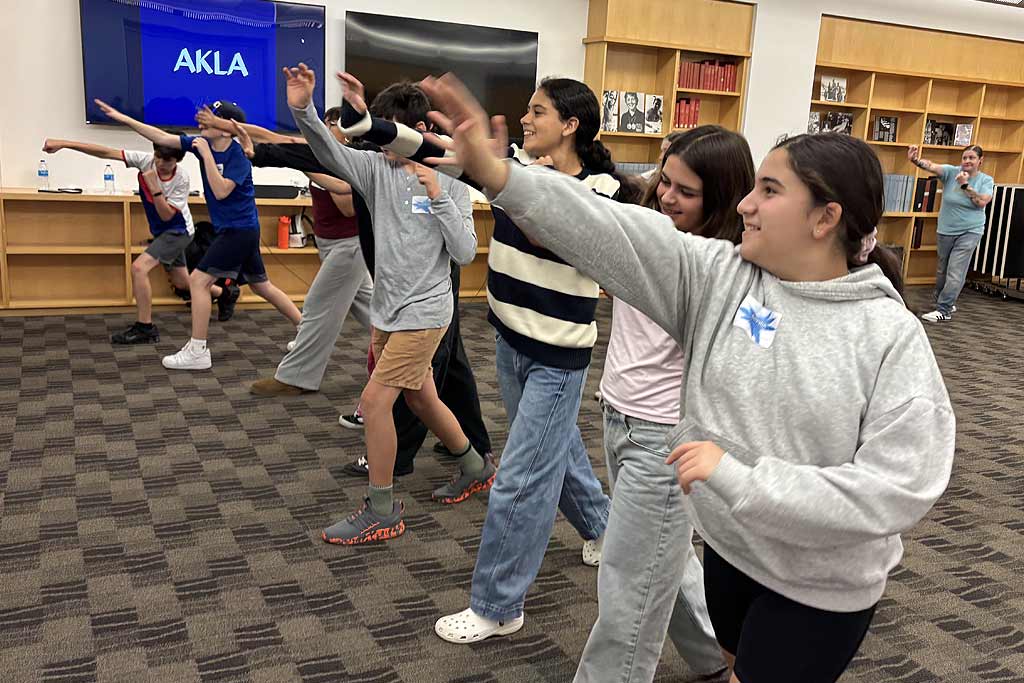
An ‘awesome’ new fellowship for teens
AKLA Chicago will be a free, five-week experiential experience for ages 12–14
Read more -
-