‘Serving the future, by preserving the past’
PAUL WIEDER
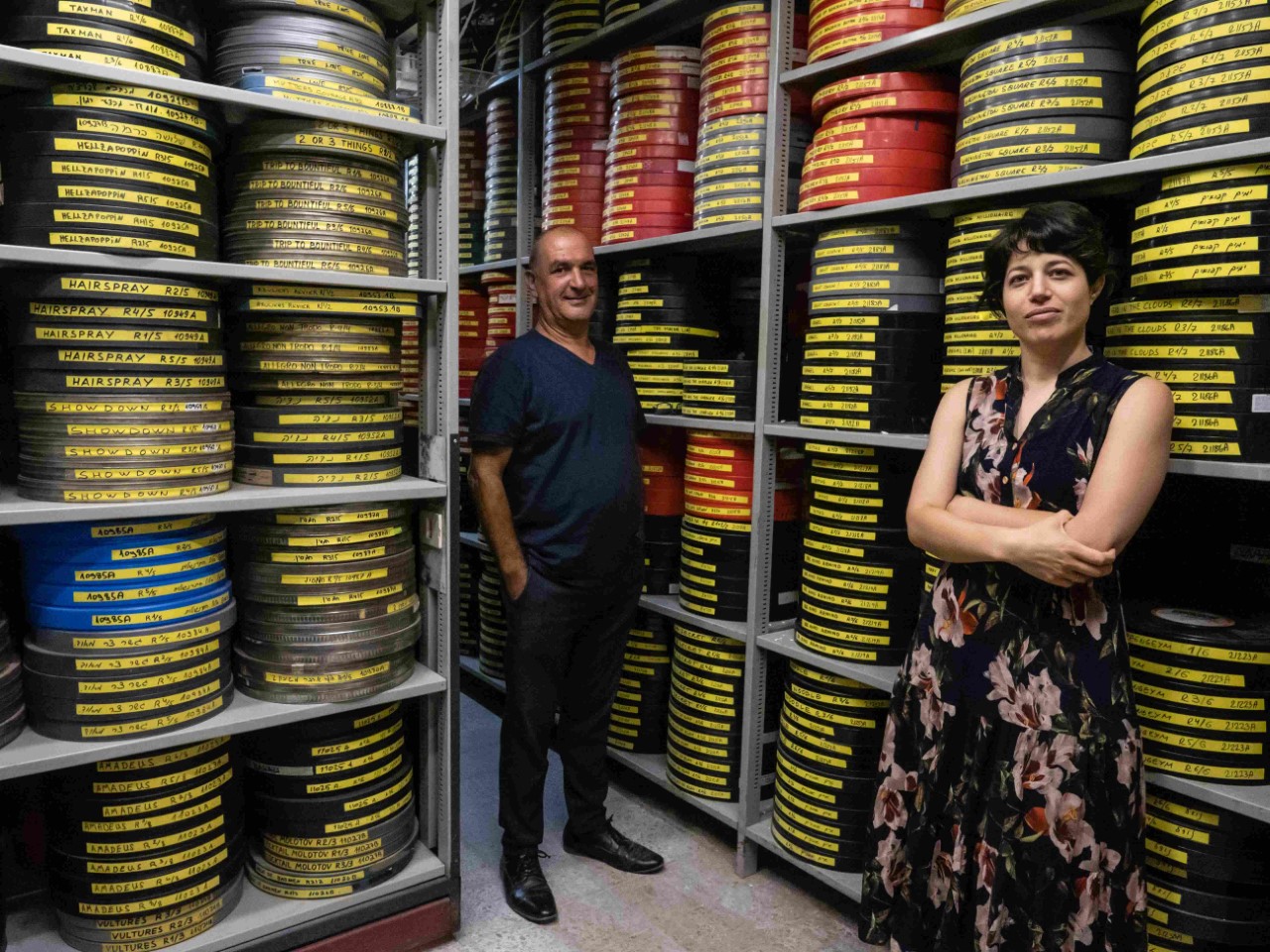
Almost all-96 percent-of the movies ever created in Israel are in one place: The Israel Film Archive. And now, nearly the entire collection is online.
“The goal is to preserve these treasures-a part of the history of the Jewish people in the Land of Israel-and make the materials accessible to the public in one click,” said Hila Abraham, who directs the Archive’s digitization efforts.
The Archive resides with The Jerusalem Cinematheque, a four-screen theater near the Old City that welcomes over a half million filmgoers annually. The theater was founded in 1974 by Lia and Vim van Leer; a decade later, Lia established the annual Jerusalem International Film Festival. The van Leers’ film collection, which they began in 1960, became the basis of the Archive.
The process of digitizing the material began in 2015, and still only 20-30% of the materials have been digitalized. After all, the Archive holds over 32,000 titles-dating back to 1896, almost the dawn of film-recorded on more than 1,200 miles of film, totaling some 4,500 hours.
“The project’s aim was transforming the Archive into a digital cultural institution accessible to everyone everywhere,” said Noa Regev, the Archive’s director, “researchers, filmmakers, culture and history buffs, students- anyone looking to locate cinematic materials.”
Disintegrating film reels-often containing the world’s only copy of a film-are now archived in 4K digital files; the Archive can store some 6 million gigabytes. The effort cost some $10 million.
“The Archive materials allow us to leave a glimpse of the life in Israel, pre-establishment of the State, and in its first decades,” Abraham said. “The voices, sounds, and sights are an integral part of the history of the people of Israel and will help preserve it forever, [and] tell the story of the Land of Israel- and life in it- to audiences around the world.”
The archive is searchable in English and Hebrew- including some 8,000 topics and 4,000 historic figures. The site also includes curator commentary. The material is divided into two categories: historic and artistic.
The “Historical View” area provides free news and archival footage, with English captions, including every Israeli newsreel from 1927-72; they range from a Tel Aviv Purim parade in 1928 to the Declaration of the State of Israel in 1948.
The “Artistic View” section offers features and documentaries, including classic Israeli films.
“The role of the Archive is serving the future by preserving the past,” said Abraham. “We believe that archival materials should be open to the public to motivate questions about the past… to create a better future, and that looking at our past can help us better understand each other, and contemporary reality.”
Visit the Israel Film Archives at jfc.org.il. The site is best accessed using Google Chrome.
In this issue
-

An ‘awesome’ new fellowship for teens
AKLA Chicago will be a free, five-week experiential experience for ages 12–14
Read more -

-