Sing a song of Seder
PAUL WIEDER
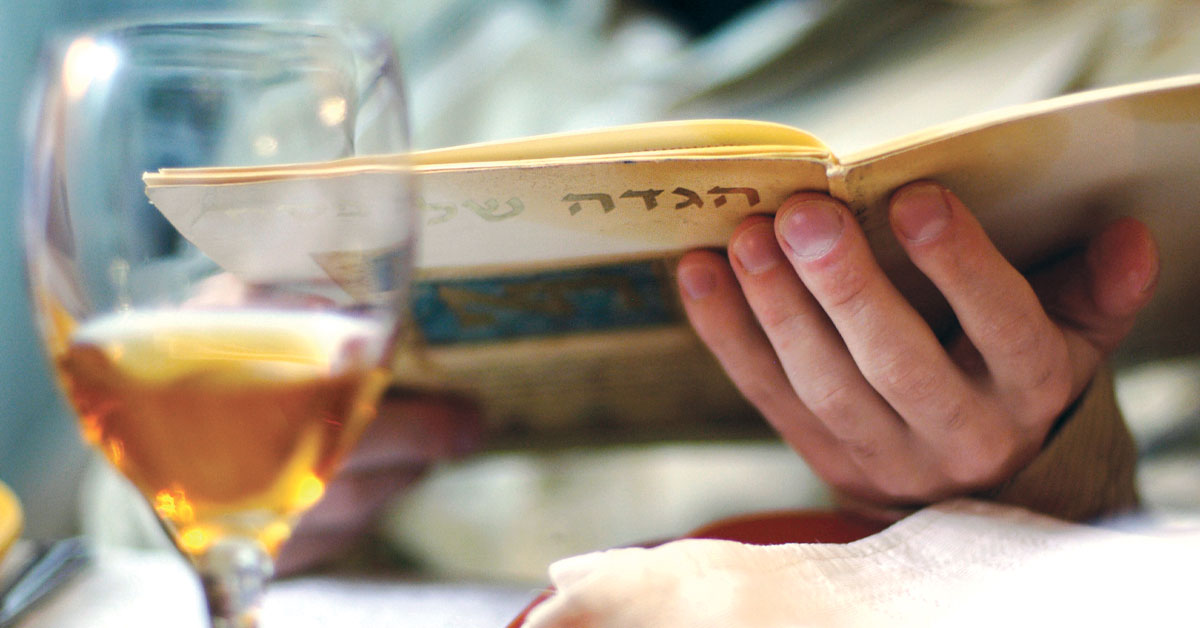
The last part of the Seder is famous for its songs, but melodies appear throughout the Haggadah.
There is even a lullaby-like tune for singing the 15 steps of the Seder themselves. Some families sing them before beginning the Seder, as a musical table of contents for the book they are about the spend the evening reading.
While the kiddush, the Four Questions, and the Ten Plagues do not require melodies, many families chant them with a sing-song cadence, or break out in full song. Likewise, the many blessings found throughout the Haggadah-such as for the wine, matzah, and maror-are often performed with a nigun, a liturgical melody.
Other passages that are often sung are found in Magid- the “storytelling” part of the Seder. These include: “Ha Lachmah Anya” (“This is the Bread of Affliction/Poverty”), explaining the matzah; “Avadim Hayinu” (“We Were Slaves”), a response to the Four Questions; “Baruch Hamakom” (“Blessed is God”); and “Vehi She’amdah” (“This is What Stood”), which notes that in every generation a threat to the Jews arises, yet God saves us.
The first proper song we encounter is “Dayenu,” (“It Would Have Sufficed Us”) which also comes during Magid. The lyrics list miracles God performed for the Jewish people during the Exodus. Of each we say, “If God had done only this, it would have been enough.”
The Hallel prayer, which is composed of Psalms, is mostly sung near the Seder’s conclusion. However, one element of it, Psalm 114, is sung to conclude the Magid. Fittingly, its first three words mean “When Israel went forth from Egypt.”
After the meal, most of the rest of the Haggadah is sung, or at least can be. Many families sing Birkat HaMazon, Grace After Meals. Then comes the Hallel, composed of Psalms written as songs for the Levite choir to sing in the Holy Temple.
Next up is a short song to “Eliyahu HaNavi,” Elijah the Prophet, whom we honor at the Seder with his own wine goblet.
The very last chapter of the Haggadah, Nirtzah, is entirely comprised of songs. One has only a few words: “L’shanah haba’ah B’Yerushalayim (ha’benuyah)!”- “Next year in (a rebuilt) Jerusalem!”
Two are alphabetical lists of praises for God. “Adir Hu” (“Mighty is He”) has a list of adjectives describing God, with a chorus that asks God to reestablish the Holy Temple in our lifetimes. “Ki Lo No’eh” (“For Him, It Befits”) lists the reasons God is worthy of majesty.
The last two take the form of cumulative songs, in which each verse repeats part of the previous ones. Similar songs include “The Twelve Days of Christmas” and “The House that Jack Built.”
The Seder’s cumulative songs are “Echad, Mi Yodea?” (“Who Knows One?”) and “Chad Gadya.” The first lists various elements of Jewish life in terms of numbers, up to 13- including 12 tribes, 10 commandments, five volumes of Torah, etc.
Most conclude the Seder with Chad Gadya, “One Kid,” as in young goat. While the story it tells is quite violent, the imagery is a metaphor for various empires attacking ancient Israel, each conquering the previous one. The goat is seen as the Passover sacrifice itself, and the “two zuzim,” or coins, as the two tablets given to Moses on Sinai. The song-and the Seder- ends on the hope that God will conquer death itself. While most of the Seder is in Hebrew, this song is in Aramaic, the language of the Talmud.
In this issue
-
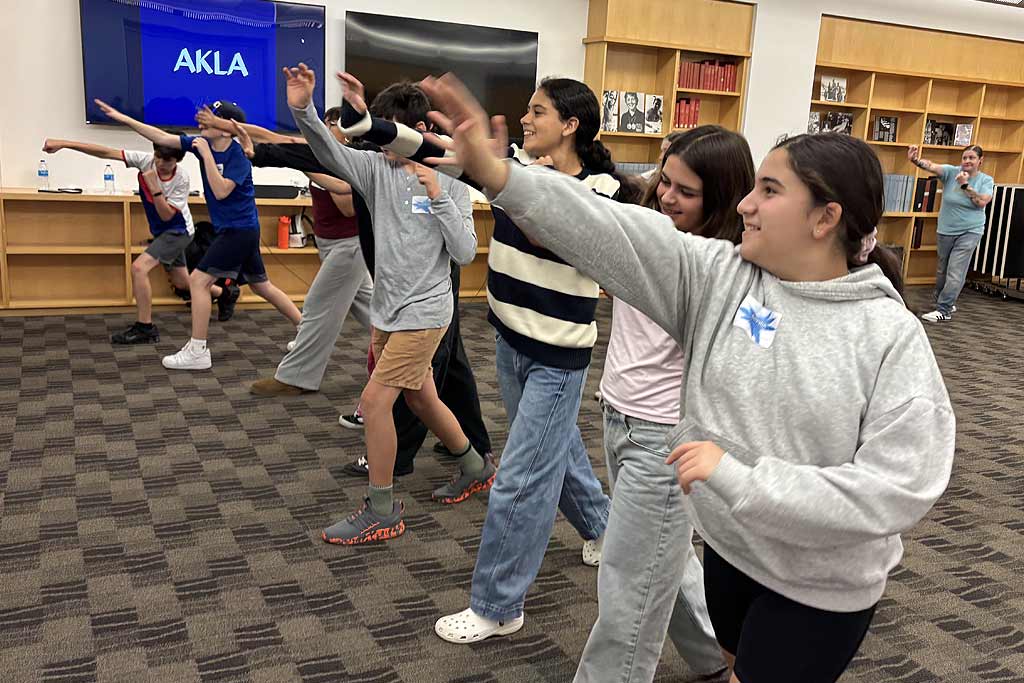
An ‘awesome’ new fellowship for teens
AKLA Chicago will be a free, five-week experiential experience for ages 12–14
Read more -
-