Soldiers, each in our own way
Rabbi Leonard A. Matanky
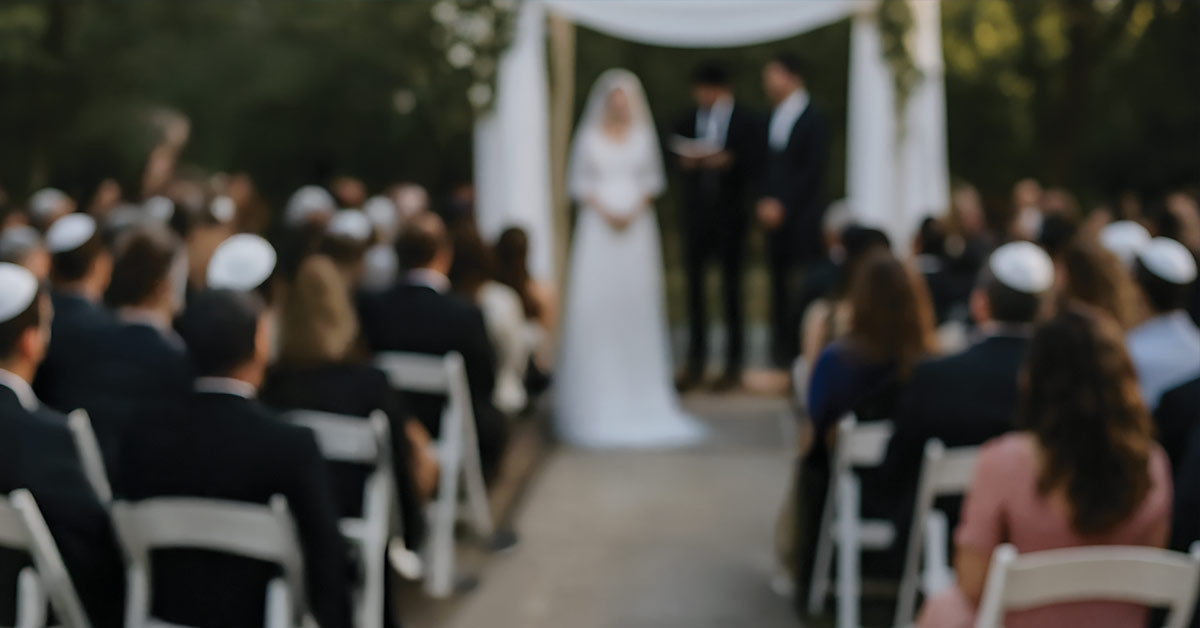
This past summer, I had the privilege of attending a wedding in Jerusalem. Despite the war, the wedding was filled with joy and celebration. But then, during the ceremony, my attention briefly shifted.
The bride and groom were standing under their chuppah. After the groom placed the ring on his bride’s finger, the ceremony paused for a new addition: the Mi SheBerach LeChayalei Tzahal : the prayer for the soldiers of the IDF. It’s become a common addition to wedding ceremonies in the Modern Orthodox/Religious Zionist community since October 7.
This time, as the singer sang the prayer, I noticed a woman with both hands on the head of a young man seated before her. He, while wearing a suit, had an M-16 slung over his shoulder, an unmistakable sign of a soldier on leave for a family celebration. With tears streaming down from her closed eyes her lips moved with the words of the prayer.
Later, I learned that she was the bride’s aunt-and the soldier was her own son.
The intensity of her prayers, her obvious fear, and her love for her child, moved me to tears. I imagined what she was enduring, day after day, knowing that her son was in harm’s way, defending the Jewish people, risking his life along with the hundreds of thousands of brave soldiers in the IDF.
It was a moment I hope I never forget. Within that moment lay so much of the secret of our survival: the power of prayer; the depth of a parent’s love; the hope that lives even in the shadow of fear; and the remarkable Jewish ability to embrace life, celebrate, and build, despite the dangers we face.
As we approach the High Holidays, I find myself returning to that moment, and to an insight I have now gained to one of the most powerful prayers we recite during these sacred days: Unetaneh Tokef.
That haunting piyyut [prayer-poem] speaks of the Day of Judgment, of how each soul passes before G-d ” kivnei maron .” The Talmud (Rosh Hashanah 18a) offers three interpretations of this mysterious phrase. One likens us to vulnerable sheep, passing beneath the staff of the Shepherd. Another views us as people climbing the slopes of Mount Meron, each making their own precarious climb. But the third image, the one I now grasped, describes soldiers, “numeron” [Greek for “military unit”] marching in formation before a heavenly review.
Until that moment-until I saw that mother, her hands on her son’s head, tears flowing as she uttered the prayer-I don’t think I ever fully appreciated that third image. But now, I do.
Today, Am Yisrael is passing before G-d as soldiers both literally and figuratively, as defenders of our people and our land, walking a path of danger, sacrifice, and hope.
And as we approach the High Holidays, we must see ourselves as one nation, bound together by fate and faith. Our prayers, our deeds, our teshuvah, tefillah, and tzedakah [repentance, prayer, and charity, referenced toward the end of the Unetaneh Tokef] not only shape our destinies, but also the destiny of our people.
This Rosh Hashanah and Yom Kippur, I will be thinking about that mother, imagining myself in her place. I will be whispering prayers not only for the safety of my children, but for peace and redemption for the entire Jewish world.
May our prayers rise to the heavens, as the prayers of that mother surely did at that wedding. May G-d bring peace and security to His people and His land. And may all the soldiers of the IDF–our modern-day bnei maron —return safely home to the embrace of their families, fighting a silent war of their own, as their children secure our future and our land.
Rabbi Leonard A. Matanky, Ph.D. is the rabbi of Congregation K.I.N.S. of West Rogers Park and dean of Ida Crown Jewish Academy.