Spiritual gratitude
RABBI SHAANAN GELMAN
The ” Mah Nishtana ” contains a series of simple questions, expressing curiosity sparked by simple comparisons. Each is designed to be understood even by the youngest and simplest minds in the room.
And yet, if we look deeper, even the first raises its own question.
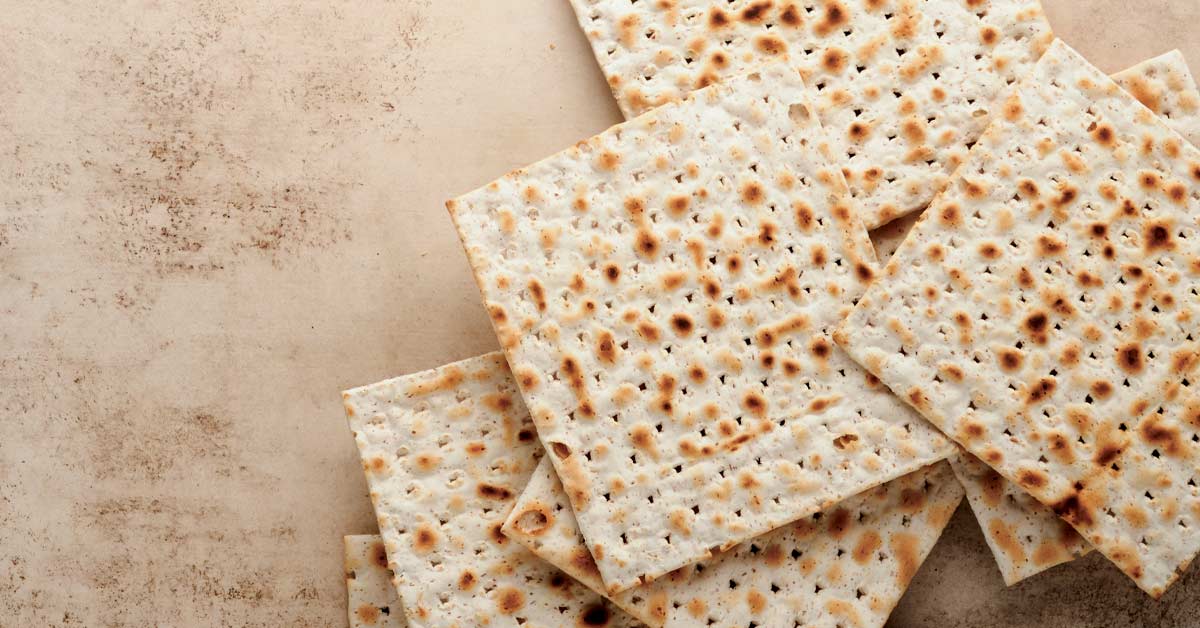
“On all other nights we eat leavened bread and matzah,” it says, “but on this night, we only eat matzah.”
But… do we? When was the last time that we broke out a box of Manischewitz matzahs and placed them on the dinner table alongside an everything bagel? Whose custom is it to eat both chametz (leavening) and matzah, at the same time, on all other, non-seder nights?
Rabbi Moshe Schreiber–the late 18th century scholar, founder of the Pressburg Yeshiva, and author of the Chatam Sofer -explains that this is a reference to the contrast between those sacrificial rites in the Temple during the rest of the year and those offered on Pesach.
He explains that, on all other days we would offer the korban Todah , the Thanksgiving offering, which included 40 loaves of bread–30 of which were unleavened, but 10 of which contained chametz . As a result, this offering may not be brought on Pesach. On all other occasions it was offered regardless. This is what our Mah Nishtana observation was referring to.
But then Rabbi Schreiber adds a remarkable insight. The Todah offering was designed as an expression of gratitude, and it seems quite conspicuous that we would lack gratitude during Pesach, when we ought to be even more effusive with our appreciation! He explains that our gratitude on Pesach takes on a different form.
After all, what was at stake in Egypt? Not only were our lives endangered, but our souls were as well–we stood, according to our Sages, on the lowest level of impurity, and on the verge of a complete spiritual collapse, had G–d not swooped in at precisely the moment that G-d did.
Indeed, the Haggadah emphasizes that the most important redemption we experienced was spiritual. Not only was it the case that ” avadim ha’yinu ” (we were slaves), but our souls were in peril, as well, because our ancestors had been idol worshipers.
The greatest freedom in the world, the most redemptive thing we can do, is to become spiritual beings, recusing ourselves from dependency upon spiritual chametz –human heroics, hunger, fear, arrogance, and the pursuit of wealth.
When your life is in physical peril, the halachic response is a korban Todah –replete with chametz , the very symbol of human intervention, and physical deliverance. Matzah, on the other hand, is entirely spiritual, symbolically devoid of human intervention.
We bring a Todah when we are rescued physically: when we come home from the hospital, fly overseas, or survive a life-threatening emergency. But matzah is employed when you look back at thousands of years of Jewish history and our children still know the words ” Shema Yisrael ,” and we still attend synagogue, listen to the Torah being read, and support Jewish day schools.
The Todah is offered when we survive a vicious attack on our lives and celebrate the blessing of a Jewish army: our physical endurance. But matzah reminds us that through it all we still believe in G–d, and are blessed with spiritual endurance.
This year our people’s physical existence was called into question, but the greatest miracle was the emergence of a national Jewish spirit, more unified than ever, connected to our homeland of Israel and to G–d. For all of the above, we must be grateful.
Rabbi Shaanan Gelman is the Rabbi of Kehilat Chovevei Tzion in Skokie, and the Immediate Past President of the Chicago Rabbinical Council.