Sukkot: A glossary
PAUL WIEDER
Sukkot is a festive, family-friendly festival celebrated with songs, handcrafted decorations, challah dipped in honey, and seasonal comfort food. The holiday honors the endurance of our ancestors during their 40-year Sinai trek after the Exodus and the abundance of Israel’s harvests.
My family’s custom is to host those who do not have their own sukkah-or may never have even been in one before. This year, Sukkot starts on the evening of Oct. 6 and ends on Oct. 13.
Here are a dozen words to help you celebrate:
*Sukkah (or Succah): hut
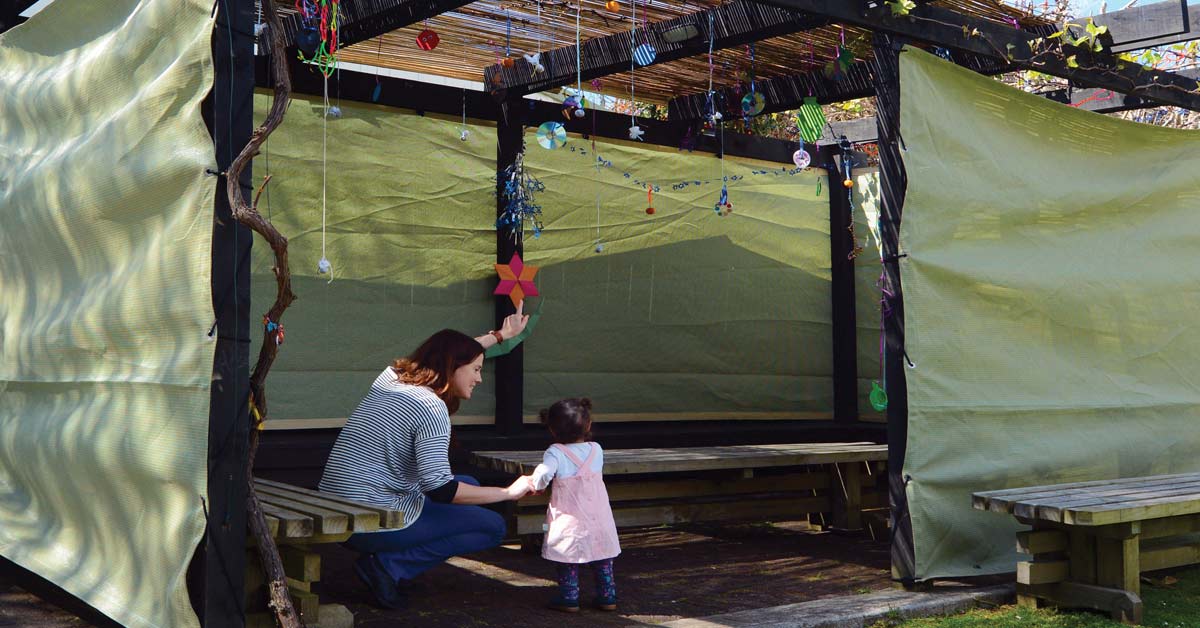
Rudimentary in design and temporary in nature, these are built on the holiday, to fulfill the mitzvah: “In huts you shall dwell” (Vayikra/Leviticus 23:42). While some live in them for the duration of the holiday, others just eat meals therein. Many communities host ” succah hops” where they visit several sukkot in one day, stopping for a nosh in each.
*Schach: thatch
Used as the roof, it can be any organic material. I have used pine branches in Cleveland and palm leaves in Jerusalem; my aunt, who has an organic farm, uses stalks from corn and sunflowers. The schach must be spread loosely enough for stars to be visible through it. (And for rain to fall through it, which is why a tarp over the schach, when the succah is not in use, is advisable.)
Leshev: to dwell, to sit
This verb is in the blessing, based on the Torah verse mentioned above, that we say upon fulfilling the mitzvah of sitting in the succah.
Ushpizin: guests
This Aramaic word can refer to the people who we invite into the succah. It can also mean the Biblical ancestors we invoke, a different couple each night-starting with Abraham and Sarah-each representing a core Jewish value. (Ushpizin is also the title of an Israeli movie set during Succot.)
Also on Sukkot, we use the Arba Minim -usually translated as the “Four Species”-during prayers, per the Torah’s instructions (Vayikra/Leviticus 23:40). There are various explanations as to what they represent, from parts of the body to levels of knowledge and observance. In any case, the symbolism is of inclusion-one must pray with one’s whole self, and with one’s entire community. The Arba Minim are the…
*Etrog: citron
This is a bumpy, lemon-like citrus fruit with a tangy aroma. It can come with a small, fragile projection, called a pitom, at the tip. If this is broken off, the etrog is rendered invalid; some etrogim, however, simply grow without one.
*Lulav: palm fond
The largest element of the four is the long, green frond of a date tree. The word also can refer to this element and the next two, taken up together as one bundle.
*Hadasim: myrtle leaves
We use at least three stalks of these small, fragrant leaves. The word gives us the Hebrew name of Queen Esther-Hadassah.
*Aravot: willow leaves
We use two twigs of these leaves to complete the Four Species…but from a specific species of willow, not the familiar weeping willow whose branches extend downward. The aravah species have twigs that turn reddish as it matures and long leaves with smooth edges.
During the Sukkot service, we hold the Four Species while parading in a procession around the bimah-the central lectern/Torah-reading table-of the sanctuary.
Hakafot: processionals
Each lap around the bimah is one ” hakafah .”
Hoshah Na: “Save us, please”
The prayers said, in call-and-response style while marching around the bimah, repeat this phrase. This phrase is the source of the English word “Hosanna.”
Hoshanah Rabbah: Great Hosanna
This can also be translated as “multi-Hoshanah.” On each day of Sukkot, we make one circuit around the bimah except on the last day, when we march around it seven times. In some congregations, the shofar is sounded after each lap.
May your Sukkot be bright and warm while the days grow short and chilly.
In this issue
-
An ‘awesome’ new fellowship for teens
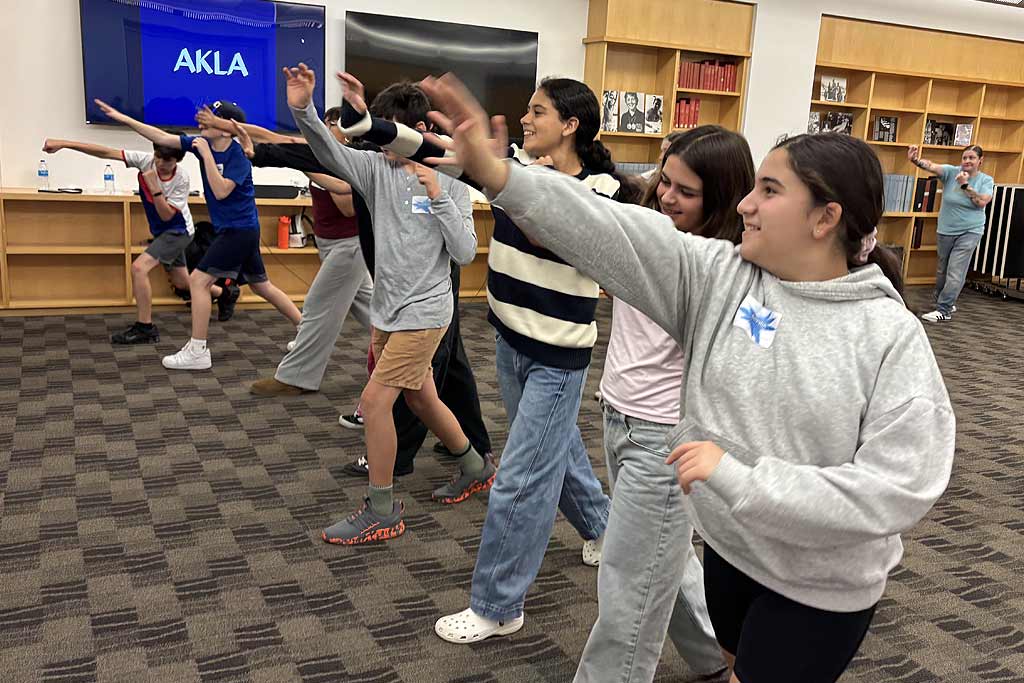
AKLA Chicago will be a free, five-week experiential experience for ages 12–14
Read more -
-