Every fall, most Jews I know can’t wait to turn the page on the calendar to a new year. And this year, most of us are more eager than ever to say “buh-bye–don’t let the door hit you on the way out” to the present year. After all, 5784 marked the darkest year for the Jewish people since World War II.
But no matter how dark it gets, our people always hope and believe that the best is yet to come. That feels very Jewish considering members of the tribe believe that when the messiah comes someday, “nation will not lift up sword against nation,” and that there ultimately will be peace.
In the current issue and in next month’s issue–as we prepare for both the High Holidays and the somber anniversary of October 7–we’ll talk a lot about Jewish resiliency.
Yes, we Jews are a resilient people who bounce back from adversity like nobody else. But the word “resilience” falls short of the magnitude of our tribe’s ability to “bounce.” After all, we don’t just spring back to where we started. Rather, we’re able to forge ahead to a new place, a better place, than where we started.
In an Aish.com article published last spring, Jewish spiritual teacher and attorney Hanna Perlberger calls the Jewish people “antifragile.” The term-coined by the mathematician Nassim Nicholas Taleb in his 2012 book Antifragile: Things that Gain from Disorder- -is the exact opposite of “fragility,” a concept that is truly foreign to the Jewish people.
In the face of adversity, “antifragility” is the ability not just to survive, but to thrive and flourish. As Taleb writes in his book: “Antifragility is beyond resilience or robustness. The resilient resists shock and stays the same; the antifragile gets better.”
What the antisemites of the world don’t get is that Jewish grit is stronger than our enemies’ hate. We’re still in the middle of the chapter that started that horrible day in October, but what we already know is that the Jewish response to October 7 has been a case of antifragility. The Jews didn’t cower at the enormity of the challenges before us. In fact, we came back better, stronger, more connected, and more determined than we were on October 6.
Rabbi Lord Jonathan Sacks, the late chief rabbi of Great Britain, believed that the Jewish people had a gift for turning our struggles into something productive and beautiful. From transforming the destruction of the First Temple into a recommitment to the Torah to willing the ashes and tears of the Holocaust into a nation for the Jewish people, whose national anthem is Hatikvah , “The Hope.”
In his essay ”Future Tense – How the Jews Invented Hope,” Sacks writes: “Judaism is a sustained struggle, the greatest ever known, against the world that is, in the name of the world that could be, should be, but is not yet. There is no more challenging vocation. Throughout history, when human beings have sought hope, they have found it in the Jewish story.”
Here’s to knowing that we’re still in the middle of writing the Jewish story, and that the best is yet to come. Wishing you and your family a sweet and peaceful 5785!
In this issue
-
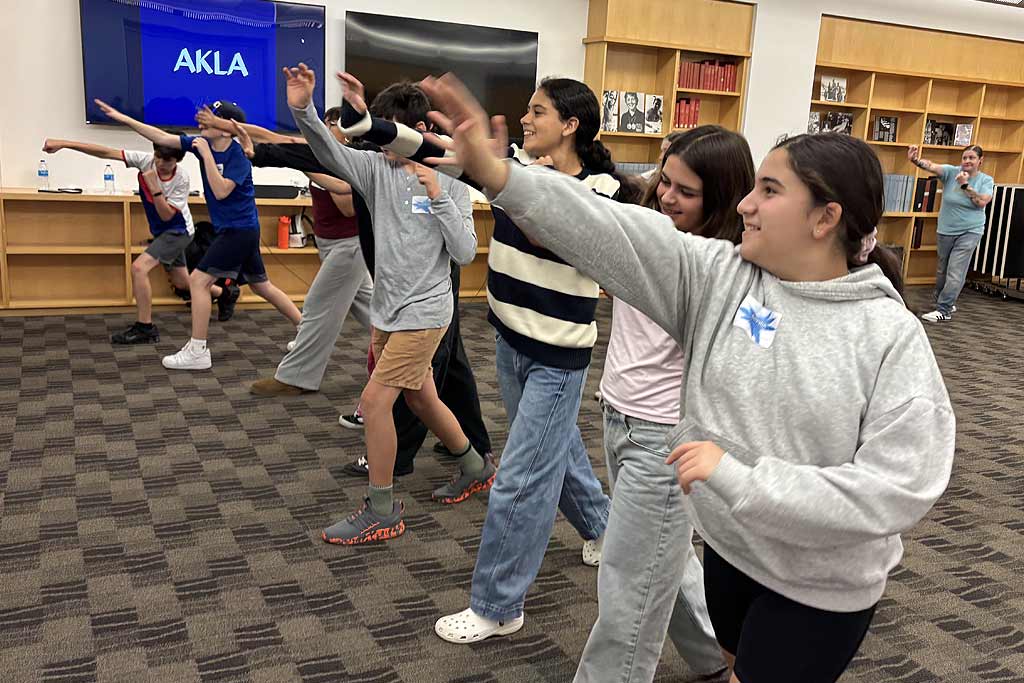
An ‘awesome’ new fellowship for teens
AKLA Chicago will be a free, five-week experiential experience for ages 12–14
Read more -
-