The past informed his 'futures'
Rochelle Rubinoff
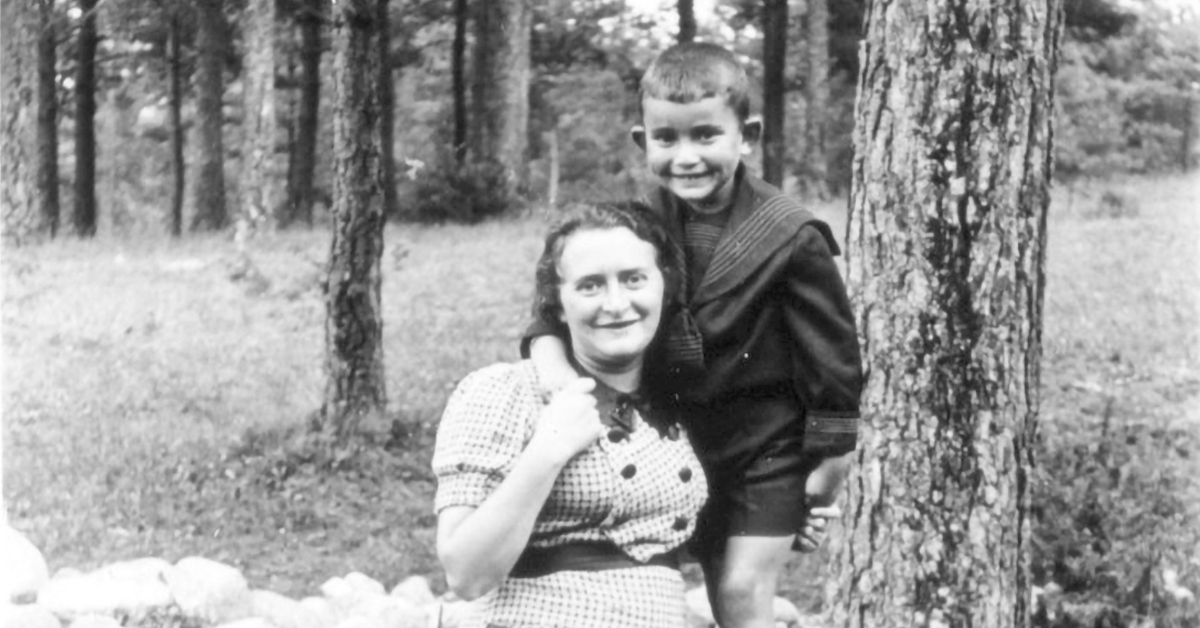
Leo Melamed was just seven years old when his world changed forever.
Born Lejb Melamdowicz, Melamed and his parents, Faygl and Moishe, both mathematics teachers, lived in Bialystok, Poland–home to about 100,000 Jews before the war. During the Nazi invasion of Poland, Bialystok fell within the first week.
The city’s mayor warned Moishe, a member of the Bialystok city council, that Germans would use him and other council members as hostages if they didn’t leave the city. Soon after, Melamed had to say goodbye to his father, not knowing where he was going.
Withholding that information was intentional. “They purposefully didn’t tell anybody because that way we could not know and therefore not tell the Nazis,” Melamed recalled. “And in fact, that’s exactly what happened. Within a week after the Germans took the capture of us, the Gestapo came looking for my father…”
Melamed described how he witnessed the Nazis ransacking their home and beating up his mother, looking for information of his father’s whereabouts. “My mother never let go of my hand and she didn’t cry, in spite of what they were doing…” he said.
Ultimately, Moishe sent for his wife and son, and they joined him in Vilna, Lithuania.
After about two years, Melamed and his family–along with thousands of other Jews fleeing Europe–were able to secure transit visas through the efforts of Japanese diplomat Chiune Sugihara. Sometimes called the “Japanese Raoul Wallenberg or Oskar Schindler,” Sugihara arranged passage through Japanese territory for the Jewish refugees–even as his own government was preparing to ally itself with the Nazis. The diplomat risked his own life and the lives of his family members to save the lives of thousands of others.
“He violated the orders of his foreign authorities and gave out over 2,000 transit visas to Japan. Actually, it was a lot more than 2,000 because if you got a visa, it was for your whole family. Sugihara saved over 6,000 souls in that fashion,” said Melamed, now 89 years old.
Last spring, the U.S. Holocaust Memorial Museum hosted Melamed’s virtual retelling of his story. At a time when both Asian and Jewish hate has been on the rise, Melamed said he felt compelled to speak out. He was joined by Nobuki Sugihara, the son of Chiune Sugihara, and historian Dr. Edna Friedberg.
To get to Japan, Melamed and his family took a three-week trans-Siberian train ride, got on a boat in eastern Russia and arrived in the port of Tsuruga, Japan, in January of 1941. “I will never forget that three-day boat ride because it was unbelievably difficult.” Soon after arriving, they applied for permission to enter the United States.
Melamed’s family was one of only 250 families that were fortunate enough to receive a visa and passage to the United States from Japan. The Melamdowicz family arrived in Seattle, but soon moved to Chicago.
In the Windy City, Melamed achieved great success. An attorney by profession, he is most well-known as the “father of financial futures trading.” He became the Chairman of the Chicago Mercantile Exchange in 1969 and, during his tenure, built it into one of the world’s largest futures exchanges. He has authored several books, most recently Man of the Futures: The Story of Leo Melamed and The Birth of Modern Finance, released last spring.
This month marks the 83rd anniversary of Kristallnacht. While recalling this unspeakable tragedy, and remembering both the victims and survivors, it is heartening to recall this unique Asian aspect to the Holocaust and righteous gentiles like Sugihara, who almost singlehandedly saved so many souls, including those of Melamed and his family.
Despite a time of great hardship, Melamed has positive memories of the Japanese people and the kindness they showed him and his parents during their four months on Japanese soil.
“I found the Japanese people to be extremely nice and welcoming,” he said. “…The vast majority of us had no money or anything. We were refugees who were running from the Nazis, and they opened their arms and let us in.”
Rochelle Newman Rubinoff is a freelance writer living in the northern suburbs of Chicago.
In this issue
-
An ‘awesome’ new fellowship for teens
AKLA Chicago will be a free, five-week experiential experience for ages 12–14
Read more -
-