To live life ‘as a Jew’
DONALD LIEBENSON
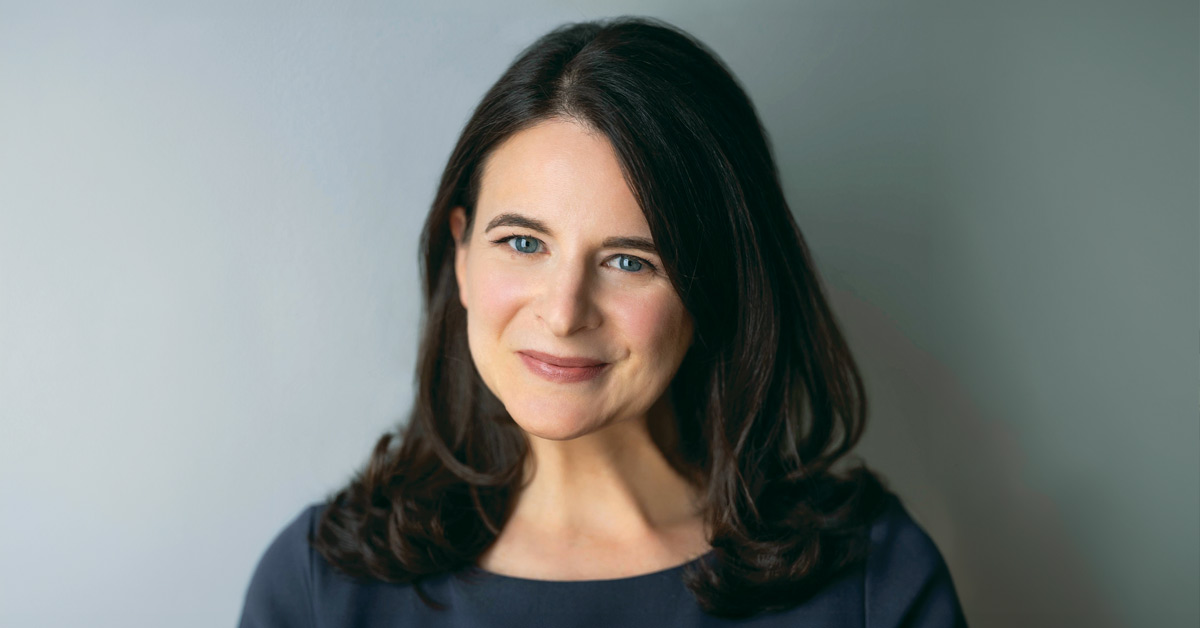
Sarah Hurwitz’s first book was Here All Along: Finding Meaning, Spirituality, and a Deeper Connection to Life-in Judaism (After Finally Choosing to Look There). It followed her Judaism journey from lapsed Jew to one who, lonely following a breakup, attended an Introduction to Judaism class. There, she “stepped into a centuries-long conversation.”
As she wrote, “Jewish texts taught me a kind of depth-language-not just words, but stories and ideas-with which I could speak to other Jews about the most fundamental questions of existence.”
Hurwitz was a White House speechwriter for the Obamas. Her new book is As a Jew: Reclaiming Our Story from Those Who Blame, Shame and Try to Erase Us. In it, she writes that she once regarded “being Jewish as more of a hassle to be endured than a gift to be appreciated.” She grew up in a secular household, where her parents nevertheless felt their children should have some sense of Jewish identity. Their Judaism was comprised of joining a synagogue, attending Hebrew school, being bat-mitzvahed, attending services twice a year on the High Holidays, and celebrating Chanukah.
But the Introduction to Judaism class was a revelation. Hurwitz took to heart the words of an Orthodox rabbi who told her that, once he began to engage deeply with Judaism, he found there was always something new to learn: “When I found Judaism, I was never bored again.”
Hurwitz writes that she felt gratitude, awe, connection, and deepening at rediscovering her Judaism. “But I also felt another, less positive emotion: confusion,” she wrote. “Where had this tradition been all my life? Why had my only points of contact with it been Hebrew school and a handful of uninspiring holidays?”
An impetus for this book was the rising tide of antisemitism following October 7. Hurwitz cited a survey- released before the attack- that found more than 40 percent of Jewish students reported having been “personally targeted” by antisemitism during college, and nearly two-thirds said they’d witnessed antisemitism. Nearly a quarter said they felt like they had to hide their Jewish identity; immediately after October 7, that number jumped to more than a third, and by May 2024, it was at 40 percent.
In the book, Hurwitz reflects on thousands of years of Jewish history to examine how we got here. “I now understand how centuries of lies about my tradition had driven me away from it; how lenses imposed on it by others had distorted and demeaned it; how my ignorance and arrogance were in part the result of a generations-long, persecution- and trauma-induced spiritual erasure,” she wrote.
She believes that it’s not enough for Jews to know their story; they have to own it.
“The Torah seems to have predicted that being different would be a lonely endeavor for Jews,” she wrote. “The word that means ‘apart’ in that verse [Bamidbar/Numbers 23:9] about the Israelites being ‘a people that dwells apart’ can also be translated as ‘alone.’ Many of the Jewish college students I met during my Hillel visits, along with other Jews of all ages, feel like they are dwelling alone. We are out of practice in dealing with antisemitism, having not had to exercise that muscle in a while, and it’s always painful when you have to get back into shape.”
But, she reassures, “None of us is alone. We are always accompanied in some way by our ancestors, and each other.”
Donald Liebenson is a Chicago writer who writes for VanityFair.com, LA Times, Chicago Tribune, and other outlets.
In this issue
-
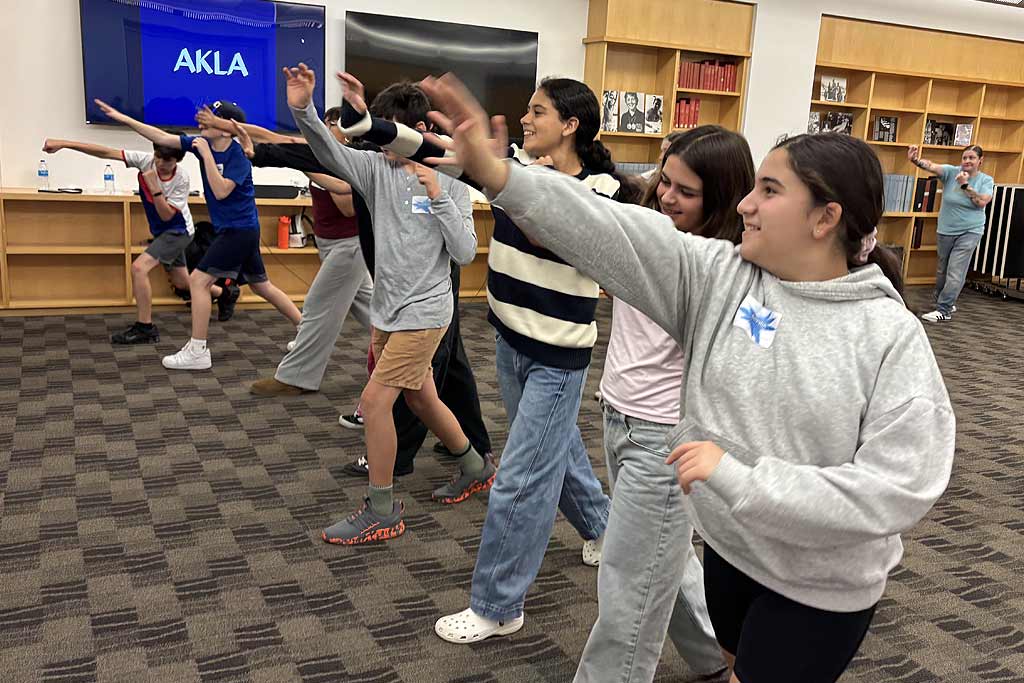
An ‘awesome’ new fellowship for teens
AKLA Chicago will be a free, five-week experiential experience for ages 12–14
Read more -
-