TOV in Tel Aviv
LISA FINGERHUT CARLTON
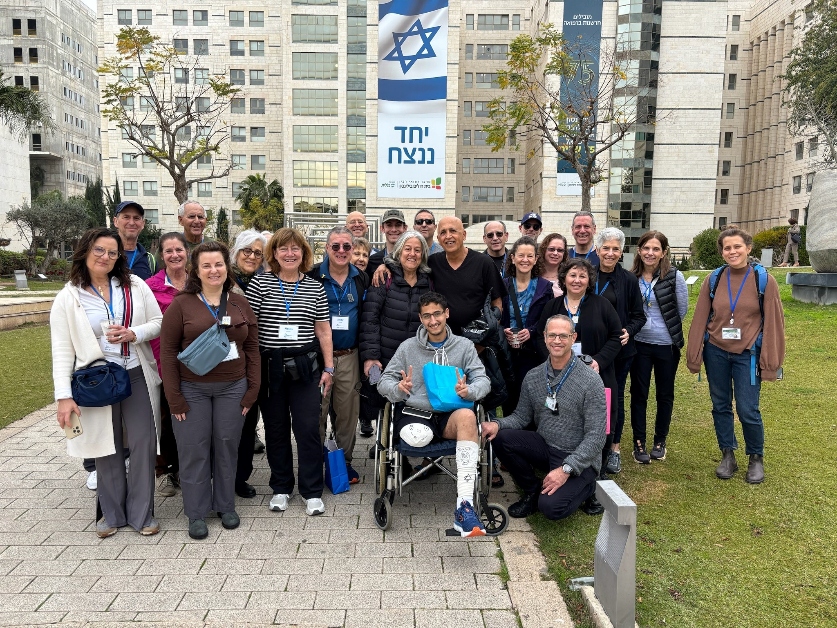
In February, JUF’s TOV Volunteer Network offered “TOV in Tel Aviv,” a JUF trip for Chicago’s Jewish community to volunteer to address critical needs in Israel. The 20 participants divided their time between volunteering, and meeting with locals and experts who offered insight into Israel’s issues, focusing on the atrocities of October 7 th and their aftermath.
During our short trip, my fellow participants and I experienced the remarkable resilience, strength, heroism, and brilliance of our people, along with the “balagan ” (Israeli slang for “tumult”) of trauma and hope, sadness and joy, reflection and action.
Trauma was visible in many forms. A walk through the Florentin-Tel Aviv’s hipster district-awed us with vibrant colors, bold lines, and words depicting stories of hostages, heroes, oppressors, and victims. Our guide, Maya, and other young artists have painted their hearts out, creating graffiti monuments screaming with all the emotions of October 7.
At Beilinson Hospital, we saw the unique physical trauma of the Israel-Hamas war. We were touched by the extraordinary commitment of doctors and administrators caring for soldiers with such honor, they call the soldiers “diamonds.” We toured a brand-new facility with state-of-the-art VR physical therapy technology. We met proud soldiers with deep wounds-who only want to recover and return to their units. Their smiles and generous dispositions are symbols of resolve and hope.
At Hostage Square, we heard the haunting, desperate trauma of parents and families that want one thing only-“BRING THEM HOME NOW.”
We were inspired by Ronen Koehler, one of the founders of Brother in Arms (Achim Laneshek), who shared how the organization pivoted from protesting against the government to mobilizing to fill in the gaps where the government had left gaping holes. Simultaneously, just on the other side of the wall, hostage family voices screamed in painful protest.
None of us were prepared for the deeply personal narrative shared by Chen Abrahams. Kfar Aza is where she was raised, where she raised her son and where most of her family lives. Chen escorted us through area after area of the devastated kibbutz describing how events played out. The shock and sadness of bearing witness to the remains of homes of young adults either murdered or kidnapped cannot be described and will never be forgotten.
At the Tel Aviv Sexual Assault Crisis Center, Miriam Schler, the director of the Center, put the atrocities of October 7 inflicted on women in perspective of the larger crisis of sexual violence facing men and women. The Association of Rape Crisis Centers issue a report on October 7, which can be found online at https://tinyurl.com/October7SpecialReport .
We were in Israel not only to open our hearts, but to lend our hands and gain awareness of the socio-economic impacts of the war. At the Jaffa Institute, which addresses economic insecurity in southern Tel Aviv, we packed boxes of food for families, the elderly, and Holocaust survivors.
In Petah Tikvah, we were introduced to Pitchon Lev, an organization-supported by JUF-working to break the cycle of poverty in Israel. In a massive warehouse, we filled hundreds of boxes with beautiful fruits and vegetables for distribution across Israel.
With residents displaced, and reservists called up, this war has created an economic crisis in addition to existing need. Israel’s NGOs have never played a more critical role.
One highlight was filling in the labor shortage by orange-picking at Moshav Shokeda in southern Israel. Working with the sounds of artillery fire as a backdrop, we harvested 15,000 oranges! We wrapped up a long day by cleaning and painting a playground in Sderot to help the city prepare for residents to return and resume “normal” life. It was a feel-good moment to assist in this transition.
I know I speak for our group in appreciating JUF for providing this opportunity with more access to people and experiences than could be mentioned here.
When our group first met, we shared why we were there. Our collective answers can be summarized by the famous Rabbi Hillel quote: If I am not for me, who will be? But if I am only for myself, what am I? And if not now, when? By the end, we knew we had gained as much as we had given, and stood by Israel even-especially-now.
A passionate and committed Jewish communal leader, Lisa Fingerhut Carleton a is a global communications professional and current president of Congregation Sukkat Shalom in Wilmette.