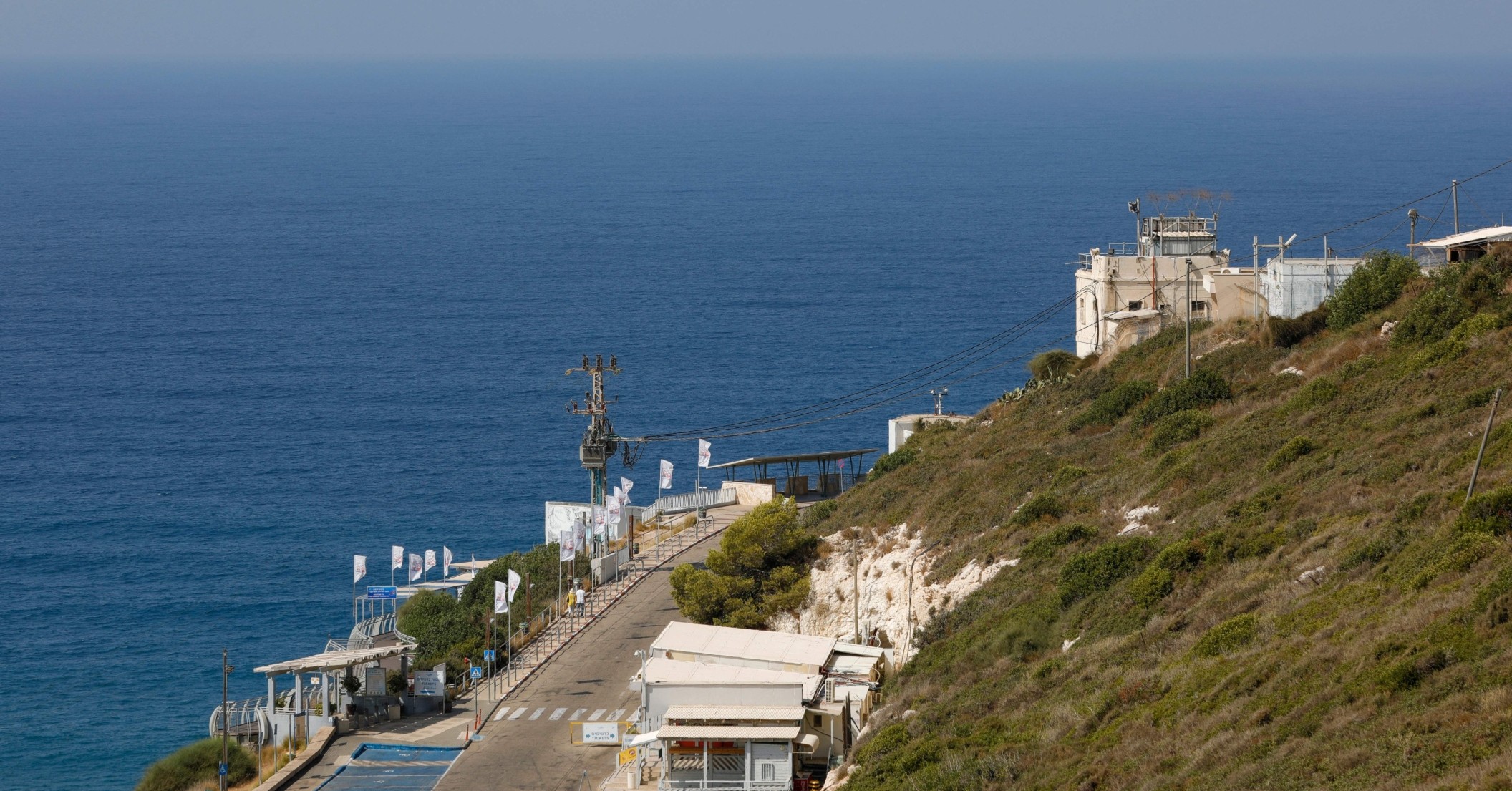
Two, if by sea
OFER BAVLY
Israel and Lebanon reached an agreement last month on maritime borders, allowing for peaceful harvesting of existing and potential gas fields in the eastern Mediterranean Sea. The agreement was the culmination of years of U.S.-brokered negotiations. The agreement, signed in October, has been the subject of fierce debate in Israel.
The agreement became necessary after Israel discovered, over a decade ago, vast amounts of gas depots in its territorial waters (12 nautical miles offshore) and in its exclusive economic zone (up to 200 nautical miles offshore). In order to equitably divide the resources, agreements needed to be reached between Israel, Cyprus, and Lebanon. Cyprus and Israel signed agreements a decade ago, as did Cyprus and Lebanon… but Lebanon and Israel, officially still in a state of war, could not reach an agreement. Even the land border between the two countries is still in dispute.
As Israel approaches a general election on Nov. 1, the issue has become political, centering around the legitimacy of a lame-duck government in making international agreements that would be binding on future administrations. The opposition, led by former Prime Minister Netanyahu, criticized the government for making concessions without what it considers public mandate and authority.
The agreement–supported by the Israeli government and the country’s top defense echelon–impacts three areas: economy, security, and law.
From an economic point of view, the agreement stands to bring billions of dollars to the effectively bankrupt Lebanese economy. While the Qana gas field, which will now be exploited by Lebanon (via the French company Total), hasn’t been prospected yet, work can now begin to ascertain its worth, while Israel will receive royalties for the field that lies partially in its economic zone.
From a security standpoint, an economically viable Lebanon-one less influenced by Hezbollah, and by extension, Iran–is a safer neighbor for Israel. By allowing Lebanon to extract gas near an Israeli field, we are creating a strong deterrent against potential Hezbollah attacks on the Israeli gas rigs. In other words, Lebanon now stands to lose, should it allow Iran-backed terrorists to target neighboring Israeli gas fields.
Further, Hezbollah demanded full Lebanese rights to the Karish gas field, which resides fully inside Israel’s economic zone, as a condition for any bilateral agreement. Israel did not concede to that demand, but did concede to other demands. Israeli critics of the agreement say that Israel made unnecessary concessions under Hezbollah’s threats, while supporters assert that by giving in on less important matters, Israel managed to de-escalate a potentially dangerous situation and secure a profitable gas deal.
From a legal perspective, the agreement is limited to the economic zones of Lebanon and Israel, without resolving the disputed demarcation line between territorial waters. That line will likely be resolved only once the two countries come to a permanent agreement on their land border. For the time being, while maintaining the status quo on the waters nearest Israel’s shores, the Israeli Navy will continue to have a free hand to patrol.
In the short term, the agreement will defuse a potentially violent escalation between Israel and Hezbollah (and Lebanon). In the long term, Lebanon may gain some financial benefits from the Qana field no earlier than five years from now. The existence of a Lebanese gas rig near an Israeli one will serve as a deterrent against terrorist attacks on the Israeli fields, while Hezbollah will present itself as the defender of Lebanese rights–and likely gain popularity domestically.
Finally, there is a strong chance that a resolution will encourage other multinationals to join Total in finding potential gas fields in the eastern Mediterranean, something they had been reluctant to do in the absence of an agreement between the countries.
On the question of whether this agreement benefits Israel, only time will tell. It seems that any agreement with an enemy country is a step–albeit a small one–toward eventual normalization… and is certainly better than a conflict, which in our estimation is always around the corner.
Ofer Bavly is the Director General of the JUF Israel Office.
In this issue
-

This Passover, four more questions
The youngest guests at our seders will likely ask the four traditional questions, but here are four other questions to chew on over matzah this holiday.
Read more -

New Stephen Sondheim biography details the towering figure
‘Walking encyclopedia of musical theater’: New Stephen Sondheim biography details the towering figure
Read more -

Celebrating spring and a crop of new productions
A celebration of Passover, warmer weather, and a crop of new productions
Read more