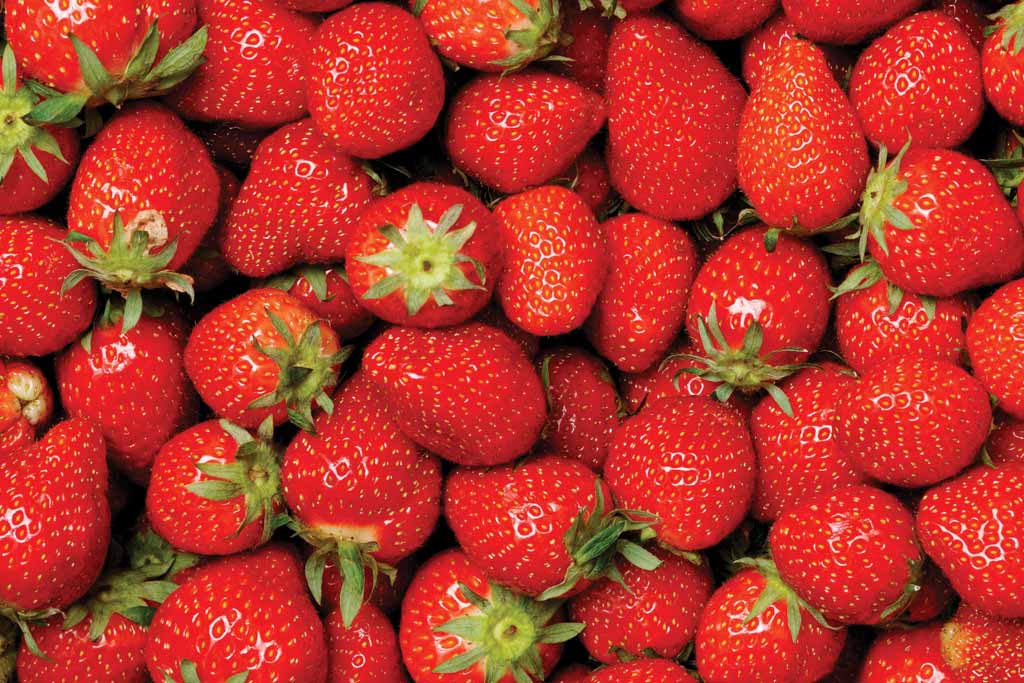
Do you remember the first time you ate strawberries, freshly picked and at peak season? I do! I was a newbie to farmers markets and was wandering through one when I was drawn into a stall filled with a potent, sweet-jammy perfume.
Tables were lined with containers of berries so red and perfectly shaped. The farmer offered a taste, and I dove in. Still warm from the sun, the berry tasted sweet and tangy with a candy-like pineapple and caramel flavor. It was so memorable and so perfect.
The light bulb went on. That berry ruined me forever from eating berries other than at peak season and small-farm grown.
Strawberries have long been associated with love, desire, and passion. The deep red color and heart shaped fruit was sacred to Venus, the goddess of love, in ancient Rome. Like red roses, strawberries were considered romantic gifts; ancient folklore says that sharing a strawberry with someone would cause you to fall in love. Strawberries are still considered the quintessential “love fruit” and are frequently served covered in chocolate on Valentine’s Day.
But strawberries love us right back! They are low in calories and sugar, but packed with vitamin C (more per serving than oranges), fiber, and antioxidants called anthocyanins. Consuming them regularly helps boost immunity, improves heart health, regulates blood sugar, and reduces inflammation, making them a nutrient-dense addition to a healthy diet.
Fun fact: Strawberries are not a true berry, but are a member of the rose family. It is no wonder that there are so many recipes around the world that pair strawberries and rose water.
Unfortunately, peak season is only about three to four weeks long, causing me to get greedy. I tend to panic-shop and end up with way too many berries. The good news is that I have recipes for you to enjoy the short season of the fruit of love.
Strawberry Salad with Strawberry-Lime Vinaigrette
This salad tastes like summer on a plate. The brightly flavored vinaigrette with tender baby lettuces, earthy beets, and sweet berries is a refreshing and vibrant dish.
For the salad
2 cups strawberries, sliced in half
2 medium beets
½ small red onion, sliced very thinly
5 cups baby spinach (I use a mix or baby arugula and spinach)
½ cup chopped, toasted almonds (or walnuts, pecans, or pistachios)
4 ounces goat cheese (or blue cheese or feta)
Extra virgin olive oil
Sea salt and freshly cracked black pepper
Preheat oven to 400°F, line a baking sheet with parchment
1. Drizzle beets with EVOO, and season with salt and pepper.
2. Wrap in foil and roast on lined sheet pan for 35-45 minutes or until a fork can pierce the beet without resistance.
3. Allow to cool before peeling and cutting into medium sized dice.
4. Arrange beets, goat cheese, berries, red onion, and greens on a platter and drizzle with vinaigrette. Garnish with chopped almonds.
For the vinaigrette
I love the complex flavor of lime with strawberries, but you can easily substitute lemon. When I “accidentally” have a glut of strawberries, I make a double batch of this vinaigrette and use it all week for every salad. Delicious!
½ cup strawberries
Zest and juice of 1 medium lime
2 tablespoons red wine vinegar
2 teaspoons honey
1/3 cup extra virgin olive oil
Pinch of sea salt and freshly cracked black pepper
Vinaigrette can be stored and refrigerated for up to 5 days.
1. Process strawberries, pepper, zest and juice, honey, EVOO, and a pinch of sea salt in a food processor until a puree is formed. Vinaigrette can be stored, refrigerated, for up to 5 days.
Melt-in-Your-Mouth Strawberry Shortcake
Strawberry season demands a shortcake dessert. Tender, cakey shortcakes with juicy berries and a dollop of softly whipped cream is the stuff of summer. Easy to make and a great do-ahead dessert for warm evenings.
Using hard-boiled eggs in doughs makes dough incredibly tender, flaky with a melt-in-your-mouth texture and without the eggy flavor. The hard-boiled yolks also inhibit the formation of gluten by coating the flour. This technique is perfect for scones, biscuits, and cookies.
Serves 6
For the shortcake
1 1/3 cups all-purpose flour
3 tablespoons semolina flour or fine-grind cornmeal
1 tablespoon baking powder
¼ teaspoon sea salt
3 tablespoons granulated sugar
2 hard-boiled egg yolks-pressed through a sieve (or grated on the smallest holes of a
grater)
6 tablespoons unsalted butter, cut into ½ pieces
2/3 cup heavy cream + 2 tablespoons
2 teaspoons vanilla extract or vanilla bean paste
Zest of 1 lemon
Garnish: coarse sanding sugar or granulated sugar
Line a baking sheet with parchment
1. Pulse flour semolina, baking powder, sea salt, sugar, and egg yolks in a food processor until small crumbles form and egg yolks are broken up.
2. Add butter and pulse into the mixture has pea-sized clumps.
3. Add 2/3 cup heavy cream and process until the mixture comes together.
4. Turn out dough onto a work surface and lightly pat the dough together.
5. Divide mixture into six pieces and gently roll each into a ball. Place on lined baking sheet and refrigerate for 30 minutes.
6. Preheat oven to 350°F.
7. Brush the tops of the biscuits with 2 tablespoons of cream and sprinkle with sanding sugar or granulated sugar. Bake until golden brown (about 25-35 minutes).
Allow to cool before slicing in half.
For the strawberries
6 cups berries, sliced in half
¼ cup sugar
Zest and juice of 1 lemon
1. Mix berries, sugar, lemon zest, and juice together
2. Allow to macerate for 30 minutes.
Whipped Cream
My husband and I disagree with whether hand-whipped or mixer-whipped is best. I insist that hand-whipped cream has more “flop” and more soul. He doesn’t want to bother. Either way, the whipped cream ties the shortcake package together.
1 cup whipping cream
2 tablespoons powdered sugar
1 teaspoon vanilla extract
1. Whisk cream, sugar and vanilla together until soft peaks form.
2. Assembly: Slice each biscuit in half and spoon berries over biscuit bottoms. Add a bit of whipped cream. Place biscuit top over whipped cream. Top with a bit more whipped cream.
Strawberry Agua Fresca
Vibrant and refreshing! This drink makes the most of peak-season berries. I like to add a touch of rose water, which enhances the berries and makes the drink really special.
1 pound strawberries
2 cups water or watermelon juice
¼ cup lime juice
2 tablespoons sugar
1 teaspoon rose water (optional)
Garnishes: club soda, lime wheels, strawberries
1. Puree strawberries, water or watermelon juice, lime, sugar, and rose water. Chill completely.
2. Skim off foam from top and discard.
3. Pour Agua Fresca into glasses with ice.
4. Top off with club soda.
Garnish with lime wheels and strawberries.
Laura Frankel—a noted kosher chef, and cookbook author—serves as Director of Culinary Operations at Tamarisk NorthShore. She is also a product development specialist and has worked as culinary director for a media company.
Tips for choosing the best strawberries
Buy local. These berries are truly the best and freshest, often picked the day they are sold. Buying local ensures superior taste, higher nutrition, and better safety, as they are picked at peak ripeness and sold within 24 hours. Local berries are typically organic or low-pesticide, are free from shipping preservatives, and support the local economy.
Aroma is key to finding the best berries. An intense sweet, jam-like aroma is going to be the best indicator of flavor.
Small to medium sized berries have the best flavor versus the larger sized berries seen in supermarkets.
Once home, store berries, stem on, in a single layer to avoid the berries crushing each other, covered with a damp towel. Wash the berries only before eating or using them in recipes.
Strawberry season is typically mid to late May through mid-June depending upon weather. Once the season begins, I urge you to find your favorite market and shop early. The berries tend to sell out.
Don’t cut the green top off your berries. You will lose too much of the berry. Gently cut the stem and leaves off the berries. Use a paring knife to cut below the stem, and twist in a circular motion to remove the stem.