‘We have so much to learn from each other’
AARON FINKELSTEIN
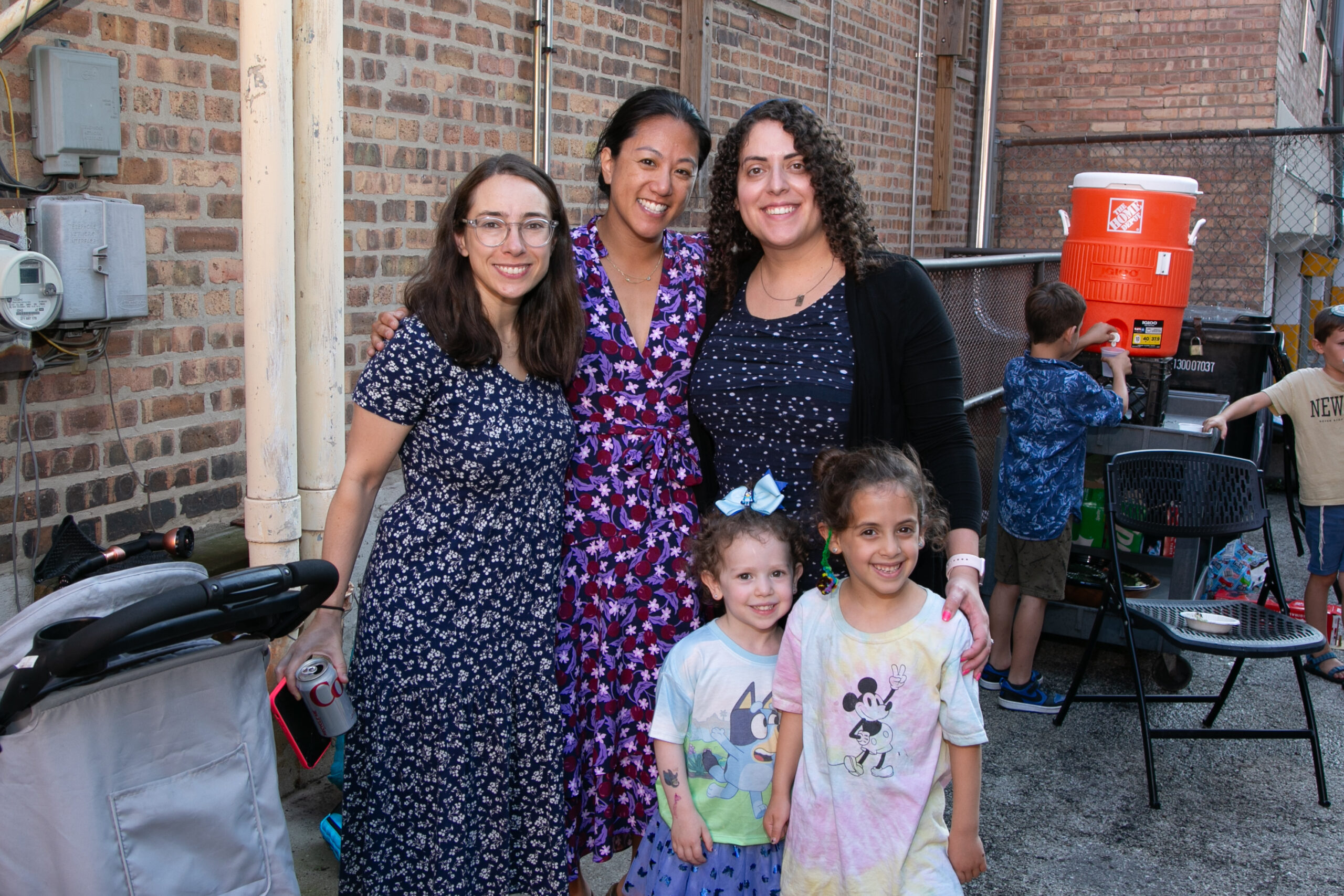
For 10 days over the summer, Lakeview became a kibbutz. Broadway overflowed with kids jabbering in Hebrew as 120 religious and secular Israelis of all ages journeyed from Kibbutz Kerem Shalom and arrived in Chicago for an unforgettable week and a half of fun and connection. The trip gave our Jewish community something we’ve long wanted: a way to support Israel and Israelis in a meaningful, personal way.
Kibbutz Kerem Shalom sits in the southernmost corner of the Gaza Envelope. When I visited this past July, I could easily see Gaza just 40 meters away, as well as the Egyptian border. Like many communities in the area, families had been displaced for much of the past two years (though 85% have now returned). The trip to Chicago, generously funded by Jeff Aeder, offered these families a true vacation and helped build a real bond with our community. On both counts, the visit exceeded our dreams.
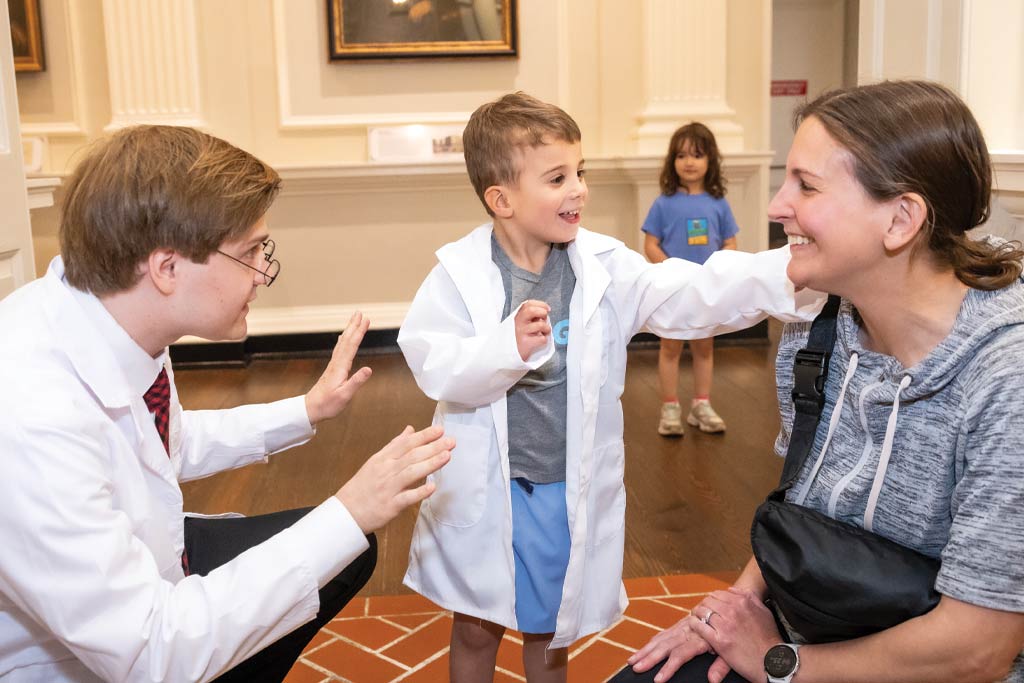
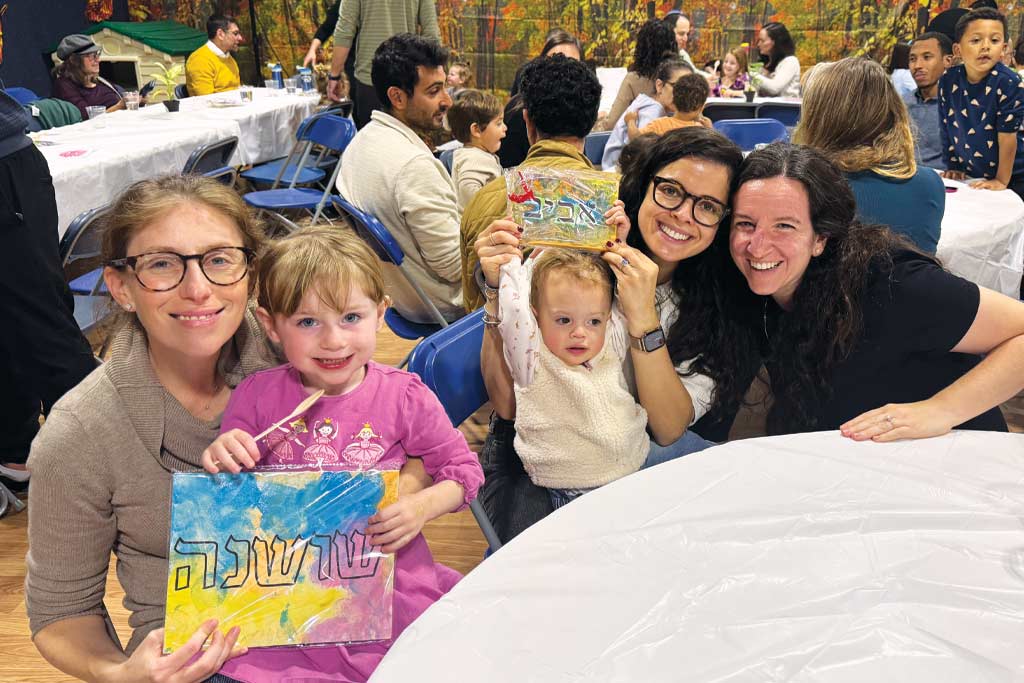
During the trip the kibbutzniks toured Chicago, enjoying museums, Lake Michigan, the Air and Water Show, and more. They were hosted in members’ homes, letting personal relationships take root.
Throughout the visit, we heard harrowing and inspiring first-person accounts of October 7. At our congregation, Anshe Sholom B’nai Israel in Lakeview, over 250 people listened to four members of the kibbutz share their stories, including Talya Vitzen and Shira Raziel, whose husbands Amichai and Yedidya died defending the kibbutz.
On Shabbat, we heard this heroism from a different perspective: For over an hour after kiddush, Eliya Ben Shimol described the “Battle of Kerem Shalom.” Because of their proximity to Gaza, the kibbutz was prepared differently. Each member of the kita konenut (security team) kept gear and weapons at home rather than in a central location. They trained extensively and stayed on high alert. On October 7, nine kibbutz men joined a detachment of five Israeli soldiers to repel an attack as their wall was breached in three places.
The security team eliminated more than 125 Hamas terrorists. Amichai and Yedidya, along with two soldiers, died fighting, with three others injured. One kibbutz member lost an arm and two fingers when a terrorist bombed his family’s safe room door. He was saved by the kibbutz’s volunteer medical team, who were also prepared. Miraculously, no other civilians were killed.
Beyond October 7, we also got to learn about the kibbutz itself. Almost a decade ago, Kerem Shalom welcomed observant families to its secular community, creating a fascinating model of diversity. On Shabbat morning, kibbutz member Dudi Rabi spoke about their process for adding single-gender swimming hours to the pool alongside mixed hours. There are joint Shabbat potlucks, and observant kids learn to check for kosher certification at the kibbutz market.
As Rabi summed up in his Shabbat D’var Torah (sermon), “even when you think you understand someone, your assumptions might be completely different-and only real communication can bridge that gap. We’ve come to call this ‘the secret of uniqueness and togetherness.’ Each of us keeps our own identity-but we don’t try to change the other. And in truth, we have so much to learn from one another.”
These words, describing Kerem Shalom, capture the essence of the trip. What began as a vacation became an experience of mutual learning, solidarity, and healing. Each of us was left with deep gratitude and a strong desire to nourish these new bonds. Hosting a kibbutz in Chicago was more than hospitality; it was a living expression of Jewish peoplehood.
Rabbi Aaron Finkelstein is the rabbi of Anshe Sholom B’nai Israel Congregation.