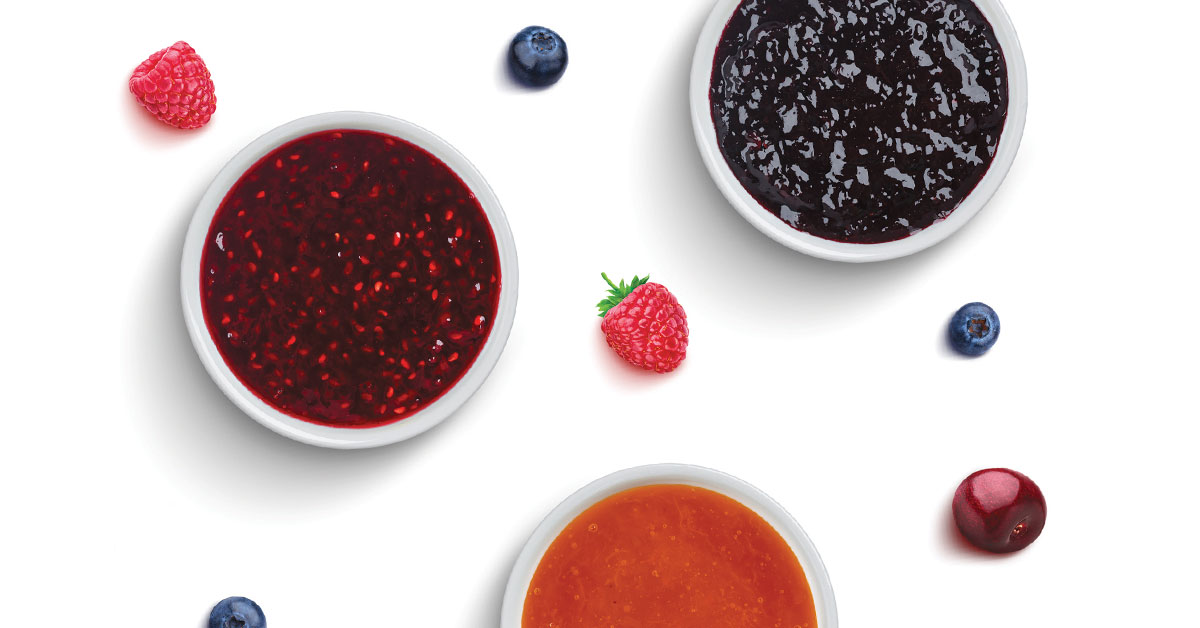
We’re jammin’
Laura Frankel
Soft summer breezes, blossoms perfuming the air, freshly cut grass, and warm evenings.
If you are like me, you want to capture the feeling, aroma, and taste of summer. If only you could just bottle it!
Well, it turns out you can–and not only can you capture summer, you can gift it to others.
Making homemade jams, jellies and preserves is the perfect way to hold on to summer. Preserving the beautiful fruits and vegetables of summer is a wonderful project that is perfect for both seasoned cooks and newbies.
A homemade jam with seasonal fruit or vegetables has a decidedly different flavor: more authentic, and genuine. Always follow seasonality, because every season has its own delicacies. If captured at the right moment, it will really allow you to keep its essence in a jar. And there could be no healthier alternative; in addition to being it free of artificial preservatives, you will know exactly which ingredients have been used, because you made it!
Deciding whether to make jelly, jam, or preserves is a matter of preference. Jellies are made with strained fruit juice, so they have no fruit pieces. Jams are made with mashed fruit and preserves contain whole, or large pieces, of fruit.
Making preserves or jam sounds intimidating but is actually very simple. Remember your first homemade pizza? Your first lasagna? It seemed hard–but once you are in the project, it all flows together. I love the fact that I can take berries from the market and create my own flavor combinations.
I love strawberries with a touch of black pepper and rosewater (strawberries are a member of the rose family). Or strawberry with cardamom and lemon. blueberries are sensational with lavender and basil. Pears with almonds and cinnamon, or peaches with saffron are just the perfect topper for grilled bread. Go wild with your flavors and release your inner jam-geek!
Once you understand the basic alchemy–all jams and preserves come down to a combination of fruit, water, sugar, and pectin–you can add your own flavors from spices, flavorful liquids like coffee and tea, and acids such as citrus or vinegar. Sugar can be added in the form of honey, brown sugar, agave, or date syrup.
Pectin is a soluble gelatinous agent present in ripe fruit, extracted through heat, for setting jams and preserves. Pectin comes in powdered form, and natural pectin is often made from dried and ground apple skins. Lemons are a delicious source of pectin. Lemon juice, lemon zest, and lemon seeds will gel up preserves. I love to save lemon seeds and will wrap a dozen of them in cheesecloth. I add the cheesecloth sack to simmering preserves.
The pectin releases from the seeds without changing the flavor of my preserves. Once the preserves are thick enough to trace a path through it on the back of a spoon, I remove and discard the lemon seeds. You can freeze lemon seeds and use them for your jams and preserves all season long.
Basic Jam/Preserve Recipe
1½ pounds of fruit
12 ounces of sugar or honey
1 tablespoon of lemon juice
(Mathematically that is 60 percent fruit and 40 percent sugar)
Lemon juice and my lemon-seed pouch (to set up just about any fruit in 30-40 minutes or less.)
- Wash, seed, or stem your fruit.
- Place in a large mixing bowl and add sweetener. Allow to sit for 15 minutes. The mixture will be quite juicy after 15 minutes.
- Transfer the mixture to a shallow sauté pan. Using a shallow pan will allow the water to cook off quickly and the fruit will still have texture. A large deep pan will cause the fruit to “stew” and lose too much texture.
- Cook, stirring constantly over high heat. Once the mixture has thickened, turn off the heat.
I like to dip a spoon in the mix, and if I can draw a clean line on the back of the spoon, the preserves are finished. If you are canning preserves, follow directions for sterilizing jars and lids.
I urge you to try different combinations and have fun. Let your imagination run wild. The only constraint I use is to keep the flavors in season. I look to the farmers’ markets to guide me:
Hibiscus blooms come at the same time as plums, raspberries, and blackberries; roses start to pop up everywhere at the same time as strawberries; basil is all season long and pairs well with everything (basil is part of the mint family).
Preserving the season and its flavors will bring back memories all winter long for you and those you love.
Fig-Walnut Preserves
These preserves are a treat. Juicy, fragrant figs scented with lemon and walnuts are delicious piled up on toast, or dolloped on vanilla ice cream, grilled chicken, roasted duck breast, roasted turkey, and whatever else you fancy. These preserves play well in savory and sweet arenas–so delicious and versatile! This recipe is well worth your time and will bring back the aroma and feel of summer all winter long.
Yields-7 cups
4.5 pounds figs, stemmed and cut in quarters lengthwise
3 pounds sugar
½ cup water
Julienned zest of 2 lemons
12 lemon seeds wrapped in cheesecloth
½ cup chopped walnuts
- Place figs, sugar water, zest, and lemon juice in a large, shallow pan (a Dutch oven works for this). Simmer at medium-high heat, stirring constantly for about 20-30 minutes.
- Once most of the water has cooked out of the figs and the figs have softened, add walnuts and continue cooking until the mixture is very thick and sticky, about 10 minutes. Dip a spoon into the mixture. If you can draw a path down the back of the spoon, the preserves are finished.
- Remove the seed pouch and follow directions for canning, or cool and freeze.
*Using a very sharp vegetable peeler, cut wide strips of zest from lemons. Avoid cutting deeply, you want to avoid the bitter pith (white thick part of the peel). Lay pieces of zest on cutting board and cut into very thin strips (julienne).
Laura Frankel is a noted kosher chef, a cookbook author, and Culinary Director for a media company. Currently, she serves as Product Development Specialist at The Spice House.