Western expansion
BRITTANY FARB GRUBER
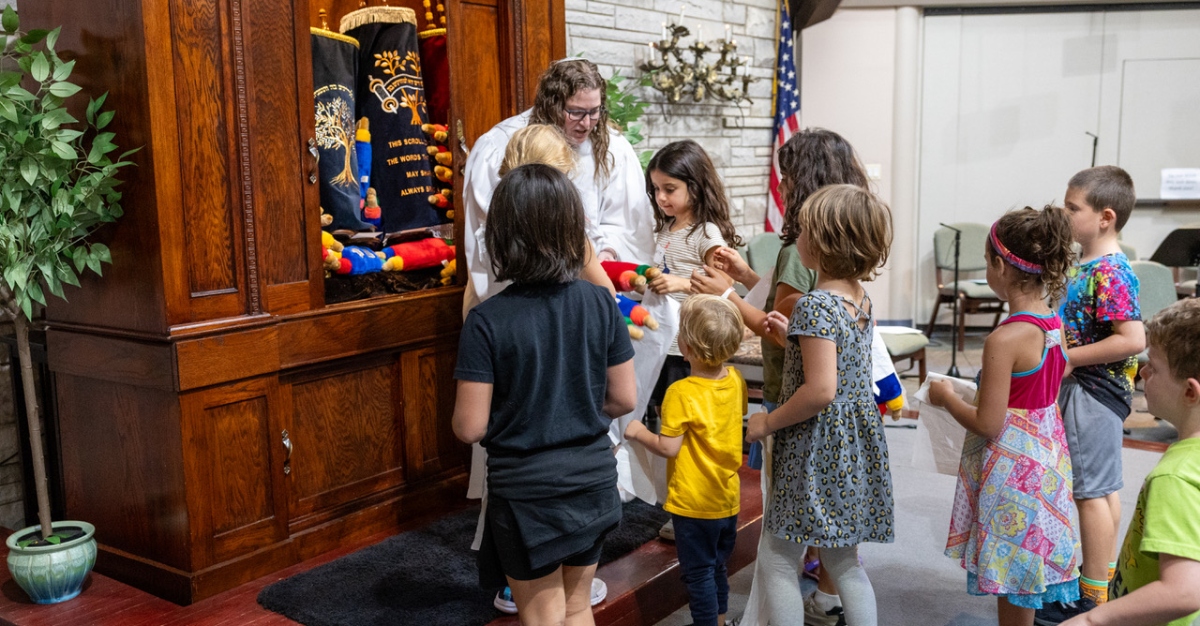
Teaching religious school at Congregation Etz Chaim (CEC) in Lombard is the highlight of Cynthia Ellis’ week.
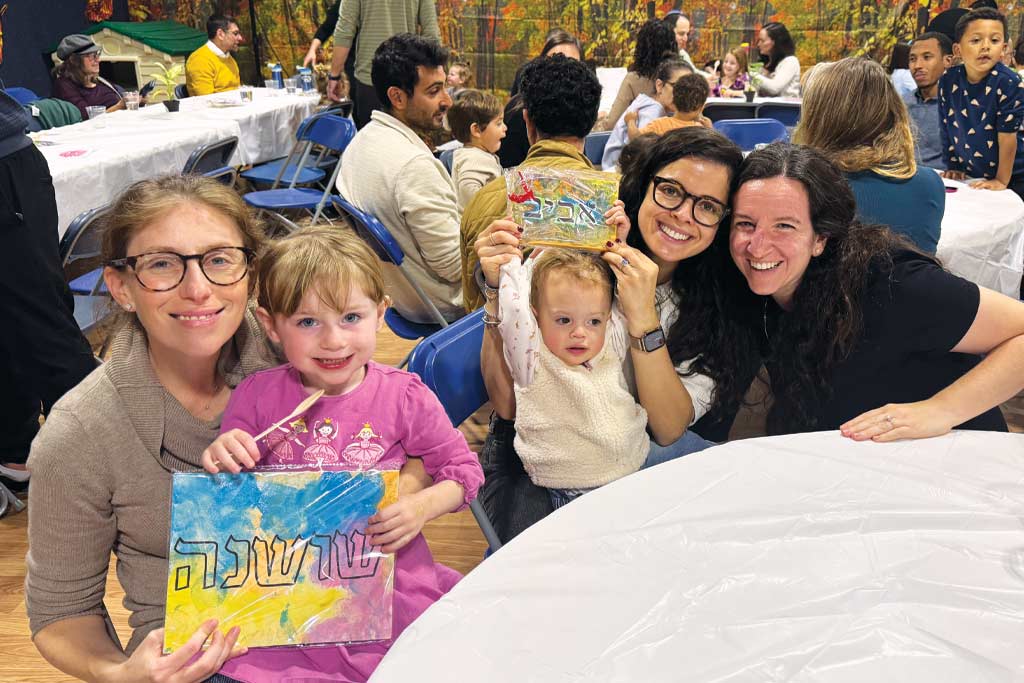
“I don’t love anything like I love teaching at CEC,” she said. “My main goal is to teach students to love coming [here]. This our Jewish community, and I want them to love it. Crafting fun and loving Jewish experiences is one of the greatest gifts I can give to parents.”
Ellis joined the CEC community more than 15 years ago and fondly remembers her first visit to the synagogue. “I immediately sensed its inclusivity,” she reflected. “There was signage about LGBTQ+ inclusivity, among other causes, and the social justice work was very available. It just felt like a great fit for our family.”
“Our tagline is, ‘Judaism that fits you,'” added Rabbi Andrea Cosnowsky, senior rabbi at the synagogue. To attract young members and others throughout the community, Cosnowsky has devoted much of her attention to serving interfaith and other diverse families.
“While we can’t give a blessing for a ham sandwich, we try to meet people where they are,” Cosnowsky said. “We try to have Jewish integrity, but we don’t marginalize. That’s often the key to getting young families engaged.”
While many of Chicago’s Jews are located throughout the city and northern suburbs, the western suburbs have emerged as an engaged and varied community. According to a recent community survey from 18Doors, a nonprofit that supports interfaith families and couples in Jewish life, 64%* of survey respondents in interfaith relationships came from the western suburbs.
“We define ‘interfaith’ broadly,” said Adam Pollack, Chief Program Officer at 18Doors. He explains that the term is applied if, “you are part of a family where there’s more than one tradition or faith either being practiced or culturally observed.”
Rabbi Max Weiss of Oak Park Temple B’nai Abraham Zion likewise embraces Oak Park’s multi-faceted community.
“It’s socioeconomically, religiously, and racially diverse, so we can reach out very easily to our non-Jewish neighbors and work together on different programs and events,” he said. “We have an ongoing relationship with our local food pantry and our local homeless shelter, where we provide materials and volunteers. We have programs with local churches and with a community of congregations.”
Weiss has also observed an “uptick in affiliation” in the aftermath of October 7. “We have had people join because they felt like they needed to be part of the Jewish community, and we’re continuing to see that,” he said.
A similar trend has been observed by Rabbi Adir Glick, Rabbinic Chair at West Suburban Temple Har Zion in River Forest.
“We’re seeing more people wanting to come together and gather,” Glick said. “People are interested in seeing other Jews and all the different ways we can share identity and belonging, as well as concerns about… antisemitism.”
In fact, Temple Har Zion has seen a 15% rise in its religious school enrollment over the past year, while synagogue membership has been steadily growing for the past several years.
“We’ve always had this feeling in the western suburbs that there are a lot of Jews in the woodwork,” Glick said. “People are being called back to their roots.”
Glick remains hopeful that Jews will remain engaged, and more committed to embracing their Judaism. “I think pre-October 7, people felt their Jewish identity was one of many identities that they could take in and out of their pocket when they wanted,” he said. “Now, people are feeling like it’s an identity they’re wearing as part of who they are, and they can’t-and don’t-want to take it off.”
* Survey results are a snapshot in time and not necessarily a representative sample.