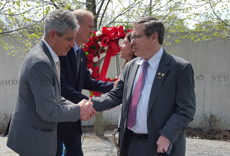
World War II veterans, local leaders share lessons learned at 70th Victory Day commemoration
JENNIFER BRODY
Seventy years ago, good triumphed over evil.
On May 8, the 70th anniversary of Victory Day, 400 people packed the Illinois Holocaust Museum to honor Holocaust survivors and World War II veterans.
Hosted by Chicago Association of Veterans of World War II, the two-hour statewide commemoration opened with remarks from its Pres. Abram Sagalovich. “All these veterans of the Great Patriotic War and World War II are real heroes who liberated the world from fascism,” he said. “Their sacrifice and bravery will always live in our memories.”
About 500,000 Jews served in the Red Army, and some 200,000 were killed in combat or after being captured by the Nazis, according to Yad Vashem. More than 160,000 earned citations. About 1.5 million Jews fought in the Allied Armies.
“We remember the millions of innocent men, women, and children who were brutally murdered by the Nazi regime,” said Gov. Bruce Rauner. “We can never forget them,”
In addition to Rauner, U.S. Senator Mark Kirk and Holocaust Museum CEO Susan Abrams also spoke. Three dignitaries- Consul General of Ukraine Gerasko Larysa, Deputy Consul General of Israel Alex Goldman, and Consul General of Lithuania Marijus Gudynas-touched on how the war affected their countries.
“We owe our freedom to the courage and determination of the Allied Armies,” said Goldman, whose grandfathers fought in the Red Army. “History has taught us that Jewish lives can never be entrusted to another nation. We must always be able to defend ourselves by ourselves.”
These history lessons are not lost on Gudynas. The war ended in 1945, but Lithuania didn’t enjoy freedom until the 1990s when the Soviet occupation ended.
The world was silent even when the warning bells sounded, when the Molotov-Ribbentrop Treaty was signed, when Nazis’ jackboots hit the streets. Alarms are ringing again, he said. “Today, when I look at the rise in anti-Semitism, it reminds me of the 1930s…Today, when I look at what Putin does, it reminds me what Hitler and Stalin did.”
He urged veterans to “tell the story you saw. If you don’t, the story will repeat. We cannot afford a Third World War.”
Gudyna’s call to action is especially urgent, given that the numbers of World War II veterans are dwindling. Close to 400 Russian-speaking veterans are left in Chicago.
One of them is Mikhail Salganik, 90, who emigrated to the U.S. in 1989. “This day is bigger than his birthday,” said his granddaughter, Natalie Zaborenko. The 24 honorary medals he wears may explain why. He worked in anti-Nazi intelligence and helped liberate villages in Lublin and Minsk. At the end of the war, he was in an Uzbekistan hospital.
“It took me a month to get there. That’s how badly I was injured,” he recalled. Pointing to scars on his leg and the back of his head, he explains that a partisan on the German side threw an explosive at his tank as he was entering Berlin.
“I crawled out from underneath,” he said. “As the tank blew up, I see a Nazi tank driving towards me. I’m lying on the ground, thinking, ‘I’m going to die.’ Nazis are everywhere. All I had was a gun.”
He pretended to be dead and prayed, said Salganik, whose father was a rabbi. Soon, Red Army troops arrived. He knew then he would survive.
Over 800,000 women served in the Red Army, mostly as medics and nurses, but some were on the front lines.
Bella Kaganovich, 93, was there, and carried a rifle very large for her petite size. In May 1942, months before the Battle of Stalingrad, she was sent to the Eastern Front.
“I wasn’t drafted. I volunteered, because my country was in a terrible situation. I want younger generations to know that war is a fearful thing,” she said through a Russian translator at the Victory Day Gala and brunch on May 9 at the Doubletree Hotel in Skokie.
One painful memory is the first time she saw people killed while serving in the Battalion of Air Surveillance unit. “The Nazis bombed a hospital, and soldiers were killed. They were buried in one big grave.”
Artillery strikes destroyed people, places, and supplies. One day she vividly recalls that her women’s unit received military boots from America. They were two sizes too large, but she was grateful anyway. After the war, Kaganovich studied medicine and finally came to the U.S. in 1992.
With a smile that could light up Times Square, she says thanks America-for help during the war and her life here.
Victory Day events were hosted by the Chicago Association of Veterans of World War II and sponsored by the Peter Polsky Freedom Fund. Community partners include The IHMEC, Holocaust Community Services, Council for Jewish Elderly, and JUF’s Russian Jewish Division
Jennifer Brody is a former associate editor at JUF News and a freelance writer living in Chicago.
Other stories
-
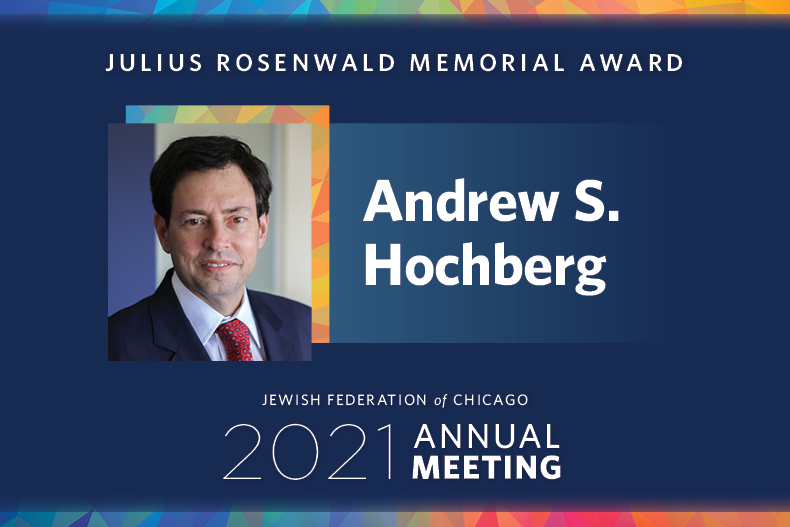
Meet Andrew S. Hochberg, 2021 Julius Rosenwald Memorial Award recipient
Celebrate Andy Hochberg at the virtual Annual Meeting on Sept. 14
Read more -
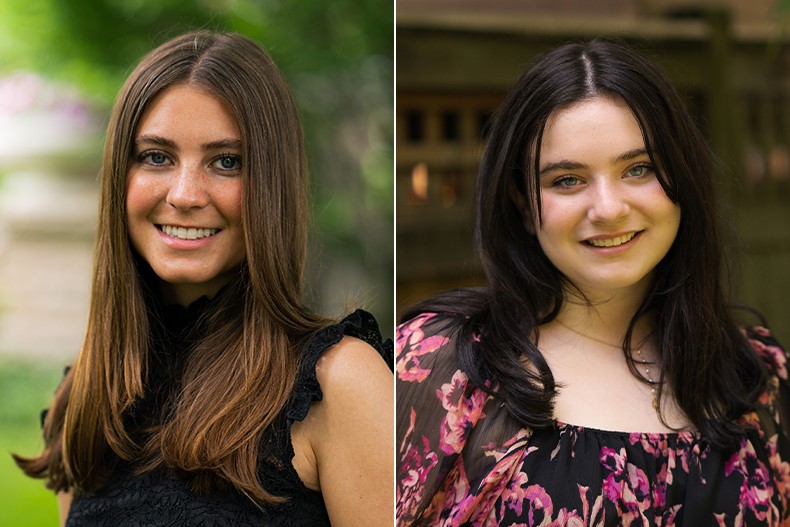
Two local teens win national recognition
Recipients of the annual Diller Teen Tikkun Olam Awards
Read more -

Celebrating six young award winners cultivating the community
Introducing young adult award winners
Read more
New inclusion initiative to expand JCC Camp Chi's programming for children with disabilities
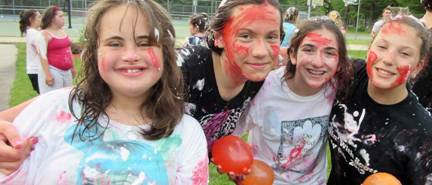
JCC Camp Chi will be one of six camps selected to participate in the Foundation for Jewish Camp Ruderman/Alexander Inclusion Initiative, a three-year program to significantly increase access to Jewish camp for children with disabilities.
The inclusion Initiative has enabled Camp Chi to hire its first inclusion coordinator. This new staff member will help enroll more campers with disabilities, increase the length of sessions offered and expand the types of disabilities Camp Chi can accommodate. This opportunity allows Camp Chi to build on its success of accommodating children with disabilities.
For more than 15 years, Camp Chi has partnered with Keshet: A Rainbow of Hope for Children and Adults with Special Needs to provide overnight camp programs that include campers with disabilities.
“This initiative provides tremendous opportunity for us to open new doors and increase access to Jewish camp,” said Camp Chi Director Ron Levin. “The integration of campers with special needs is a natural part of what makes up our Camp Chi community, and it’s inspiring to see all our campers grow together and develop compassion and understanding.”
Camp Chi recognizes the value in recreational camp programs for all children and young adults and is proud to have been selected in the 2013 Slingshot Guide as one of the most innovative Jewish programs committed to fostering inclusion.
Accomplished special education professional Jennifer Phillips will join the Camp Chi staff as the inclusion coordinator. Phillips will complete intensive training provided by the Foundation for Jewish Camp to offer the highest caliber programs to campers with disabilities and the camp community at-large. Phillips joins Camp Chi with deep roots in the Keshet community and more than 17 years of teaching experience.
“The benefits of having a camp that integrates all campers no matter their ability extends to the entire camp community,” Phillips said. “Inclusion provides all campers with the skills to become independent, build confidence and grow personally.”
In response to an overwhelming need expressed by families of children with disabilities and disabilities advocacy groups, FJC conducted a study in 2012-13 outlining that children with disabilities are significantly under-represented in Jewish camp. Proper staffing and training across all levels of staff has been identified as one of the greatest barriers to camps offering greater access to children with disabilities.
“FJC is happy to partner with camps such as Camp Chi to help take the lead by bringing specialized training to fruition and begin to increase access to Jewish camp, making our camp population more reflective of the overall Jewish population,” said Jeremy Fingerman, CEO of Foundation for Jewish Camp.
The other camps chosen to participate in this pilot are: Camp Young Judaea Texas, in Wimberley, Texas; URJ Camp Harlam in Kunkletown, Pennsylavania; B’nai B’rith Camp in Beaverton, Oregon; Camp JCA Shalom in Malibu, California; and Camp Judaea in Hendersonville, North Carolina.
For additional details about the FJC Ruderman/Alexander Inclusion Initiative, please contact Allison Cohen, FJC, at 646.278.4504 or [email protected] .
To learn more about JCC Camp Chi’s programs, please contact Ron Levin at 847.763.3551 or [email protected] .
Other stories
-
Meet Andrew S. Hochberg, 2021 Julius Rosenwald Memorial Award recipient
Celebrate Andy Hochberg at the virtual Annual Meeting on Sept. 14
Read more -
Two local teens win national recognition
Recipients of the annual Diller Teen Tikkun Olam Awards
Read more -
Celebrating six young award winners cultivating the community
Introducing young adult award winners
Read more
Barely seven decades after the fall of the Nazis, the scourge of anti-Semitism is once again, openly and at times violently, re-emerging in Europe. Terrorists have murdered Jewish children and adults in Paris, Brussels, Copenhagen and Toulouse. Jewish buildings and graves have been desecrated. Comparisons to the early 1930s are being made.
On the next episode of the public-affairs program “Sanctuary” – which airs at 11:30 a.m. Sunday, May 17, on ABC7-Channel 7 – two of European Jewry’s leading figures offer insights into what is happening across the continent and, specifically, in their native France, home to more than half a million Jews.
Featured are noted philosopher and author Bernard-Henri Lévy, who in January keynoted a United Nations session on global anti-Semitism, and Jewish communal leader David Revcolevschi. Cindy Sher hosts.
Starting Monday, May 18, the program will be available for viewing on the Jewish United Fund website, www.juf.org/interactive .
“Sanctuary” is a joint production of the Jewish United Fund of Metropolitan Chicago and the Chicago Board of Rabbis, in cooperation with ABC7-Channel 7.
Other stories
-
Meet Andrew S. Hochberg, 2021 Julius Rosenwald Memorial Award recipient
Celebrate Andy Hochberg at the virtual Annual Meeting on Sept. 14
Read more -
Two local teens win national recognition
Recipients of the annual Diller Teen Tikkun Olam Awards
Read more -
Celebrating six young award winners cultivating the community
Introducing young adult award winners
Read more
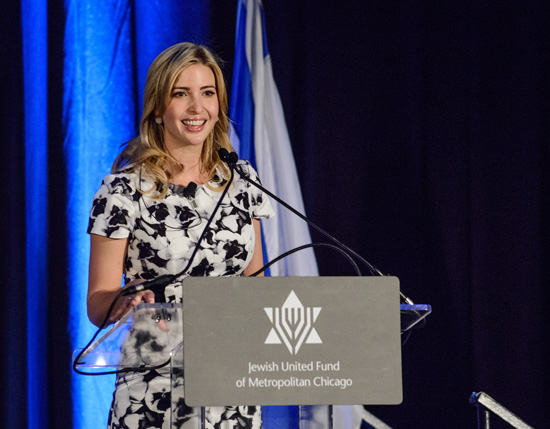
Ivanka Trump recognizes that women are super multi-taskers, blending many facets of themselves to live the fullest lives possible.
Trump launched the #WomenWhoWork initiative to honor the multidimensional lives of women who inspire her. “We celebrate all women–there is no one right path.”
Trump, smart, poised, hard-working, and passionate, is an example of a “woman who works”: She’s an executive, an author, a visionary, a TV personality, a wife, a mother, a Jewish person–and a half-marathon runner too.
She spoke about all the parts that make her who she is to a room of nearly 1,000 women at the Jewish United Fund of Metropolitan Chicago’s Women’s Division’s 2015 Spring Event on Tuesday, May 12.
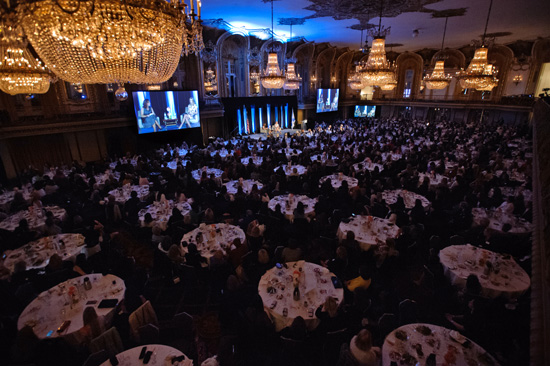
Trump, who has a business degree from Wharton, is charged with the domestic and global expansion of the Trump Organization’s real estate interests and she’s the founder of Ivanka Trump Fine Jewelry and Ivanka Trump Footwear.
After meeting her husband, who is Jewish, Trump converted to Judaism, and the couple has a 3-year-old daughter and a 1-year-old son.
She spoke about the importance of Judaism to her and her family. She said she has visited Israel several times.
And every Friday, she gives her daughter three pennies to take to her school to help buy food for people in need. Trump said she hopes that the tzedakah her daughter is learning about as a little girl will blossom into the type of tzedakah on a grander scale that the crowd of women in the room perform in their lives through JUF.
Trump said she loves to put the chaos of her busy life on hold every Shabbat. “The Sabbath is almost like a weekly meditation,” she said, “where we can be fully present.”
Jenniffer Weigel, a Chicago author and broadcast journalist, moderated the conversation with Trump. The two women both followed in the professional footsteps of their famous fathers, Donald Trump, and Tim Weigel, the late sports broadcaster. The women spoke about the challenges that come with their famous names. Ivanka said she “utilized the expectations [of being her father’s daughter] as a motivator” to work even harder.
Trump said her dad always taught her that “the only way to be great at something–is to love it.”
In addition to hearing from Trump, the women at the luncheon learned about the vital work and impact of JUF and supported the 2015 JUF Annual Campaign.
Other speakers included Gail Rudo, chair of Spring Event; Pam Lookatch, chair of JUF’s Young Women’s City Council; Linda Schottenstein Fisher, JUF’s 2015 Women’s Vice President of Campaign; Sofia Kenzer, Young Women’s Board Event Chair; and Zoe Zirlin, a high school junior and an alum of JUF’s Diller Teen Fellowship.
Learn more about the #WomenWhoWork initiative here .
Other stories
-
Meet Andrew S. Hochberg, 2021 Julius Rosenwald Memorial Award recipient
Celebrate Andy Hochberg at the virtual Annual Meeting on Sept. 14
Read more -
Two local teens win national recognition
Recipients of the annual Diller Teen Tikkun Olam Awards
Read more -
Celebrating six young award winners cultivating the community
Introducing young adult award winners
Read more
As second quake strikes, Jewish Federation’s Nepal Earthquake Relief Fund continues to respond
Less than three weeks after a massive earthquake killed more than 8,000 in Nepal, a second major quake has struck. More deaths. More destruction to already devastated areas. And once again, an immediate response from relief agencies around the world, including the Jewish Federation of Metropolitan Chicago.
Within hours of the April 25 quake, Chicago’s Federation began raising emergency funds – more than $130,000 so far – to support the critical relief efforts of its international partners on the ground – the American Jewish Joint Distribution Committee, the “911 of the Jewish world,” and IsraAID, the coordinating body of Israeli charities devoted to global relief work. Those agencies, working with Israel Defense Forces medical teams, were among the first and largest international rescue and relief responses to the disaster.
In the wake of today’s earthquake, the Federation is continuing to support those teams as they save lives, care for the wounded and work to restore some degree of normalcy to the region. As always in such emergencies, the Jewish Federation is absorbing all administrative costs, so that 100 percent of funds collected will go to meeting needs on the ground.
We’re proud of our Jewish community’s compassion, and honored to serve as the conduit for its generosity.
Donations can be made online at www.JUF.org/NepalRelief , or by calling 312.444.2869 or sending a check payable to “JF Nepal Earthquake Relief Fund” to Jewish Federation of Metropolitan Chicago, #3015, 30 S. Wells St. Chicago, IL 60606.
Other stories
-
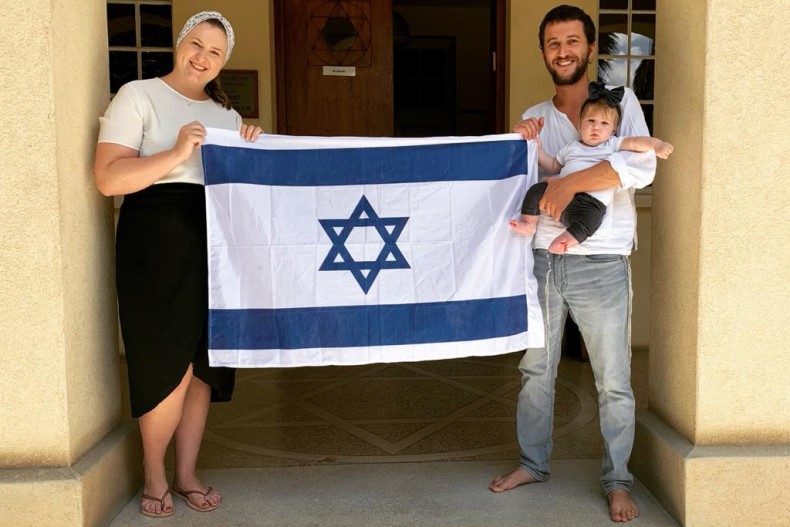
Chicago to Israel to Kenya
A family’s story of living Jewishly on three continents Michelle Cohen World May 28, 2021 Avital, Tzofia, and Netanel Kaszovitz outside their home in Nairobi on Yom HaAtzmaut. When Avital Kaszovitz prepared to be a Modern Orthodox shlicha (emissary) to the Jewish community in Ke
Read more -
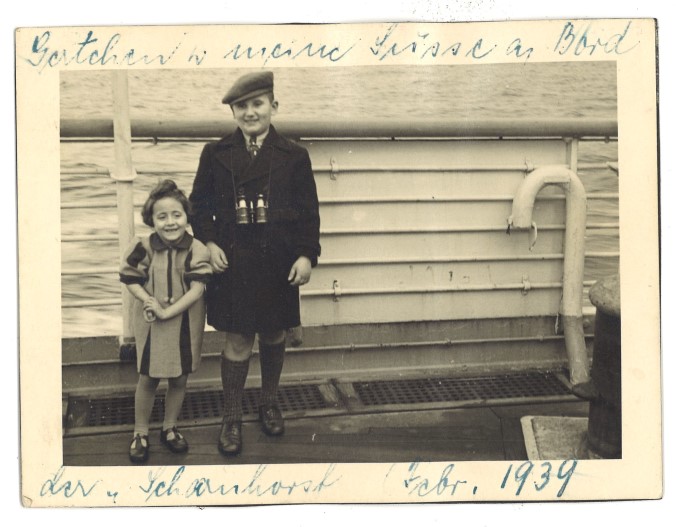
New exhibit spotlights the experience of ‘Shanghai Jews’
Explore a new Illinois Holocaust Museum and Education Center exhibit
Read more -
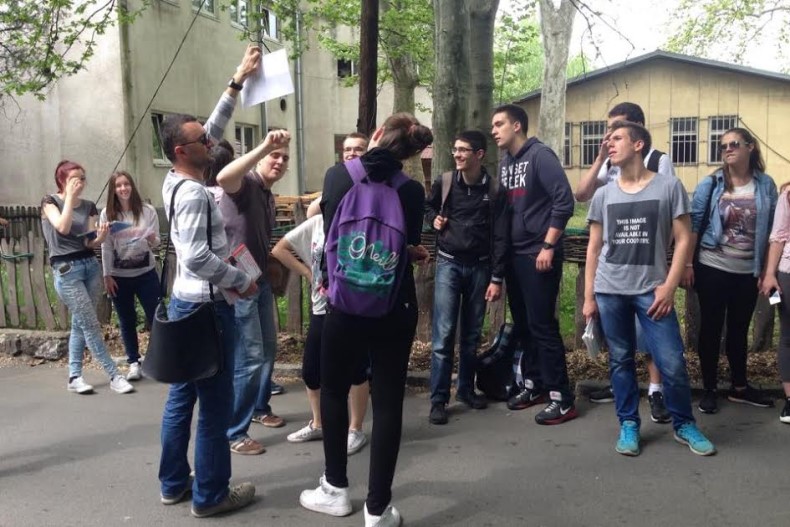
Europe’s brave new teachers of the Holocaust
Teaching the Holocaust in the modern era has its difficulties and rewards.
Read more
Applications for next cohort of Taglit Fellows Birthright staff training program now open
Taglit-Birthright Israel opened registration earlier this week for Cohort 3 of Taglit Fellows , the professional development program launched in 2014 in partnership with the iCenter for Israel Education as an educational intensive for exceptional Jewish leaders and aspiring Jewish educators looking to staff Taglit-Birthright Israel trips.
The first two cohorts were comprised of nearly 200 Fellows who were selected from over 1,000 applicants. The program will welcome in another group of highly motivated and talented individuals to increase the quality of the Taglit-Birthright Israel experience and to play significant roles in the ongoing Jewish journeys of young adults. Registration is at www.taglitfellows.com and is open through May 15.
“We are excited to build on the successful Taglit Fellows model and the great momentum of cohorts 1 and 2,” said Anne Lanski, executive director of the iCenter. “Through the program, Fellows gain new skills that help them leave a lasting impact on Birthright Israel participants and on Jewish youth in their home communities. Now a new cohort will learn directly with leading Israel and Jewish educators to create meaningful Israel experiences that help young Jews develop personal connections to the country and people.”
The Taglit Fellows program includes a four-day in-person seminar of interactive trainings and in-depth conversations with master Israel educators focusing on a range of areas, including how effective storytelling is a tool for education and engagement; how to create ritual moments with personal meaning; and what experiential education might look like at a range of sites in Israel. In addition to the seminar, Fellows engage in online learning and workshops in experiential Jewish education, and over time, form a close network of peers.
Naomi Karp, director of student life at UCLA Hillel and a member of Cohort 2, reflected on her training seminar from earlier this year: “Not only did the Taglit Fellows seminar give me a number of new tools and activities to use when staffing future trips, it also provided me with an incredible community of 100 other Fellows. It was inspiring to learn from the experience of the facilitators and my peers, and I feel empowered with the responsibility of creating more intentional and meaningful experiences for Taglit-Birthright Israel participants rooted in Jewish content and Israel education.”
The program, funded by the Maimonides Fund, accepts one hundred participants aged 22 and above every six months, with the majority of Fellows either professionally or personally serving as leaders, educators, and connectors in their Jewish communities. The first Fellows staffed Winter 2014/2015 trips, and Cohort 2 Fellows will begin staffing this summer.
“The bottom line is that the strength of the educational staff is a key factor that influences the quality of the trip,” says Taglit-Birthright Israel CEO Gidi Mark. “So we want to continue to raise that quality with more Fellows who are trained to impact the Taglit-Birthright Israel experience.”
Taglit-Birthright Israel has sent close to 500,000 young Jewish adults to Israel from more than 66 countries and from all 50 U.S. states, including students from nearly 1,000 North American college campuses accompanied by more than 70,000 Israelis.
Taglit Fellows enhances both Taglit-Birthright Israel experiences as well as the broader field of Israel and Jewish education by cultivating emerging Jewish professionals as role models and educators. Taglit-Birthright Israel has a unique, historical and innovative partnership with the Government of Israel, thousands of individual donors and private philanthropists, and Jewish communities around the world through Jewish Federations of North America, Keren Hayesod and the Jewish Agency of Israel.
Visit taglitfellows.com and follow #TaglitFellows for more information.
Other stories
-
Meet Andrew S. Hochberg, 2021 Julius Rosenwald Memorial Award recipient
Celebrate Andy Hochberg at the virtual Annual Meeting on Sept. 14
Read more -
Two local teens win national recognition
Recipients of the annual Diller Teen Tikkun Olam Awards
Read more -
Celebrating six young award winners cultivating the community
Introducing young adult award winners
Read more

The Jewish United Fund of Metropolitan Chicago and its affiliate, Jewish Child and Family Services, are building a state-of-the-art facility in West Rogers Park to house JCFS’ expanding programs for children and adults with special needs.
The new building, which will be known as the Cooper Center, is being made possible with a lead gift from the Abe and Ida Cooper Foundation.
“We are very excited about creating a facility that will leverage our resources in support of individuals with special needs and their families,” said Howard Sitron, JCFS president and CEO. Construction of the new center, which will be located adjacent to JCFS’ Joy Faith Knapp Children’s Center in Chicago’s West Rogers Park neighborhood, will begin this spring. The campus will be named by the Jules and Gwen Knapp Family Foundation in memory of Esther Knapp, grandmother of Joy Faith Knapp and JCFS Board Vice Chair Sue Schulman.
The Cooper Center will be owned and managed by JUF through its JFMC Facilities Corporation.
“Supporting the most vulnerable members of our community is one of JUF’s top priorities. We are thrilled to support a new space that will be uniquely designed to meet clients’ needs,” said JUF president Dr. Steven B. Nasatir.
Neither school nor clinic, the Cooper Center will serve as the new home of JCFS’ Virginia Frank Child Development Center, Encompass, and Integrated Pediatric Interventions (IPI), along with a host of expanded services for people with special needs-including residential supports, respite care, and the JUF Legal Advocacy Center.
“The facility has been carefully planned as a departure from an institutional ambience by incorporating as much natural light as possible and making the facility comfortable and welcoming,” said Stacey Shor, JCFS Vice President and Chief Development Officer. “We planned the Cooper Center using design elements for people with special needs, considering best options right down to paint color. For example, we have selected a shade of pale green for our treatment rooms that is shown to be especially calming for children with autism spectrum disorders.”
Such a feat could not be accomplished without the support of architects who truly “got it.” Enter: Mike Breclaw and Katie Lambert, of OKW Architects.
“We wanted to create a quality of indoor space that was almost an additional therapist in the way that it serves the clients,” Breclaw said. “We saw the building as client-focused, with good staff support-good connections between the two and also good separation between them.”
“Right now the various programs have distinct lines of communication,” said Beth Wyman, senior director for Services for People with Disabilities at JCFS. “With Cooper’s opening, there will be better communication across programs. The open workspace will facilitate effective conversation ultimately benefitting our clients.”
The center is slated to open in 2016.
Sneak Peak inside the Cooper Center:
Green campus: Environmentally-friendly green design is expected to earn the Cooper Center LEED Gold certification. Special features will include a green roof, photovoltaic solar panels reducing energy dependence, and a native plant nature path and observation area.
Family Lounge : Space for clients and families to relax, re-charge and re-energize in comfortable surroundings.
Conference Center: Flexible rooms with high-tech audio-visual equipment and an outdoor patio, suitable for trainings, meetings, and social/recreational activities.
Administrative Wing: Open work stations fostering collaboration within and between programs.
Client Wing: State-of-the-art therapy gym, consultation rooms, the Virginia Frank Child Development Center Daily Room, therapy kitchen, patio with a teaching garden and even a Snoezelen Room -a specially designed space based on unique Dutch techniques to help individuals with autism spectrum disorders and other developmental disabilities regulate their responses to sensory stimulation.
Cooper Center Services
Services for People with Disabilities
Information and referral for people with disabilities and their families, support groups, socialization opportunities, residential supports, and more.
Respite
Short-term relief to families caring for children and adults with special needs, offering a supportive, nurturing and therapeutic approach.
Integrated Pediatric Interventions
Speech-language, occupational and developmental therapists and social workers work with infants, toddlers and children who are experiencing developmental delays using cutting-edge therapies, integrated multidisciplinary treatments and plans and therapeutic peer groups.
Virginia Frank Child Development Center
The Virginia Frank Child Development Center, a nationally recognized pioneer in the field of family-centered child development, offers a continuum of preventative and therapeutic services for families of children from birth to six years Services include a therapeutic nursery, counseling and support services as well as consultation and professional trainings.
Encompass
Encompass creates powerful partnerships among existing service providers, community members and organizations to plan and coordinate the provision of services and supports for Jewish adults with Intellectual/Developmental Disabilities, including a place of their own to live, meaningful day options including employment, and social recreational programing.
JUF Legal Advocacy Center
Attorneys specializing in Special Education, Mental Health, Developmental Disabilities and Adult Guardianship offer legal services to children and adults with special needs and their families, information and referral services and community education.
Several highly visible naming opportunities for the center are still available. For more information, call Stacey Shor at (312) 673-3212, or Donna Kahan at (312) 444-2827.
Other stories
-
Meet Andrew S. Hochberg, 2021 Julius Rosenwald Memorial Award recipient
Celebrate Andy Hochberg at the virtual Annual Meeting on Sept. 14
Read more -
Two local teens win national recognition
Recipients of the annual Diller Teen Tikkun Olam Awards
Read more -
Celebrating six young award winners cultivating the community
Introducing young adult award winners
Read more
On Sunday, May 3, some 6,500 people came to Ravinia Festival in Highland Park to celebrate Israel’s 67th birthday at Israel Solidarity Day (ISD), JUF’s annual celebration in honor of the founding of Israel in 1948. Each year, Israel Solidarity Day brings together the Jewish community to celebrate Yom Ha’atzmaut (Israel Independence Day) and to stand together in support of Israel.
“We could not be more excited to be back at Ravinia Festival celebrating Israel’s 67th birthday with thousands of our friends!” said Josh Herz; he and his wife, Jennifer, were the event’s co-chairs. “Over this past year, we have come together as a community in support of Israel during difficult times, so it feels great that today we unite for a day of celebration, great music and family fun!” Herz also addressed “our friends in law enforcement who work tirelessly to protect our institutions and community: Thank you for keeping us safe.”
Bill Silverstein, Chairman of JUF’s Board of Directors, agreed. “Being together is a fantastic statement of solidarity with our beloved Israel,” he said, adding “Nothing makes me more excited than seeing a strong turnout” in support of Israel. He acknowledged the “challenges and issues Israel faces”: he denounced the spreading anti-Semitism in Europe as “violent, viral, and vicious,” dismissed the BDS movement as a mere tactic for “delegitimizing Israel,” and insisted that all remain “vigilant against Iran’s march to nuclear weapons.”
Silverstein expressed his thanks to the attendees for helping JUF in responding to these threats and in “supporting Israel experiences and Jewish continuity and community-building.” He concluded by saying he felt that the community’s “ruach (spirit) is strong” and by leading the crowd in a cheer of “Am Yisrael chai!”
Roey Gilad, Israel’s Consul General to the Midwest, brought greetings on behalf of his country and thanked all the attendees. “This week, in Jerusalem, a new government is being formed,” he noted. “And so we send, from all of us, to the government of Israel, our wishes that all of their many challenges be met successfully.” He said the event “sends a strong message: Israel, you will never walk alone.”
The main event, as always, was the Walk with Israel. This is a three-mile walkathon– one mile for families with smaller children– to raise awareness of, and funds for, Israel. The Walk with Israel this year raised more than $100,000 for JUF’s Israel Children’s Zone, a program in JUF’s our Partnership Region that enriches the lives of disadvantaged students and boosts their educational achievement. Those who raised $100 or more received a $100 JUF Israel Experience Voucher or JUF Mission Voucher.
The musical performances were highly energetic. Earlier in the day, Jewish rockstar Rick Recht led the youngest attendees in song; he was joined by ShireNU, the Jewish a cappella ensemble from Northwestern University, who also sang the American and Israeli anthems. The a cappella YouTube sensations The Maccabeats played early in the day, and Hadag Nahash, a large ensemble from Israel that merges hip-hop and funk, closed out the event. Throughout the day, Israel’s Jamman Drum Circle offered hand-drums to a dozen or more at once, and accompanied the walkers on their route.
“I love coming to Israel Solidarity Day,” said Chicago resident Hillel Morris. “I like seeing people I haven’t seen in a long time. And I realize how much I miss my brother and sister and their families in Israel.”
Throughout the day, events were held to involve participants in Israeli culture. Younger kids made Israel-themed crafts and played an Israeli playground game called “ga ga,” a low-impact version of dodgeball.
Teens were able to attend lessons in krav maga , an Israeli martial art used for self-defense and employed by the Israeli military. JUF’s Jewish Teen Alliance of Chicago (JTAC), comprised of teen representatives from many teen organizations in the community, was on hand to introduce Hadag Nahash and run information booths about their own programs.
In addition to the thousands of participants, 180 volunteers helped out at ISD through JUF’s TOV Volunteer Network. “I really enjoy it,” said returning volunteer Marci Claus, representing the Skokie Lion’s Club. “It’s a great day for a good cause.”
Also in attendance were many public officials, including: Senator Dick Durbin; Congresswoman Jan Schakowsky; Congressman Bob Dold; state senators Daniel Biss, and Ira Silverstein; state representatives Lou Lang, and Elaine Nekritz; Mayor of Highland Park Nancy Rotering; and former Congressman Brad Schneider.
More than 50 synagogue and organizational supporters– as well as corporate sponsors Hyatt Regency Chicago and AV Chicago– participated as well.
To share your photos from the day, post them on Facebook and Twitter with #chicagolovesisrael.
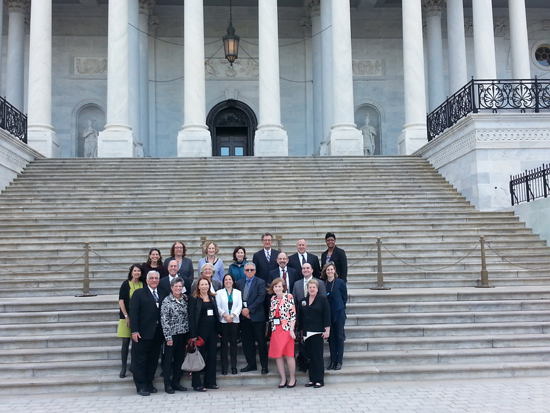
JUF and agency leaders in Washington, D.C. on a two-day advocacy mission.
On April 28-29, 21 JUF executive staff, agency professionals, and volunteer leaders participated in the annual Agency Mission to Washington, D.C.
During the two-day fly-in, community leaders met with policymakers to discuss domestic policy issues important to JUF and its affiliated agencies and the people they serve. Participants attended briefings and had conversations with Sens. Dick Durbin and Mark Kirk and the entire Illinois House delegation to stress the importance of protecting funding for health and human services programs that serve the most vulnerable populations. Mission participants also advocated with congressional committee staff and with senior officials at the U.S. Department of Health and Human Services.
“Meeting with policymakers is critical to our efforts,” said David Goldenberg, Federal vice chair of JUF’s Government Affairs Committee. “JUF and our affiliated agencies depend on strong policies and continued funding support from the federal government. Without it, our ability to meet the health and human services needs of Chicago’s Jewish and broader community would be significantly limited, and that was the message we delivered in Washington.”
Also on day one, JUF hosted a reception for the Illinois congressional delegation and mission participants. Reps. Cheri Bustos, Rodney Davis, Bob Dold, Tammy Duckworth, Bill Foster and Jan Schakowsky attended and reaffirmed their commitment to the Jewish community and the issues it cares about.
On the second day, members of the Illinois House delegation heard from mission participants about the importance of preserving Medicare/Medicaid, the Social Security Disability Insurance program, and reauthorizing the Older Americans Act with provisions that will help Holocaust survivors.
“Our agency professionals continue to present a compelling narrative about the strength of our network of services and the effectiveness of how we leverage the combination public and private philanthropic dollars,” said David Golder, chair of the Government Affairs Committee, who led the mission along with Goldenberg. “Our regular presence in Washington, D.C. is essential to continue to strengthen our relationships and reinforce the importance of continued government support.”
Participants included representatives from CJE SeniorLife, JCFS, the Sinai Health System and Keshet, who provided important information and specific examples of how congressional proposals to cut funding would have serious consequences for the people they serve.
“This mission offered a great opportunity to meet with members of the Illinois Congressional delegation, key Republican and Democratic congressional committee staff, and Administration officials,” said Mark Weiner, president and CEO of CJE SeniorLife. “Given our history of innovation, service to the community and partnership with government, and using our collective voice, JUF and its affiliated agencies were able to deliver an important message calling for robust resources to support health and human services programs. A big thanks to JUF staff for their efforts.”
Members of Congress also expressed their appreciation for the partnership of JUF and its agencies.
“It is always good to meet with members of the Jewish Federation of Metropolitan Chicago who are working so hard every day to improve our community,” said Rep. Schakowsky. “So many of my constituents rely on the quality services that the Federation provides – and I appreciate partnering with the Federation to get the resources needed to continue to get the job done.”
Rep. Bob Dold also expressed enthusiasm for meeting with mission participants. “I always enjoy meeting with JUF advocates and was especially grateful to learn about services JUF provides to Holocaust survivors through programs authorized in the Older Americans Act,” he said. “Thank you to JUF for continuing to help people in need.”
Other stories
-
Meet Andrew S. Hochberg, 2021 Julius Rosenwald Memorial Award recipient
Celebrate Andy Hochberg at the virtual Annual Meeting on Sept. 14
Read more -
Two local teens win national recognition
Recipients of the annual Diller Teen Tikkun Olam Awards
Read more -
Celebrating six young award winners cultivating the community
Introducing young adult award winners
Read more
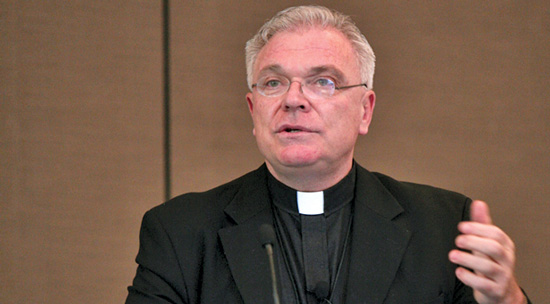
Loyola University Chicago President Father Michael Garanzini.
Warm and welcoming, Father Michael Garanzini is a man who puts you immediately at ease. Chatting with him in his lakefront office feels like schmoozing with an old friend. But as Loyola University Chicago’s 23rd president, whose tenure in office spans 14 years, Fr. Garanzini has little time for small talk. Beneath his calm and jovial visage lie a deep intellect, strong faith, and a steady moral compass-assets he uses to traverse a sometimes tense and divisive atmosphere on campus.
I spoke with Fr. Garanzini after Loyola’s student government on March 26 narrowly passed a resolution to divest from companies that do business with Israel. The student body president vetoed a similar resolution last year. The university has stated that it will not abide by such resolutions.
The nation’s largest Jesuit Catholic university, Loyola welcomes Jews, Muslims, Hindus, and others among its more than 58 percent of students who are non-Catholic.
During our conversation, Fr. Garanzini described his approach to dealing with the Israel-Palestine issue on campus within the framework of his educational mandate.
JUF News : Fr. Garanzini, what do you think is at stake in the campus debate about Israel and Palestine?
Father Garanzini: We need an Israel that’s stable so that the [Jewish] dreams that have existed for centuries can be realized. The world settled the issue after a tragedy of unspeakable proportions in Europe by offering Israel a place to go back home and I think the two-state solution sounds like the most reasonable one.
What I see happening now that is very disconcerting is a rise of what I don’t think is only anti-Israel sentiment, but a kind of resurgence of anti-Semitism, as if the Jews have some kind of magical power over the rest of the world, which has to be fought. That’s the way the Jews were portrayed negatively and unfairly in the past.
There’s something in the air again that is anti-Semitic and that’s very troubling.
How do you feel about the political debate on campus?
When our students take up the issue, I applaud them. We have Muslim, Christian, and many Jewish students who love to come here because their faith is respected. We need a Loyola in this town so that every issue is not secularized. Loyola is a place where the religious dimension of all these issues can come out.
But when the students choose an avenue of what I would call political coercion, we’ve tried to explain that they’re heading in a direction that is only divisive. They love the idea that they are a united student body, that they are one family. They like to talk like that. They like the fact that they can discuss things in a forum. But when they want to make decisions without thoroughly studying the issue or when they split as they did on this issue, down the middle, after hours and hours of debate, they split [the student body].
I tried to point that out to the president and vice president of student government. I said you don’t have a united position. You just saw how terribly torn your fellow students are about the issue. Well, it won 16 in favor, 15 against, and two abstentions. I said if you want to play the numbers, it’s really a 17-16 vote, but let’s forget about the numbers. You don’t have a mandate to speak out on anything. What you have is a divided student body and did you see the pain that it caused just discussing this? Do you think you’re smarter than all the people in the UN or all the governments that are trying to settle things in the Middle East?
I said stay away from making these kinds of pronouncements. They don’t do you any good. And I said, some of this smacks of anti-Semitism. I just fear and feel that, so I’m warning you because that has no place. I don’t care what you talk about with academic freedom, but that has no place on this campus.
Don’t you think the students believe that through their actions they’re going to change the world?
I went to St. Louis University in the late ’60s, so I understand student activism. Throughout that period we kept trying to find the source of what was really problematic. We debated those things. We didn’t want our country in a war that we felt needed to be settled peacefully.
I don’t see that in this resolution. As American citizens if you want to say the United States should or shouldn’t do something, discuss whether the Republicans should have invited or not invited Netanyahu. Discuss whether you want President Obama to do more to solve the problem. Take a stand on solutions for peace, not on sides in this issue because the sides seem to be pretty divisive.
When you say anti-Semitism, how do you parse and understand what is opposition to Israeli policy, and what is anti-Zionism?
Given the long history of Christian anti-Semitism, it’s important for Christians to be careful in this argument not to fall back into a general anti-Semitic position out of some visceral hatred of Jews. That’s what I’m worried about and this is just slightly beneath the surface. We see these anti-Semitic groups cropping up especially in Europe today. It’s a very thin line and Christians should be more than careful not to cross it because they have used religious excuses in the past for some horrible crimes.
The last time I wrote back to the president of student government, after they’d sent me an open letter, I said, “You know, it is ironic that I am writing you this asking you to be cautious on Good Friday when you receive this, because it was precisely on a day like this that Christians used to do horrible things to Jewish people throughout Europe.”
It’s ironic and sad that we’re talking about his very thing at Passover. I said, it’s just a very thin line here and that’s what I worry about. We are not in the position to claim the moral high ground.
It seems that the tactic of boycott divestment, and sanctions has made it impossible for people who at the end of the day need to make peace.
Exactly. To me the conclusion to a discussion that the students had on these issues, should not have been a resolution about boycotting, but should have been a resolution about getting closer. We here in the States–Jews, Christians, and Muslims–could be an example of how one works for peace, if they would talk together. What America has to offer to the world is our capacity for tolerance and, in fact, moving beyond tolerance to embracing other people, other cultures, and religious differences. That’s not what this resolution demonstrated.
When we had some of our most tense moments, for example, at 9/11, there was no incident here, there was no problem here. We talked and we learned that we need each other and we need to maintain our sanity while we discover what is at the root of what was going on. It was an example of the best we can offer here.
To rush to list whose side you think people are on, and to condemn certain sides, is to me un-American. There’s kind of a patriotic obligation involved in this question for all of us, and I think I can appeal to all students whether they have faith or not, and whether they think they have a stake in this or not. In a very tense situation we need to model the tolerance and the inclusion that we stand for.
So I was very disappointed that they took the route they took.
Is there something about this generation of students that fuels this adversarial and contentious environment?
This generation is searching for how to become citizens of a global world that’s so highly divided in many, many ways. They do see themselves as part of a big world unlike previous generations. They have the notion that they don’t belong to a single community or a single state or a single nation because they know they’re going to live all over the place. So they’re global in their thinking.
But we have not shown them what civil discourse looks like. Our national discourse is not very civil. We don’t know how to talk to each other without talking over and past each other. People are trying always to stake out a position to get some kind of galvanized base. It’s not a very good way to do most business.
Do you find openness here for students to hear the directive from their faith?
The kids take their faith very seriously. Right on the same corridor in the student center there’s a Christian chapel, a Punjab for the Hindus, two Muslim rooms (for men and for women), and Hillel. That has sent a signal that this place is about religious tolerance, freedom and inter-religious dialogue. They’re put next to each other so that they have to talk. They’re very open to this and that’s why the politicization about this issue is just so difficult. It’s our duty to keep working at teaching what real discourse looks like.
Do students of every faith learn about Jesuit values?
What’s happening after this resolution, for example, is very much a part of the Jesuit thing, pushing the students to reflect on whether or not this action solved anything, confused anything, hurt anything, contributed positively or negatively to their life together. So I’m not completely hopeless about what’s just happened and not completely disappointed. The year isn’t over yet and we’re pushing the student government to reflect on what they did and whether or not it solved any problem.
So how do you manage this?
Getting our hands dirty in these kinds of issues is part of what an educator does. These kinds of issues are really what we’re about and if you’re not going to learn them here, I doubt you’re going to learn them out on the street or after you graduate because you’re going to be in a job, living more and more with your own kind all the time, you know, in your own little world, which usually gets pretty small.
Does the plight of Christian communities animate students?
It animates us Jesuits. There’s a lot of people feeling very threatened and it looks like extremism is succeeding in driving out minority communities of all kinds. Unless we bring that part of the world into the human democratic family, it’s going to splinter even more. Maybe our students need to see that age-old religious-ethnic-racial rivalries are deep in our genes, and that what we understand by sin is almost genetic. It’s in us; we pass it on. It doesn’t take much [to reignite] these ancient rivalries when there’s economic difficulties or social difficulties.
What we saw in the previous century was atrocities committed ostensibly in the name of atheism, and what we see in the 21st century is atrocities being committed in the name of bad religion and fundamentalisms that are taken to the extremes. That’s worrisome for a man in religion, because the last thing we need is for people to turn away from God because God is so misused by all these false religious movements. We have a real challenge, those of us that are interested in preserving faith, because I think a lot of young people are going to be extremely turned off to the whole notion that theology, any belief system, has anything of value for their future.
When you have no faith, or bad faith, you have license to do anything.
What do you hope and dream for the future of Loyola?
Because we take faith seriously, we have an opportunity to be a training ground for people who know how to deal with these issues. Dismissing faith as irrelevant is a modern tendency, but that’s not the way the world lives. So I think we could be a place where kids actually learn that respect and interreligious dialogue are the way of the future or there is no future.
This issue we’ve been discussing is precisely a good issue to discuss. Getting the students to hold back from thinking they have solutions is extremely important for us because a resolution is not a solution.
Aaron B. Cohen is vice president of Marketing and Communications for the Jewish United Fund of Metropolitan Chicago.
Other stories
-
Meet Andrew S. Hochberg, 2021 Julius Rosenwald Memorial Award recipient
Celebrate Andy Hochberg at the virtual Annual Meeting on Sept. 14
Read more -
Two local teens win national recognition
Recipients of the annual Diller Teen Tikkun Olam Awards
Read more -
Celebrating six young award winners cultivating the community
Introducing young adult award winners
Read more