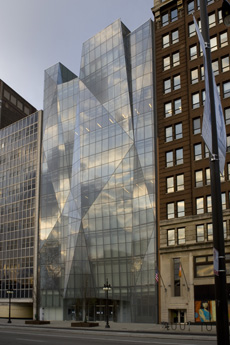
Rooted in the belief that “great Jewish communities need great leaders,” the Spertus Institute for Jewish Learning and Leadership will launch the Center for Jewish Leadership this fall. This new programmatic center will cultivate innovative approaches to leadership and create leadership development opportunities tailored to the challenges faced by professionals and volunteers working in Jewish communities locally and around the world.
New opportunities for leadership development will be designed to enhance the knowledge, effectiveness, creativity, and strategic agility of current and future Jewish leaders, advancing the missions of the organizations they serve and fostering more vibrant futures for their communities.
The creation of the Center for Jewish Leadership comes from an acknowledged need for targeted professional development in the nonprofit sector, a trend that is magnified in the Jewish community for a number of reasons. According to the March 2014 report Cultivating the Next Generation of Leaders for Jewish Nonprofits by the Leadership Pipeline Initiative, “the vast majority of Jewish nonprofits—75% to 90% by some estimates—must find new executive leadership in the next 5-7 years.” Yet “many organizations simply don’t have the capacity or expertise to effectively cultivate their talent” and “there are not enough leadership development programs serving the field as a whole.”
Jewish organizations that do not develop existing talent face two significant challenges when hiring from outside: they need to compete against higher salaries offered by the business sector and they often struggle to find candidates with the specialized knowledge required by Jewish organizations. According to a report in the Journal of Jewish Communal Service (Vol 85, No 1), “The success of Jewish organizations depends to a considerable extent on their ability to retain and promote skilled, experienced, and committed Jewish professionals, especially in the face of the impending leadership gap.” In fact, according to the Leadership Pipeline Initiative report, “Cultivating outstanding leaders is the most powerful lever that organizations have towards becoming more innovative, adaptive, and results-oriented.”
The need for skilled leaders extends beyond those on an organization’s payroll. Too frequently, the only training that nonprofit trustees receive is designed to help them understand an organization’s mission and impact. This compels trustees to rely on their own business skills or life experiences as they oversee the planning, policy development, and financial management of the organizations on whose boards they serve.
The Center for Jewish Leadership—supported with generous grants from the Crown Family and an anonymous foundation—will serve both employees and volunteers of Jewish organizations. CJL programs and initiatives will directly address the need in Jewish agencies and organizations for well-equipped and forward-thinking leadership at every level.
CJL offerings will include graduate degree and certificate programs, master classes and workshops, a Jewish Leaders on Leadership series, an annual leadership symposium, a professional community mentoring program, and micro-grants for innovation and collaboration. Programs offered through the CJL will provide participants with a unique and holistic approach to Jewish leadership that seamlessly integrates deeper understanding of Jewish life, culture, and history with insights and best practices from the worlds of business and nonprofit leadership.
The Center for Jewish Leadership launches officially on Sunday, Oct. 26 with an Inaugural Symposium: Entrepreneurship, Innovation, and Jewish Leadership. For this symposium, Spertus Institute brings together a group of impressive innovators from the business world and social sectors, in the US and Israel, to inspire ideas for individual, organizational, and community-wide innovation.
The featured presenter is serial entrepreneur and high tech venture capitalist Jon Medved, currently the founder/CEO of OurCrowd, a crowdfunding platform focused on Israeli startups. According to Forbes, OurCrowd is “one of the largest crowdfunding organizations on the planet,” having raised $50 million for 38 companies since its 2013 launch. Over the past two decades, Medved has invested in more than 140 startup companies, helping bring twelve of them to values in excess of $100 million. Known as a passionate and inspiring speaker, Medved is a frequent media guest and commentator who has appeared on PBS, CNN, CNBC, Bloomberg, CBN, and BBC.
Joining Medved as panelists will be Ariel Beery, Jay Goltz, Dr. Hal M. Lewis, and Toby Rubin.
Ariel Beery is co-founder/CEO of MobileOCT, an Israeli biophotonics startup enabling mobile phones to detect cancer. He served as the Global CEO of the PresenTense Group, a social ventures accelerator that has franchises in sixteen cities around the world. Jay Goltz is founder/CEO of the Goltz Group. With businesses including Artists Frame Service and Jayson Home, he pioneered the evolution of Chicago’s Clybourn Corridor from an abandoned factory district to a premier shopping destination. He is author of The Street Smart Entrepreneur and a blogger for “You’re The Boss,” an ongoing New York Times series on small business leadership. Dr. Hal M. Lewis is the president and CEO of Spertus Institute as well as a recognized author and expert on Jewish leadership. Toby Rubin is an attorney who left law to drive innovation in the Jewish community. She is the founder/CEO of UpStart, a national nonprofit that accelerates projects of Jewish social entrepreneurs and fosters entrepreneurship in established Jewish organizations.
It is exceptional for such a group of trailblazing individuals to come together on one stage. Attendees can look forward to a rare and frank discussion of what it takes to be a successful entrepreneur, the steps that organizations wishing to innovate must take, and how this knowledge can be leveraged to advance Jewish life.
The symposium is open to the public and will be followed by lunch, providing opportunities for participants to take part in small group discussions based on suggestions from presenters and attendees. Tickets can be purchased online at spertus.edu/Center or by phone at 312.322.1773.
In discussing the need for the Center for Jewish Leadership, Dr. Lewis said, “Jewish life today faces complex challenges. Because we cannot solve 21st-century Jewish problems with 20th-century Jewish organizations, the Center for Jewish Leadership is necessary to help Jewish agencies develop first-rate leaders—in both volunteer and professional positions—who are equipped to meet today’s demands.”
Caren Yanis, President of the Crown Family Philanthropies, tied the importance of the Center for Jewish Leadership to the findings of the recent Pew Research Survey, A Portrait of Jewish Americans. She said, “The Pew study echoed what we already knew, that people identify with Judaism in a variety of ways and for a variety of reasons, and that thinking about Jewish heritage has shifted. In response, the Center for Jewish Leadership at Spertus develops prepared, certified, and committed Jewish leaders to meet the changing needs of American Jewish communities and institutions.”
A full range of CJL master classes and workshops are scheduled for this fall. All are designed for professionals and volunteers working for and with Jewish organizations. Master classes include Business Plans for New Initiatives, Fundraising for Nonprofit Organizations, Jewish Values for Professionals and Lay Leaders, Strategic Planning, and Writing for Social Media. Daylong workshops will be offered on Grantwriting and Negotiation Skills.
In the areas of graduate and certificate programs, in conjunction with the launch of the Center for Jewish Leadership, Spertus Institute expands two program areas that have demonstrated their success over the last several years. This fall, Spertus Institute’s Master of Arts in Jewish Professional Studies program, in which Jewish communal professionals enhance their educational qualifications and learn critical leadership skills in a Jewish context, will welcome the eighth Chicago-area cohort of students, all of whom are already working in Jewish organizations. This spring, Milwaukee will join Pittsburgh and Chicago as the third U.S. city offering the program, and Israel will join Canada as the second international location. In Israel, the program will benefit Israeli nonprofit professionals who work with North American Jewish communities and in the increasingly important area of Israel education.
In addition, a new session of the Certificate in Jewish Leadership program will begin in Chicago this fall. A partnership between Spertus Institute and Northwestern University’s School of Professional Studies, the Certificate in Jewish Leadership serves established and emerging leaders (including lay leaders) of Jewish organizations. The program consists of a four-part series of courses, group work, and individual mentoring.
Other stories
-
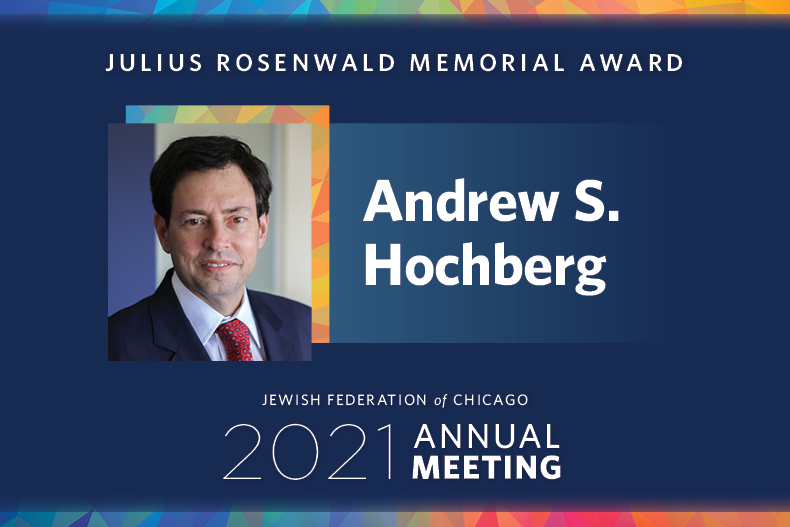
Meet Andrew S. Hochberg, 2021 Julius Rosenwald Memorial Award recipient
Celebrate Andy Hochberg at the virtual Annual Meeting on Sept. 14
Read more -
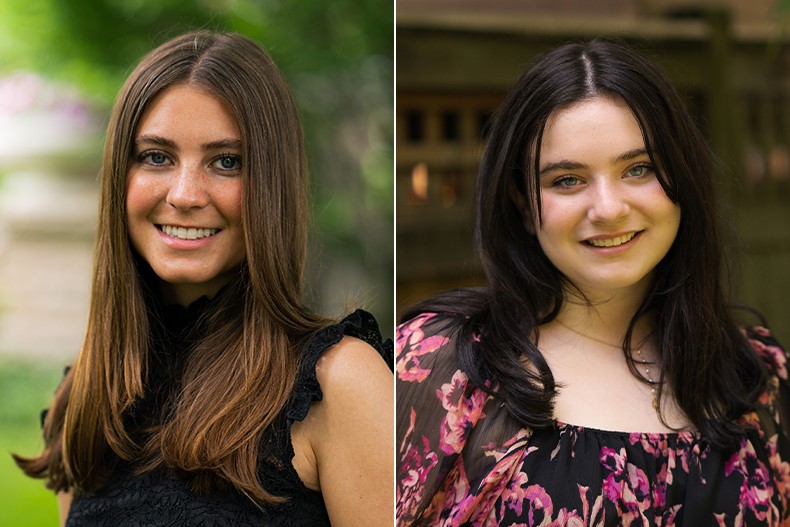
Two local teens win national recognition
Recipients of the annual Diller Teen Tikkun Olam Awards
Read more -
Celebrating six young award winners cultivating the community
Introducing young adult award winners
Read more
TEANECK, NEW JERSEY – Sharsheret, a national not-for-profit organization supporting young women and their families, of all Jewish backgrounds, facing breast cancer and ovarian cancer, is proud to recognize the Center for Jewish Genetics as a Sharsheret Supports Partner of Excellence.
The Sharsheret Supports program assists communities in developing and maintaining local, free breast cancer and ovarian cancer programs and support groups. Sharsheret Supports combines local Chicago cancer resources with Sharsheret’s vast national expertise and culturally sensitive resource materials to enhance the support available to women and families facing cancer. As a Partner of Excellence, the Center for Jewish Genetics will receive financial support and national recognition for its important work.
“Since the launch of Sharsheret Supports in 2007, we have partnered with more than 40 Jewish organizations and cancer organizations across the country to develop and maintain local, culturally-relevant breast cancer and ovarian cancer support and education,” said Director of Operations Elana Silber. “As we begin the second year of our Partners of Excellence program, we are proud to recognize the Center for Jewish Genetics for their efforts and look forward to working together to continue to bring outstanding programming to the Chicago community.”
To learn more about and get involved in the Center for Jewish Genetics’ breast cancer and ovarian cancer programming, contact Karen Litwack at 312.357.4717 or [email protected]. For more information about the Sharsheret Supports Partner of Excellence program, contact Director of Support Programs Adina Fleischmann at 866.474.2774 or [email protected].
Other stories
-
Meet Andrew S. Hochberg, 2021 Julius Rosenwald Memorial Award recipient
Celebrate Andy Hochberg at the virtual Annual Meeting on Sept. 14
Read more -
Two local teens win national recognition
Recipients of the annual Diller Teen Tikkun Olam Awards
Read more -
Celebrating six young award winners cultivating the community
Introducing young adult award winners
Read more
PJ Library, the Harold Grinspoon Foundation’s popular national program that sends free Jewish-themed books and music each month to tens of thousands of children up to age 8, is launching a new edition: PJ Our Way.
The new two-year multi-city pilot project, being launched in Chicago in partnership with the Jewish United Fund/Jewish Federation of Metropolitan Chicago, expands the program to Jewish kids ages 9 to 11 and, for the first time, lets them choose the books they receive.
Every month, children can go online to pick from a selection of high-quality titles reviewed by a panel of PJ educators, parents and kids. They also will be able to write reviews, upload their own video trailers, and share ideas on the PJ Our Way website.
Those who want to take an even more active role can apply to the National Design Team, where they will have early access to PJ Our Way books and work with PJ Library to create videos and reviews for the website.
PJ Our Way also offers parents the opportunity to read about each book and find suggestions for family discussion on the PJ Our Way Parent Blog. They can join the conversation online and learn about activities and events happening in their local Jewish communities. Congregational educators and day schools also will develop related programming.
All participants, including those who previously signed up for the original PJ Library program, must register for PJ Our Way. The website, www.pjourway.org, is now open for registration. Eligibility is spelled out there, and parent approval is required at sign-up.
Once they register, each child will receive a copy of “Jordan and the Dreadful Golem,” by Karen Goldman, as a welcome gift. After that, they will be able to choose from a selection of books each month.
The full website, with all of the new features, goes live in a few weeks, at which point kids will be able to start choosing books. Selections made by the 10th of each month will be delivered 4-6 weeks later.
JUF’s original partnership with the PJ Library program, for children 8 and younger, continues to serve more than 6,000 Chicago-area families and is the largest local effort in the nation. Part of the Harold Grinspoon Foundation’s national initiative to promote Jewish literacy among children and their families, the Chicago program is a gift from the Jewish United Fund/Jewish Federation of Metropolitan Chicago; generous local donors including Iris and Steve Podolsky, Charlene and Pierre Eilian, and the Crown Family Philanthropies; and local Jewish early childhood educators.
Other stories
-
Meet Andrew S. Hochberg, 2021 Julius Rosenwald Memorial Award recipient
Celebrate Andy Hochberg at the virtual Annual Meeting on Sept. 14
Read more -
Two local teens win national recognition
Recipients of the annual Diller Teen Tikkun Olam Awards
Read more -
Celebrating six young award winners cultivating the community
Introducing young adult award winners
Read more

Apples and honey for Rosh Hashanah! Who doesn’t look forward to that first smear of honey dripping slowly off a crisp apple slice? Well, this year I am saying, ‘Put down the Honey Bear and try the honey from Israel.’ I am not talking about honey from bees; I am referring to Silan or date-honey.
Biblical foodies and Torah scholars that have bandied about the notion that “the land flowing with milk and honey” refers to date-honey, though beekeeping was an ancient practice.
Either way, I am in love with the rich sweetness and sophisticated, dried fruit flavor of date-honey.
While in Chicago, I can be in touch with my Israeli spirit by using some Israeli ingredients, and my favorite right now is Silan.
Date-honey is a puree of dates and water. Easy to purchase at kosher stores and those that carry Mediterranean foods, I prefer to make my own. Sometimes the store bought products have added sugar which, in my mind, defeats the point of date-honey. I am looking for the natural sweetness from the fruit and not from sugar. My son Jonah calls dates “nature’s candy.” He is right! And the puree is a perfect natural sweetener that is perfect for most recipes where sugar, maple syrup or honey is added.
Date-honey is commonly used in Israel, and if I can’t be in Israel for the holidays, I can use the exclusive and delicious sweetener for my apple-dipping, cooking and baking.
L’Shana Tovah u ‘Metuka! Happy new year!
Sweet and Sour Meatballs with Date-Honey
These are not your mother’s meatballs! Skip the cloying, overly sweet sauce and use subtle and stylish date-honey.
Date-honey adds a sophisticated sweetness that is rich and earthy.
This recipe is modern with no added sugar
and you can easily substitute the ground chuck
for turkey.
*Chef’s tip-I use a panade in my ground meat dishes. A panade is a starch and liquid mixture that adds moisture to meatballs, meatloaf and other dishes. It is not a way to “stretching” the meat. It is there because meat shrinks as it cooks, and ground meat, more so, and squeezes out moisture in the process. The panade is a moist “place holder” and keeps the meat from contracting so much as to be dry and flavorless. A panade can be made with soft bread crumbs, oats, cooked rice, barley or other cooked grains. The liquid can be wine, stock, beer, water or any flavorful liquid.
For the sweet and sour sauce
2 tablespoons extra virgin olive oil
1 medium yellow onion, grated on a box grater
2 garlic cloves, grated on a box grater
1 15-ounce can tomato sauce or 2 ripe tomatoes, chopped
3 tablespoons apple cider vinegar
1/3 cup Silan (date-honey)
Kosher salt and freshly ground black pepper, to taste
For the meatballs
1 cup soft bread crumbs (leftover challah works well for this)
1/2 cup chicken stock, white wine or water
2 pounds ground beef chuck
2 eggs
1 small onion, grated on a box grater
2 garlic cloves, grated
3 tablespoons chopped fresh flat leaf parsley
2 teaspoons chopped fresh thyme
2 teaspoons kosher salt
1 teaspoon freshly cracked pepper
Heat a medium sauce pan, with the olive oil, over medium heat. Add the grated onion and cook, stirring occasionally until the onion is very fragrant and beginning to caramelize. Add the remaining ingredients and stir to combine.
Decrease the heat to low and simmer the mixture for 15 minutes.
Place the bread crumbs in a small bowl and add the stock or other liquid. Stir to combine.
Squeeze an excess liquid out of the bread crumbs. Transfer the breadcrumbs to another bowl and discard the liquid.
Add the remaining ingredients for the meatballs and gently mix together. With light and slightly wet hands form the meatballs. You can also use an ice cream scoop for this and then all the meatballs will be the same size.
Heat a sauté pan, lightly coated with olive oil, over medium heat. Brown the meatballs in batches until caramelized.
Transfer the meatballs to the sauce and continue cooking in the sauce.
Serve the meatballs with rice, potatoes, or favorite vegetable. Garnish with chopped parsley and pomegranate seeds
Homemade Date-Honey
Homemade date-honey is easy and fast to make. Sometimes I keep it neutral without spices, but I like the added OOMPH of flavor cinnamon brings to it.
20 Medjool dates, pitted
1 cup very hot water
Pinch of cinnamon (optional)
Combine the dates, hot water and cinnamon, if using, and steep for 1 hour.
Puree the mixture in a blender or food processor until very creamy and thick.
Store the date honey, covered in the refrigerator for 1 month.
Root Vegetable Tzimmes with Date-Honey
This stylish version of the classic side dish takes center stage with rich fall root veggies and warm toasty spices. The date-honey compliments the vegetables without being too sweet. I serve this as a side for my favorite Pomegranate Chicken Recipe (my own recipe of course!), or with a large salad as a vegetarian meal.
Extra virgin olive oil
1 large red onion, sliced thinly
1 medium sweet potato, unpeeled, cut into large dice
1 medium butternut squash, peeled and cut into large dice
2 medium carrots, peeled and cut into large dice
2 medium red beets, peeled and cut into wedges about ½ inch thick
1 medium gold beet, peeled and cut into wedges about ½ inch thick
4 garlic cloves
½ cup date honey
½ cup golden raisins
½ cup dried apricots, chopped
1 cup water
1 cinnamon stick, or 1 teaspoon ground cinnamon
1 star anise
1/8 teaspoon ground cloves
1/8 teaspoon freshly grated nutmeg
½ teaspoon ground coriander
Kosher salt and freshly cracked pepper
Preheat oven to 325°
Place a large Dutch oven or sauté pan, lightly coated with EVOO, over medium heat.
Sauté the root vegetables, in batches, until they are browned on all sides. BE SURE TO SEASON EACH BATCH WITH SALT AND PEPPER!
Add back all the vegetables to the Dutch oven or to a pan with a tight fitting lid. Add the date-honey, raisins, water, spices and salt and pepper.
Cover the pan and roast the vegetables about 45 minutes or until the vegetables are tender. Uncover the pan and continue cooking until all the liquid has evaporated and the vegetables are browned, caramelized and gooey!
Serve with chicken, brisket, fish, or as an entrée.
Garnish with fresh parsley, pomegranate seeds, and chopped dates
Crustless Pumpkin Custard with Date-Honey
Special equipment: 8 ¾-cup ramekins
1½ cups canned pumpkin puree
4 large eggs
2½ cups coconut milk, or whole milk for dairy recipes
¾ cup date-honey
¼ cup cornstarch
1 teaspoon cinnamon
½ teaspoon ground ginger
¼ teaspoon freshly grated nutmeg
½ teaspoon sea salt
Preheat the oven to 350°
Heat a tea kettle with water.
Whisk all the ingredients together and divide the custard into 8 ramekins.
Place the ramekins in a pan with high sides. Pour the hot water into the pan so the water level comes up about halfway up the ramekins.
Bake the custard for 45-555 minutes or until it is set but still jiggly in the center.
Remove the whole set up from the oven and allow the custards to cool for 30 minutes in the water before refrigerating.
Refrigerate for at least 4 hours or overnight before serving.
Garnish with pumpkin seeds, chopped dates, and pomegranate seeds.
Laura Frankel is the Executive Chef at Wolfgang Puck Kosher Catering at the Spertus Institute for Jewish Learning and Leadership in Chicago.
Visit Chef Laura Frankel’s Facebook page (Chef Laura Frankel) to find out where she is teaching cooking classes around town, including an upcoming cooking demonstration at North Suburban Congregation Beth El. Watch the film ‘The Sturgeon Queens’ at Spertus on Sunday, Sept. 7, and join in a discussion and “Herring Pairing” with Frankel after the movie. Visit www.spertus.edu for more details.
Due to the popularity of e-books, major Chicago bookstore chains have swung many of their doors shut. Local shops, like Rosenblum’s World of Judaica in Evanston, have yet to turn off their lights, but still feel the impact of the growing digital library.
“It’s extremely disturbing,” said Rosenblum’s owner Avi Fox. “People need to be sensitive to the fact that if they don’t go to the Jewish bookstores that provide extraordinarily important services in the community, when they want to go buy a Jewish book at a local Jewish bookstore, there won’t be any to go to.”
Fox explained that when it comes to the High Holidays, not only are actual prayer books in high demand, but also supplementary reads to “inspire and give insight into the themes of the holidays.”
And browsing through the shelves, according to Fox, is just as valuable as indulging in a book itself. “You can’t have a real book-buying experience by going online,” he said.
So, in the spirit of bringing back the traditional paperback book to be passed down from generation to generation, l’dor v’dor, here’s a guide of reads to enliven your High Holidays- whether you’re sitting in a service or your living room.
Rosh Hashanah Readings: Inspiration, Information, and Contemplation and Yom Kippur Readings: Inspiration,
Information, and Contemplation
Dov Peretz Elkins, Ed. (Jewish Lights)
To add spiritual depth and meaning to both the Jewish New Year and the Day of Atonement, this commentary fosters a personal understanding of what makes the High Holidays so holy. The collection of writings and prayers drawing from a variety of sources- ancient, medieval, Jewish, even non-Jewish-allows readers to experience the spirit of the holidays on an intimate level.
God In Search of Man: A Philosophy of Judaism
Rabbi Abraham Joshua Heschel (Farrar, Straus and Giroux)
Heschel discusses not man’s search for God, but rather God’s search for man, questioning the idea of a Chosen People and the very nature of Biblical thought- and how ideas transform into beliefs.
All These Vows: Kol Nidre
Rabbi Lawrence A. Hoffman (Jewish Lights)
This book examines the essence of Kol Nidre by tracing the prayer’s history, detailing various attempts to revise it-and even erase it altogether! A diverse group of scholars, poets, and artists contribute to this exploration of why Kol Nidre remains a highlight for worshipers in the High Holiday season.
All The World: Universalism, Particularism, and the High Holy Days (Prayers of Awe)
Rabbi Lawrence A. Hoffman, Ed. (Jewish Lights)
Assembling the insights of over 40 scholars, rabbis, and artists from all over the globe, All The World sparks a dialogue on what the High Holidays reveal about the principles of universality and particularity in Judaism and Jewish stories.
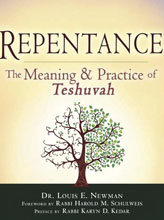
Repentance: The Meaning and Practice of Teshuvah
Louis E. Newman (Jewish Lights)
By examining Judaism’s core teaching of repentance, this book investigates the meaning of teshuvah from both its practical and philosophical sides.
Change & Renewal: The Essence of the Jewish Holidays & Days of Remembrance
Rabbi Adin Steinsaltz (Maggid)
Take a deeper look into the essence of the Jewish calendar to find entirely new meanings of the Jewish holidays, with a highlight on the significance of Rosh Hashanah and Yom Kippur.
Gates of Repentance:
The New Union Prayerbook for the Days of Awe
Chaim Stern, Ed. (Central Conference of American Rabbis)
This unique machzor of the Reform Movement is filled with readings, meditations, and songs for the High Holidays using modern, gender-inclusive language.
Worship of the Heart: Essays on Jewish Prayer
Rabbi Joseph B. Soloveitchik (KTAV Publishing House, Inc.)
This rich collection of Rabbi Soloveitchik’s commentaries on prayers such as the Amidah, the Shema and other biblical texts analyzes the Jewish tradition of prayer and its development from halacha (Jewish law) to modern Jewish practice. n
To discover more Jewish titles, visit Rosenblum’s World of Judaica (www.alljudaica.com), Hamakor Galley (www.jewishsource.com), or the Spertus Shop (http://shop.spertus.edu).
Other stories
-
Meet Andrew S. Hochberg, 2021 Julius Rosenwald Memorial Award recipient
Celebrate Andy Hochberg at the virtual Annual Meeting on Sept. 14
Read more -
Two local teens win national recognition
Recipients of the annual Diller Teen Tikkun Olam Awards
Read more -
Celebrating six young award winners cultivating the community
Introducing young adult award winners
Read more
First, my confession. And it comes with a slice of guilt. I never liked the High Holidays. In fact, as the thoughts of family and friend-filled Passover seders would start to fade each year, I would begin to think about the impending Days of Awe with a knot in my stomach and a distaste in my mouth that even the thought of sweet apples and honey could do little to relieve. What’s worse is that as a Jewish educator, I would be charged each September to teach about the meaningfulness of these Tishrei days: the opportunity to reflect, to return, to become a better person.
What was really swirling through my mind was the unpleasant thought of sitting through seemingly endless services, uninspiring sermons and a day of fasting and praying that had a sadomasochistic feel to it.
I would ask myself why the need for the hours on hours of prayers, many of which are repeated over and over. And isn’t it enough to hear the words of Kol Nidrei once? But three times! Really?! All while standing and listening to musical notes dragged out for what seem like days. And I was cynical of the whole spectacle. Synagogues having to move locations to accommodate larger than normal crowds-reminiscent of college days when on final exam day the lecture hall would fill up with students who had not shown up all semester for class. And cynical of the fashion shows and the maneuvering for the best seats that money can buy.
But all of these thoughts changed about 15 years ago when I was in my late 30s. The holidays were approaching, and I was anything but looking forward to them. I was introduced then to a work booklet called Where Are You? by Jael Greenleaf and subtitled The Inventory of the Soul in Preparation for the High Holy Days. Each page included a verse from the High Holiday prayer Ashamnu. Following the verse was a related prompt and a half page for written reflection. Every night I would read the page and then journal.
That year, as I reflected upon the High Holidays just past, I realized that they were not only meaningful, but I actually felt refreshed and empowered. I reflected about it after the holidays and realized something that had never occurred to me previously.
Every year until that year, I would walk into services on the holidays and would expect to be transformed somehow. I would enter the sanctuary on the first night of Rosh Hashanah and unconsciously I would be thinking: Rabbi, Cantor, do your work. Make me a better person. Make me feel something. And only that year on the cusp of my fifth decade, did I realize that this was my responsibility. I couldn’t expect to walk into the final exam having not done the work and then expect to ace the test.
Every year since then I have done my homework. Beginning the first day of Elul (traditionally the beginning of the days of preparation for the High Holidays) I have made a plan to get me into the mindset of the challenging work of reflection and self-transformation. One year I bought a book that included a reading for each day of the month preceding the High Holidays. One year I journaled each night, focusing on ways I hoped to do better in the year ahead. Another year I read a psalm each night, a psalm traditional for this time of year.
A few years ago I decided to focus my preparations on a specific goal and aspect of my life that was troubling me. At the time I was feeling disconnected from friends and social relationships. It was taking a toll on my spirits, and I knew that I needed to do something to repair this. I decided each day to call a friend with whom I had not spoken for a while. By the end of the month, having spoken with or left voice mails for 30 friends with whom I had been out of touch, I found myself feeling much less disconnected and significantly more whole. And walking into services on the first day of Tishrei I was ready to engage. I had done my homework.
The next year I was feeling less charitable than I wished I were. I decided that every day I would put a dollar in my tzedakah box. My hope was that I would make a concerted effort to carry this over for the rest of the year and beyond. When I sat in services last year I reflected on my active engagement in the Elul preparations.
This year, as I have these last years, when I teach about Elul and preparing for self-transformation and when I journal with my students about this, it will be from my heart.
And on the first day of Tishrei when I walk into services on the first evening of Rosh Hashanah, I will be able to say, as Abraham and Moses say in the Torah and as the Cantor chants at Kol Nidrei evening, Hineini, here I am. I am here. I am ready.
Jeff Bernhardt is a Jewish educator, Jewish communal professional and writer living in Los Angeles. His dramatic readings have been used by synagogues to help their congregants prepare to enter the High Holidays. His first book is On Sacred Ground: Jewish and Christian Clergy Reflect on Transformative Passages of the Five Books of Moses (blackbird books, 2012). He can be reached at www.jewishdramas.com.
This article first appeared in the Jewish Journal of Los Angeles.
Other stories
-
Meet Andrew S. Hochberg, 2021 Julius Rosenwald Memorial Award recipient
Celebrate Andy Hochberg at the virtual Annual Meeting on Sept. 14
Read more -
Two local teens win national recognition
Recipients of the annual Diller Teen Tikkun Olam Awards
Read more -
Celebrating six young award winners cultivating the community
Introducing young adult award winners
Read more
JUF News asked some readers around town and in Israel to tell us their wishes for the new year–and here’s what they said. Peace in Israel and around the world topped the list for readers. May it be a sweet and peaceful year for all!
David Goldenberg, Highland Park
I wish for a year of health, nachas (pride), and smachot (joy) for my family, friends, and loved ones. May it be a year that brings calm and peace to Israel and when extremism is overwhelmed by those who share a commitment to coexistence, respect, and tolerance.
Ellen Hattenbach, Deerfield
My biggest hope is to get to Israel and enjoy our people, food, music, weather, culture and strength.
Simone Miller, Northbrook (Age 11)
Peace.
Michael Golden, Chicago
I know it’s a bit selfish with the world out of control, but I wish for my mother’s health. She’s been dealing with daily pain for so many years, and I want her time now to be peaceful and enjoyable. If I could snap my fingers and have one wish come true, I would drain all her pain away in a heartbeat.
Rotem Yehudai, Ben-Gurion University student from Mabuim, Israel (on the Gaza border), who has spoken in Chicago for JUF events.
My hope for the Jewish new year is that the whole world would see the Jewish people for who we really are-peaceful people.
Sandy Rockind, Chicago
Learn not to panic! Smile more. Laugh often. Actually laugh out loud-in person. Worry less. Be a better daughter, sister, friend. Travel. I wish for a bigger, better year filled with unexpected amazing surprises. And I wish everyone a Shana Tova-may you, your family, and the state of Israel be granted a blessed year.
Josh Rothenberg, Chicago
Having just come back from Israel, it would be nice to see sustained peace in that part of the world. Sometimes I don’t feel like we’re as far as off as people think we are.
Harold Gerber, Chicago
In the new year, I hope that humanity will trump extreme religious beliefs. I hope whatever higher power that exists will fix what we cannot. Too many people are dying, too much anger boils, and not enough creativity prevails. I hope we can evolve into a population of cohabitants that can share the same soil.
David Passman, Chicago
At my age? To consider this question all over again–one year from now.
Other stories
-
Meet Andrew S. Hochberg, 2021 Julius Rosenwald Memorial Award recipient
Celebrate Andy Hochberg at the virtual Annual Meeting on Sept. 14
Read more -
Two local teens win national recognition
Recipients of the annual Diller Teen Tikkun Olam Awards
Read more -
Celebrating six young award winners cultivating the community
Introducing young adult award winners
Read more

When a Turkish owner of a cafe near the Belgian city of Liege puts up a poster that welcomes dogs but not Jews, that’s a sign of the times.
And when an on-duty doctor refuses to treat a 90-year-old Jewish woman from Antwerp and refers her to Gaza instead, that, too, is the kind of news that encapsulates a larger reality.
Such incidents, well publicized in the international media, suggest how Muslim immigration has lifted Europe’s post-Holocaust taboos and in turn loosened inhibitions for many educated Europeans. But behind those headline grabbers are countless smaller incidents that, though they seldom makes the news, are very much part of the daily grind of anti-Semitism in Europe and elsewhere.
Some of these less noted incidents appeared in a report Aug. 13 by the Anti-Defamation League. Titled “Violence and Vitriol,” the report offers a snapshot of anti-Semitic attacks in Europe and elsewhere in the wake of Israel’s recent operation in Gaza. The report covers incidents in over 15 countries, including Australia, Canada and several Latin American nations.
“There was a dramatic surge in violence against Jews and Jewish institutions around the world during Israel’s Operation Protective Edge,” ADL National Director Abraham Foxman said.
The list-ranging from firebombs hurled at a synagogue in the German city of Wuppertal to the beating of a Moroccan rabbi in Casablanca as retribution for Israel Air Force strikes-aims to “illustrate but do not fully document the hatred of Jews displayed thousands of miles away from Israel and Gaza,” the ADL wrote.
In the United Kingdom that hatred manifested itself in the placing of pro-Palestinian messages on two synagogues, including one that read “child murderers” in Kingston on July 30. Earlier that month in Manchester, anti-Israel protesters returning from a rally drove through Broughton Park while shouting and swearing at Jewish pedestrians with slogans that included “Heil Hitler.”
A pattern “continued and metastasized” during the operation, the ADL wrote. “Hamas fired missiles from Gaza; Israel’s military responded; Jews around the world were attacked, this time in even greater numbers.”
The pattern also included what scholars of anti-Semitism call Holocaust inversion: The portrayal of Israel as equivalent to Nazi Germany. This tendency was prominent in Latin American countries.
In Venezuela, lawmaker Adel El Zabayar claimed on state television on July 14 that relations between international Zionism and Nazism were established long before the creation of the State of Israel, and that a high-ranking official of Hitler’s government had visited Israel to support the creation of the future Jewish state.
And in Chile-where the Jewish community of Santiago received numerous death threats and where an Orthodox Jew was chased on the street and called a murderer-one protester was seen carrying a sign accusing Israel of being worse than the Nazis, the ADL reported.
Other stories
-
Chicago to Israel to Kenya
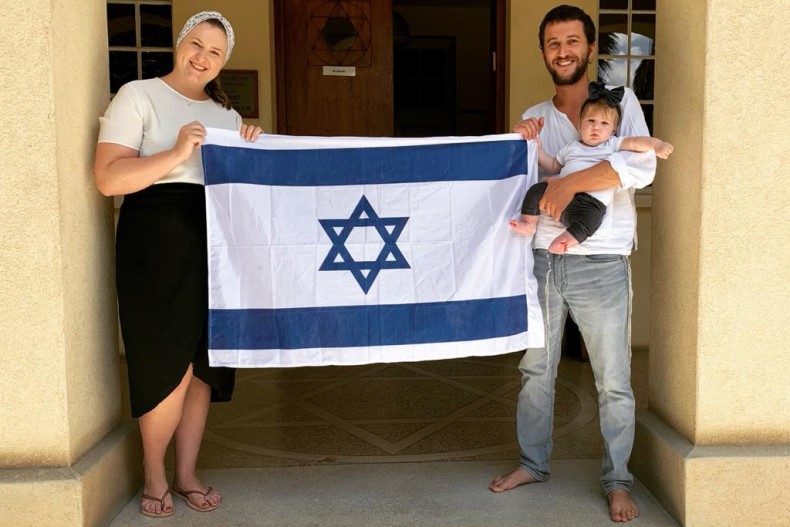
A family’s story of living Jewishly on three continents Michelle Cohen World May 28, 2021 Avital, Tzofia, and Netanel Kaszovitz outside their home in Nairobi on Yom HaAtzmaut. When Avital Kaszovitz prepared to be a Modern Orthodox shlicha (emissary) to the Jewish community in Ke
Read more -
New exhibit spotlights the experience of ‘Shanghai Jews’
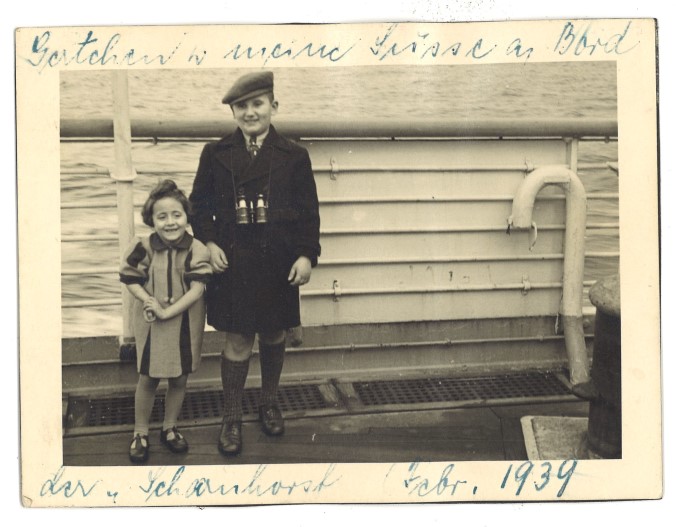
Explore a new Illinois Holocaust Museum and Education Center exhibit
Read more -
Europe’s brave new teachers of the Holocaust
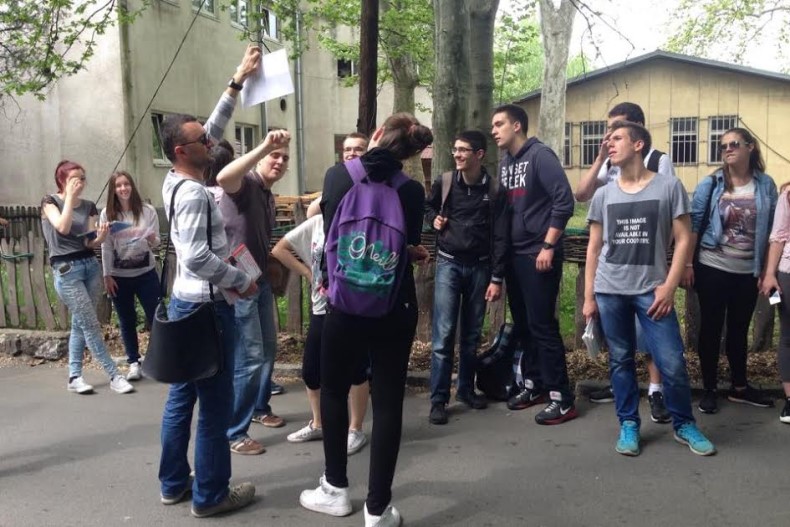
Teaching the Holocaust in the modern era has its difficulties and rewards.
Read more
Sometimes, when you do what’s best for yourself, it helps others, too.
Manya Treece, who lives in the West Town area, was looking for a nearby place to pray and, finding none that fit the bill, decided to create one for herself. Her quest caught the interest of many others, and now she could not have a shorter commute—her minyan (quorum of 10) meets in her basement.
It was “started by several of us,” she said, including Amanda Hensley and Adam Peri, “who wanted more diversity in Jewish life.” They, too, lived in West Town but were looking for more Jewish options and all believed that the West Town neighborhoods in Chicago should have thriving and diverse opportunities for the many Jews living in the area.
They contacted the JCC Sidney N. Shure Kehilla. The program and its manager, Becky Adelberg, helped to support and nurture the concept. The minyan is sometimes sponsored by the JCC Makor program as well.
Treece is proud to help revive West Town as a Jewish neighborhood. As her minyan’s website relates: “Once a thriving hub of Jewish life, Chicago’s West Town neighborhoods have [had] a recent influx of boutiques, restaurants and exciting nightlife, and numerous Jews have once again begun to call West Town their home.” (Where exactly is “West Town”? The site gives its basic perimeters: “Wicker Park, Ukrainian Village, Bucktown, Logan Square, Humboldt Park and Noble Square.”)
Once a month, the congregation gathers for a “spirited, lively” Kabbalat Shabbat service, followed by a homemade dinner. The minyan’s first service was held in February, and now expects some 30 people at each service.
Denominationally, the West Town Minyan is “Open Orthodox-style.” As Treece explained, “if something is prohibited by Jewish law for women to do, we do not permit it. But if it is only a matter of custom, we do.” Treece very much enjoyed the services she attended at Kol Sasson Congregation in Skokie, which she cites as inspiration.
The minyan has chosen the budding “Partnership Minyan” prayer style, its website says, “in an effort to meet the needs of as many Jews as possible. The Partnership Minyan service represents a progressive movement within traditional Jewish practice. This traditional style of Jewish practice enables both women and men to participate in Jewish ritual life while fully adhering to Jewish law.”
Specifically, it continues, “women and men are both able and encouraged to lead different parts of the service. In keeping with Jewish law, men and women will stand separately, but there will be no physical mechitza, or divider, between them.”
Treece’s own overall goal is to create a “more egalitarian and affirming” worship environment, she said, that is “inclusive of women and queer people. We want everyone to feel warmly received.”
Hensley concurred. She feels the minyan is a place “where tradition is available,” but the doors are open to those on “all levels” of affiliation, knowledge, and practice. Today, the attendees are “a diverse crowd of shul-hoppers,” adding that, for some, it’s “the only Jewish thing they do.”
While “observance and literacy are not key for participation,” Treece said, “those who are literate and learned assume leadership roles.” She readily admits that she is not the most Jewishly literate member of her minyan. While she is the host, she laughs, “I need page calling!”
Treece’s own religious experience was very wide-ranging. Her father was an Evangelical Christian, and her mother came from socialist, atheist Jews. “The only religious holiday I celebrated as a kid was Christmakkah,” she laughs.
When she moved to Chattanooga, Tennessee after college, she began to explore her own spirituality, visiting churches, Bahai and Buddhist temples, and eventually a Reform congregation. By then, she felt so distant from Judaism, yet so drawn to it, that she told the rabbi that she wanted to convert (he explained to her that this was not necessary). These days, she considers herself Orthodox. But her history also explains why she says she has “never been in a leadership position” in a Jewish context before.
As for marketing the West Town Minyan, her efforts have been “100 percent social media.” There are 200 in the minyan’s Facebook group. Her husband made their simple, elegant website. Aside from that, news of their presence has spread through congregants’ word of mouth.
And they are fine with that. The minyan is “still in infancy,” notes Hensley, and they “would like it to grow organically.” She’s “very proud, very happy with how it’s going.”
As for the future, they might need to fine a larger home, but for right now, Hensley said, the West Town Minyan will “keep doing what we’re doing!”
For more information, visit www.westtownminyan.com.
Other stories
-
Meet Andrew S. Hochberg, 2021 Julius Rosenwald Memorial Award recipient
Celebrate Andy Hochberg at the virtual Annual Meeting on Sept. 14
Read more -
Two local teens win national recognition
Recipients of the annual Diller Teen Tikkun Olam Awards
Read more -
Celebrating six young award winners cultivating the community
Introducing young adult award winners
Read more
This past summer, and every July for nearly 10 years, the Glenview-based “Hands of Peace” has brought Jewish-Israeli, Palestinian-Israeli, and Palestinian teenagers to the Chicago area in an interfaith initiative to build bridges between teens divided by conflict, religion, culture, history and geography.
Its summer program introduces Middle Eastern teens, hosted by area families, to each other and their American counterparts. The program challenges stereotypes, teaches leadership skills, and helps teens launch grassroots peace-building initiatives in their
home communities.
Participants attend daily dialogue sessions led by professional facilitators, educational activities, and visits to houses of worship.
Other stories
-
Meet Andrew S. Hochberg, 2021 Julius Rosenwald Memorial Award recipient
Celebrate Andy Hochberg at the virtual Annual Meeting on Sept. 14
Read more -
Two local teens win national recognition
Recipients of the annual Diller Teen Tikkun Olam Awards
Read more -
Celebrating six young award winners cultivating the community
Introducing young adult award winners
Read more